
Explore the differences between lathes and mills, two essential CNC machines. Understand their functions, advantages, and best use cases.
Introduction to Lathe and Mill Machines
CNC machines are important in manufacturing as they help make products accurately and efficiently. Two of the most common CNC machines are the lathe and the mill. Understanding the differences between these two machines is crucial for making the best decision for any manufacturing project.
CNC Machining Overview
CNC (Computer Numerical Control) machining uses computers to control machine tools, which allows for high precision, speed, and consistency in production. By automating the control of machine tools, CNC machining helps reduce human error and speeds up the entire manufacturing process.
Lathes and mills are two of the most commonly used tools in CNC machining, each playing a key role depending on the type of part being made.
Choosing the Right Tool
Choosing between a lathe and a mill depends on several factors, including the type of material being used, the shape of the part, and how complex the part is. Lathes are the best choice for making round shapes by spinning the material, while mills are better suited for creating complex shapes using a rotating cutting tool.
Understanding these differences helps manufacturers choose the right tool, improve product quality, and make the process more efficient. It is important to consider the specific requirements of the project when selecting between a lathe and a mill.
What is a Lathe?
Source: SYIL CNC.com
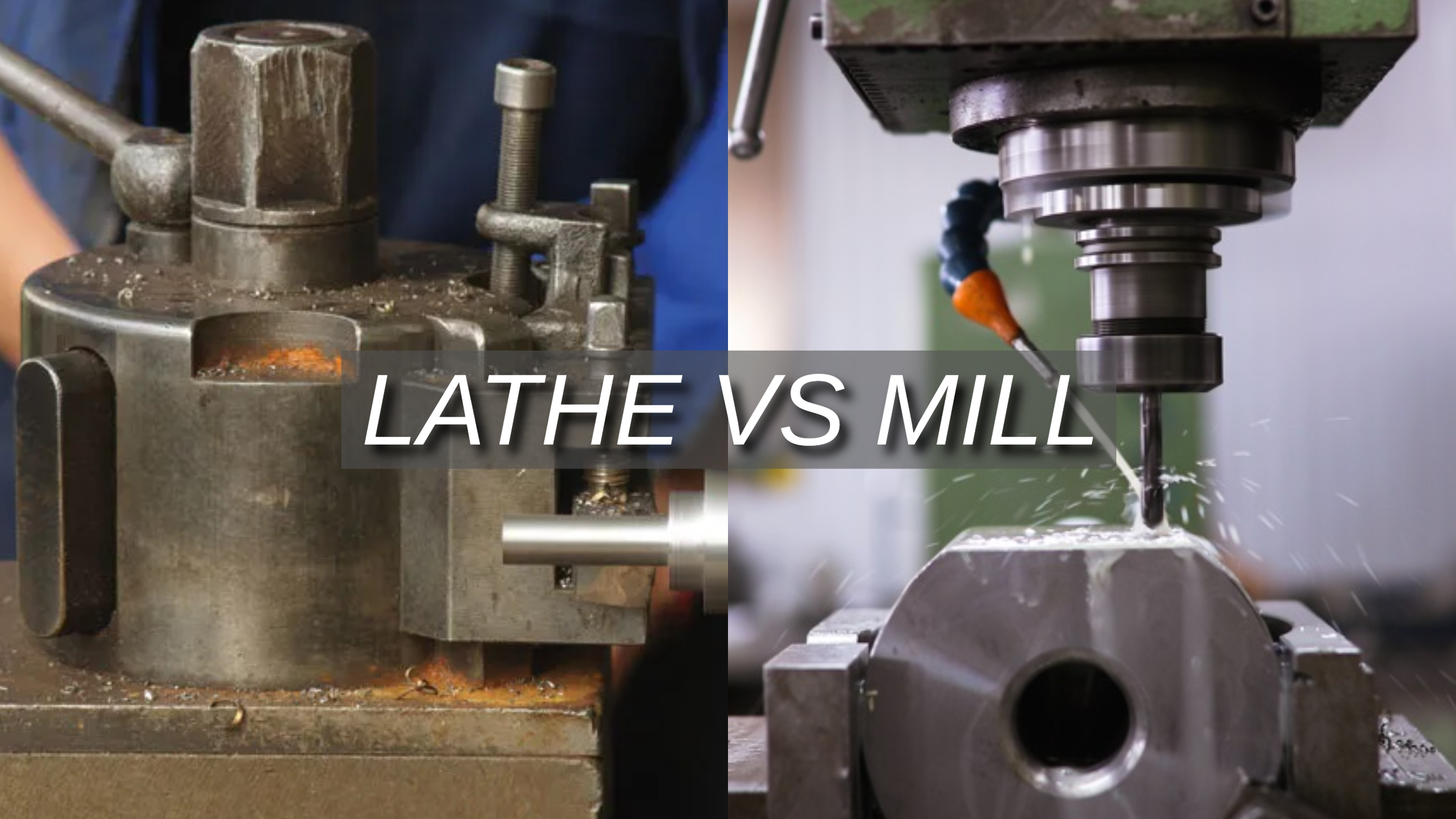
A lathe is a machine that spins a piece of material around a central axis while a cutting tool shapes it. This process is ideal for making round parts like cylinders, cones, and spheres.
Lathes are particularly good at creating symmetrical parts, and they are used to make both simple and intricate designs that are rotationally symmetric. The cutting tool can be moved in different directions to shape the material, giving the lathe versatility in producing different features.
Common Uses for Lathes
Lathes are commonly used to create parts like shafts, bushings, and pulleys. They work well with materials such as metals (like steel, aluminum, and brass), wood, and some plastics.
Lathes are widely used in industries such as automotive and aerospace, where precision and repeatability are essential. They are also used for artistic purposes, like woodturning, where intricate designs are made by turning a piece of wood while shaping it with tools.
What is a Mill?
Source: kadcoceramics.com
A mill is a machine that uses a rotating cutting tool to shape a stationary workpiece. Unlike a lathe, the workpiece does not move; instead, the cutting tool moves along multiple axes to shape the material.
Mills are ideal for making complex shapes, flat surfaces, slots, and other detailed features that would be difficult or impossible to create with a lathe. The milling machine's ability to move the cutting tool in different directions makes it highly versatile for a wide range of tasks.
Common Uses for Mills
Mills are used to create detailed parts such as slots, holes, pockets, and other complex features. They work well with a variety of materials, including metals (such as aluminum, steel, and titanium), plastics, and composites.
Milling machines are essential in industries such as aerospace, electronics, and automotive, where precision and the ability to create complex designs are critical. Mills are also used for prototyping, where detailed features are needed to test the function and fit of a design.
Lathe vs Mill: Key Differences
Feature | Lathe | Mill |
|---|---|---|
Operation | Spins workpiece | Uses rotating cutting tool on stationary part |
Speed | Faster for round parts | Slower due to complex movements |
Accuracy | High for round shapes | High for complex and flat shapes |
Complexity | Best for simple, round shapes | Great for complex shapes and movements |
Pros and Cons of Using a Lathe
Benefits of CNC Turning
Lathes are fast and accurate for creating round shapes and are great for repetitive tasks. They work well with a variety of materials, including metals, wood, and plastics. Lathes are also generally easier to set up and operate, making them a good choice for simpler parts that need to be produced quickly.
Limitations of CNC Turning
Lathes are less versatile than mills when it comes to creating complex features. They are not suitable for making intricate designs, such as slots, pockets, or irregular shapes, which require a milling machine. Lathes are primarily designed for parts with rotational symmetry, which limits their ability to create more detailed or irregular parts.
Pros and Cons of Using a Mill
Benefits of CNC Milling
Mills are highly flexible and can create complex shapes with high precision. They work with a wide range of materials, including metals, plastics, and composites. Mills are ideal for making detailed features, such as flat surfaces, slots, and holes, and they excel at producing parts with intricate geometries. The ability to move the cutting tool along multiple axes makes mills suitable for a wide variety of projects.
Limitations of CNC Milling
Mills are generally slower compared to lathes when making simple round parts. The setup and operation of a milling machine can also take more time, especially for tasks that could be done more easily with a lathe. Mills are less efficient for working on long, cylindrical parts, and they require more careful planning and setup to achieve the desired results.
When to Choose A Lathe or A Mill
Considerations for Projects
When choosing between a lathe and a mill, it is important to consider the specific requirements of the project. Use a lathe for parts that need to be round, such as shafts or cylinders, because lathes are faster and more efficient for these types of parts.
On the other hand, use a mill for parts that have complex shapes, flat surfaces, or detailed features that require precision. The decision should be based on the shape, complexity, and material of the part, as well as the production speed needed.
Tips for Choosing
Symmetry: If the part is symmetrical around an axis, use a lathe, as it is designed for these types of shapes.
Complex Shapes: If the part has complex shapes, pockets, or slots, use a mill because it can move in multiple directions and create detailed features.
Material: Both lathes and mills work with a variety of materials, but the type of material and the finish required may influence the choice of machine.
Speed: For simple, symmetrical parts, lathes are generally faster. For more detailed designs that require precision, mills are better but may take more time.
Production Quantity: If large quantities of simple parts are needed, a lathe is often the better choice because of its speed. For smaller quantities or complex parts, a mill may be more suitable.
Conclusion
Lathes and mills are both important tools in CNC machining, each with its strengths and ideal applications. Lathes are best for making round parts quickly and efficiently, while mills are better for producing complex shapes and detailed features. Understanding the strengths and limitations of each machine helps manufacturers make better decisions, improve product quality, and enhance efficiency.
When deciding between a lathe and a mill, consider the shape, complexity, and material of the part. Lathes are ideal for round and symmetrical parts, while mills are better for parts with complex geometries and multiple features. Choosing the right tool will lead to better quality, faster production, and cost-effectiveness in manufacturing.
Choose Unionfab for Precision CNC Solutions
Unlock the potential of CNC machining with Unionfab. Whether you need a lathe, mill, or custom CNC solution, our experts ensure precision and quality every time.
Contact us today — our team is ready to discuss your project and provide a customized quote.
You can also receive an instant estimate by uploading your file. Let's get started!