
Explore weldability, corrosion resistance, and real-world uses of 316L stainless steel.
Introduction
316L stainless steel is a low-carbon, corrosion-resistant alloy specifically designed to perform well in harsh environments.
Compared to standard stainless steels, it offers superior resistance to pitting and crevice corrosion—making it ideal for marine applications, chemical processing, and medical devices.
Its excellent weldability and durability under extreme conditions have made it one of the most widely used stainless steel grades across industries.
What is 316L Stainless Steel?
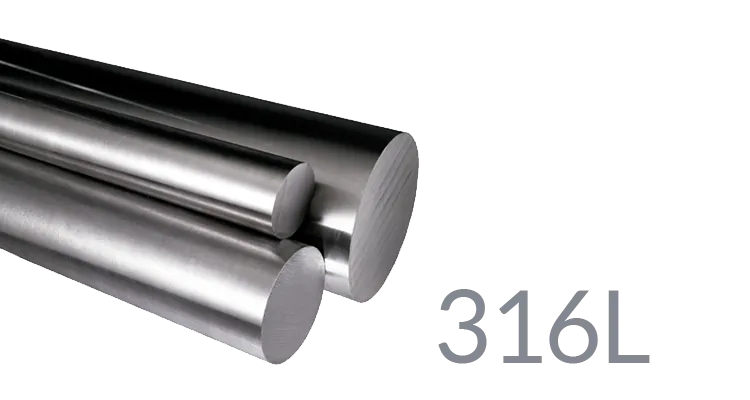
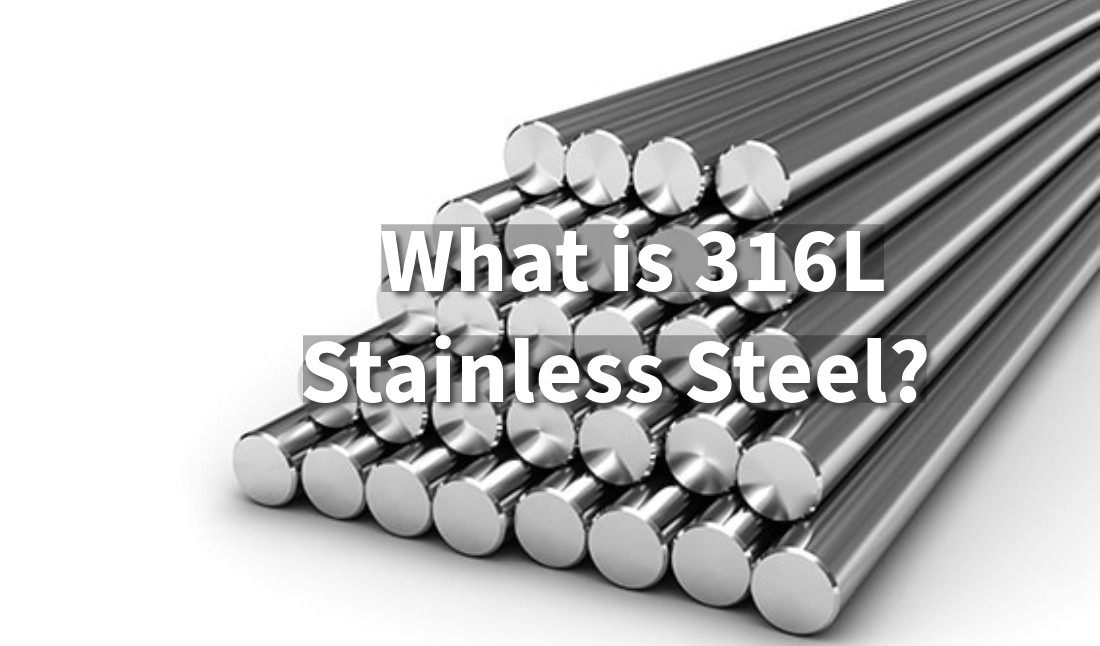
316L stainless steel is a low-carbon variant of 316 stainless steel, engineered for enhanced corrosion resistance and superior weldability.
The “L” denotes its reduced carbon content—typically below 0.03%—which minimizes the risk of carbide precipitation during welding and improves its performance in chloride-rich or high-temperature environments.
These characteristics make 316L ideal for demanding applications in marine engineering, medical implants, and chemical processing equipment, where durability and resistance to aggressive conditions are critical.
Chemical Composition & Mechanical Properties
316L stainless steel combines excellent corrosion resistance with reliable mechanical performance, making it ideal for demanding applications. Below is an overview of its chemical composition and physical properties.
Chemical Composition of 316L Stainless Steel
316L stainless steel is primarily composed of iron (Fe), with key alloying elements that enhance its corrosion resistance and strength. The addition of molybdenum (Mo) improves resistance to pitting and crevice corrosion, especially in chloride-rich environments, while its low carbon content (<0.03%) minimizes the risk of sensitization during welding.
Typical Chemical Composition (% by weight):
Element | Content (%) | Function |
|---|---|---|
Chromium (Cr) | 16.0 – 18.0 | Enhances corrosion resistance |
Nickel (Ni) | 10.0 – 14.0 | Improves ductility and corrosion resistance |
Molybdenum (Mo) | 2.0 – 3.0 | Boosts resistance to pitting and crevice corrosion |
Carbon (C) | ≤ 0.03 | Low carbon improves weldability |
Manganese (Mn) | ≤ 2.0 | Improves hot workability |
Silicon (Si) | ≤ 1.0 | Enhances oxidation resistance |
Phosphorus (P) | ≤ 0.045 | Controlled to reduce embrittlement |
Sulfur (S) | ≤ 0.03 | Improves machinability (in trace amounts) |
Iron (Fe) | Balance | Base material |
Physical & Mechanical Properties of 316L
Property | Value |
|---|---|
Density | ~8.0 g/cm³ |
Melting Point | 1,375 – 1,400 °C |
Tensile Strength | 485 – 620 MPa |
Yield Strength (0.2% offset) | ≥ 170 MPa |
Elongation at Break | ≥ 40% |
Hardness (Rockwell B) | ≤ 95 |
Modulus of Elasticity | ~193 GPa |
Thermal Conductivity | ~16.3 W/m·K at 100 °C |
Electrical Resistivity | ~0.74 μΩ·m |
316L stainless steel offers a balance of strength, ductility, and temperature resistance, making it suitable for structural, thermal, and high-pressure applications.
316L vs. 316 vs. 304 vs. 17-4 PH Stainless Steel
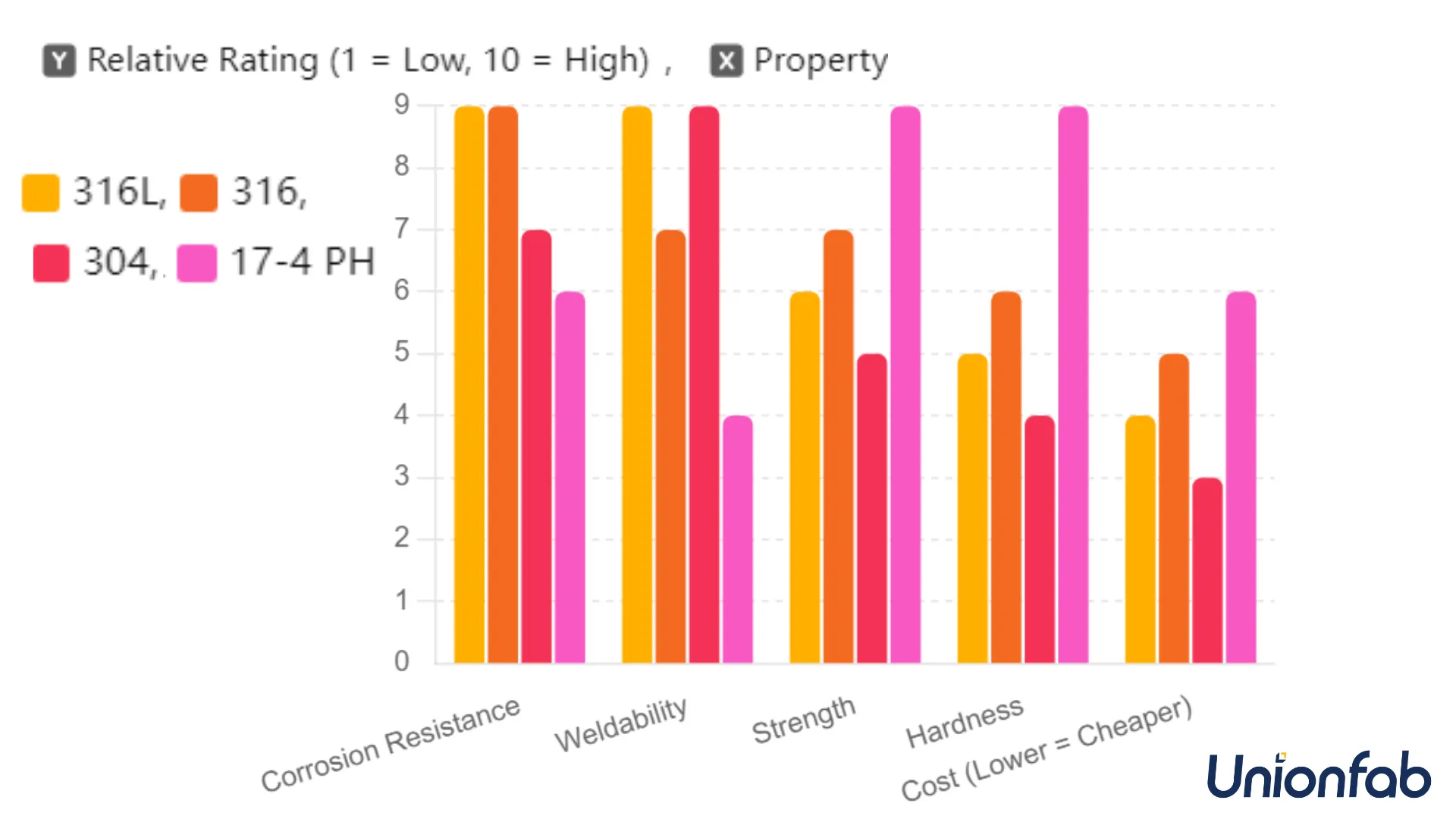
When choosing a stainless steel grade, it’s important to balance factors like corrosion resistance, weldability, mechanical strength, and cost. Below is a detailed comparison of four common stainless steels—316L, 316, 304, and 17-4 PH—used across industries.
Comparison Table: 316L vs. 316 vs. 304 vs. 17-4 PH
Property | 316L | 316 | 304 | 17-4 PH |
|---|---|---|---|---|
Corrosion Resistance | 9 | 9 | 7 | 6 |
Weldability | 9 | 7 | 9 | 4 |
Strength | 6 | 7 | 5 | 9 |
Hardness | 5 | 6 | 4 | 9 |
Cost (Lower = Cheaper) | 4 | 5 | 3 | 6 |
Scores are relative (scale of 1–10) based on typical industrial performance.
Summary of Each Stainless Steel Grade
316L stainless steel is known for its low carbon content, which enhances weldability and prevents intergranular corrosion after welding. It offers excellent corrosion resistance in marine, chemical, and medical environments, making it the go-to grade for critical welded structures.
316 stainless steel has a slightly higher carbon content, giving it a minor strength advantage over 316L. It’s suitable for industrial parts that are not welded or where post-weld treatment is feasible.
304 stainless steel is the most widely used grade due to its cost-effectiveness and excellent formability. However, it provides lower resistance to chlorides and acidic corrosion, making it more suitable for general indoor use and consumer products.
17-4 PH stainless steel is a precipitation-hardened alloy offering high strength, hardness, and fatigue resistance. While it sacrifices some corrosion resistance and weldability, it excels in aerospace, defense, and structural applications where strength is a priority.
When to Choose the Right Stainless Steel
If your application requires frequent welding and exposure to saltwater or chemicals, 316L is the ideal choice due to its excellent corrosion resistance and weldability. For structural parts needing slightly higher strength and not exposed to welding heat, 316 provides good balance. Choose 304 when cost is a primary concern and the part will be used in dry or mildly corrosive environments. If your design demands maximum strength, hardness, and thermal stability—such as in turbines, shafts, or aerospace hardware—17-4 PH offers superior mechanical performance, though with limited weldability and higher cost.
316L Stainless Steel in 3D Printing
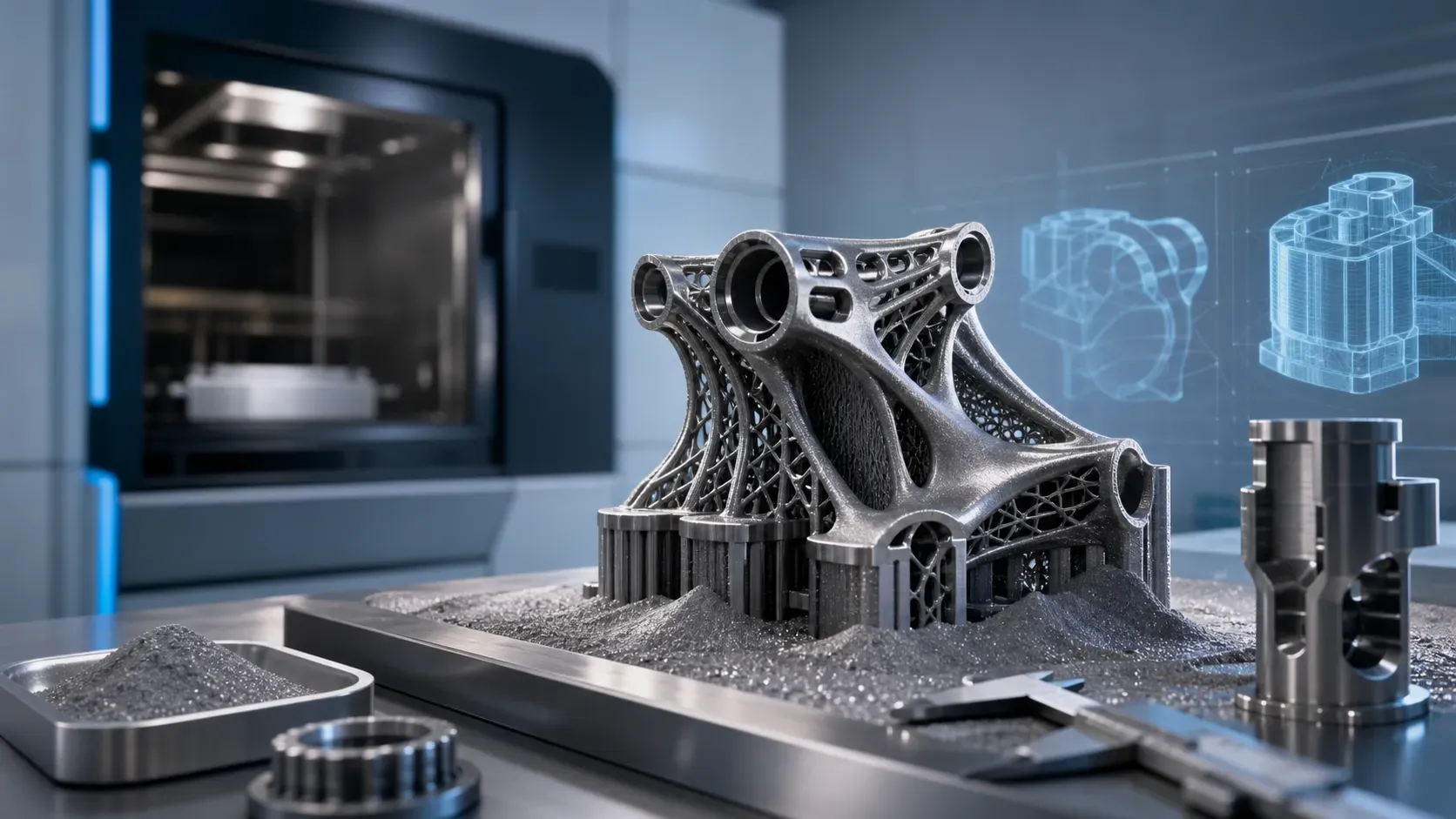
316L stainless steel is one of the most widely used materials in metal additive manufacturing, offering a powerful combination of strength, corrosion resistance, and weldability that makes it ideal for printing functional prototypes and end-use components.
Why 316L Is Ideal for Metal 3D Printing
316L’s fine grain structure and low carbon content make it exceptionally well-suited for laser powder bed fusion (LPBF) and binder jetting technologies. The material exhibits:
Excellent printability with minimal risk of cracking or warping
Strong interlayer bonding due to high weldability
High-density final parts (~99.8%) with reliable mechanical performance
Minimal post-processing distortion compared to harder alloys
Advantages Over Traditional Manufacturing
Using 316L in 3D printing allows for the creation of geometrically complex, lightweight, and customizable parts that would be difficult or impossible to produce via CNC machining or casting. Additive manufacturing also enables:
Rapid prototyping of stainless parts
On-demand spare part production
Material efficiency, with minimal waste
At Unionfab, we offer precision 316L stainless steel 3D printing using industry-leading metal AM platforms. Whether you're prototyping a corrosion-resistant part or manufacturing production-grade components, we deliver reliable results with short lead times and competitive pricing.
Applications of 316L Stainless Steel
Common Industries
316L stainless steel is used in many industries, including automotive, marine, medical, food processing, and chemical processing. Its great rust resistance and strength make it perfect for environments that need strong and safe materials.
Use Cases of 316L Stainless Steel
N95 Mask Molds
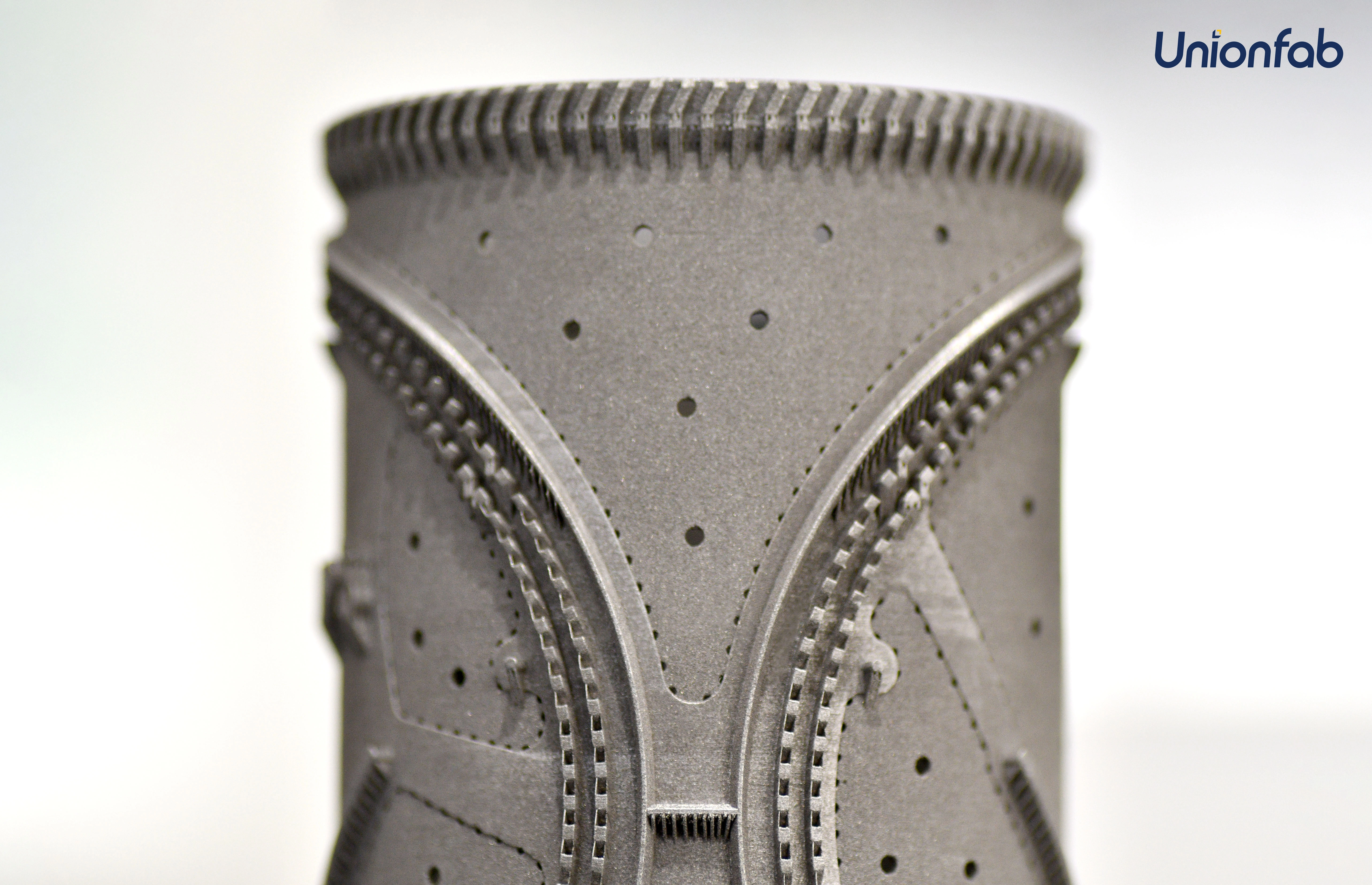
When it comes to manufacturing high-quality, life-saving N95 masks, 316L stainless steel stands out as the material of choice for the mask molds. Its remarkable durability and resistance to corrosion ensure that every mold maintains its precise dimensions, even after rigorous, repeated use.
Heat Sinks
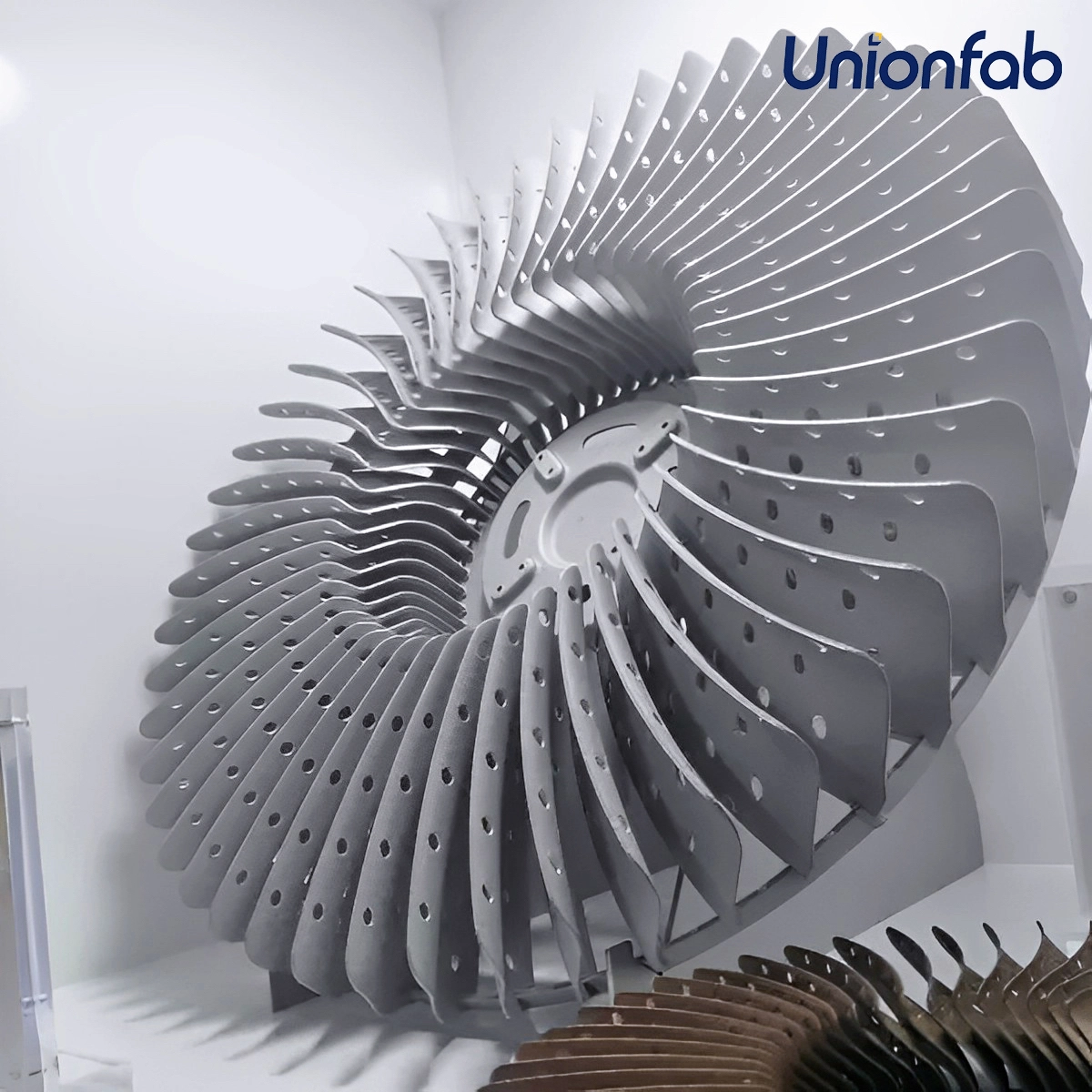
In the demanding environments of automotive, electronic, and industrial systems, 316L stainless steel heat sinks excel at efficiently dissipating heat. The alloy's high thermal conductivity and resistance to wear allow it to maintain optimal performance, delivering a reliable solution that keeps machinery and systems cool.
Automotive Parts
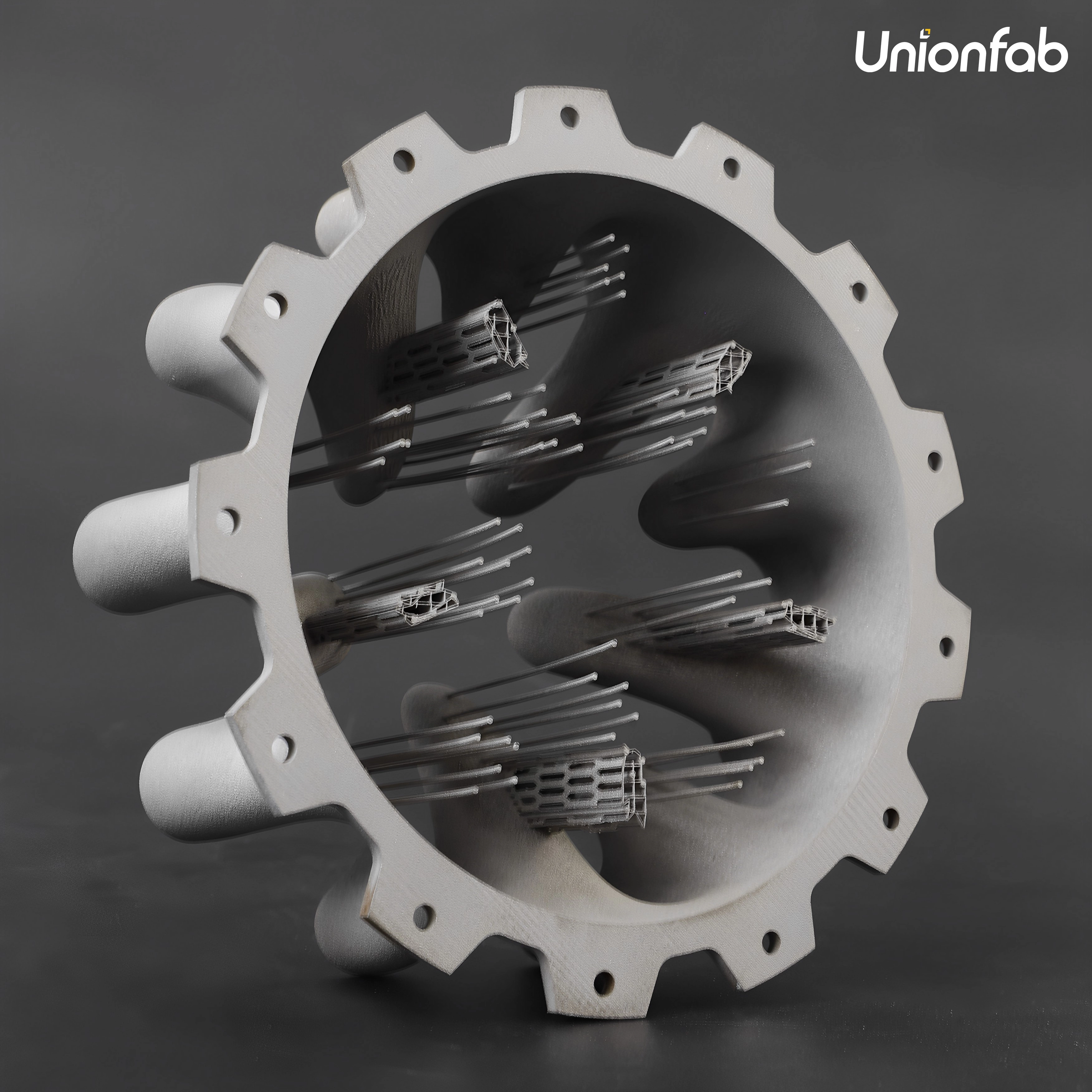
When it comes to critical automotive parts like tailpipes and wheel hubs, 316L stainless steel stands out for its unmatched combination of strength and corrosion resistance. Made of 316L stainless steel, tailpipes can withstand the intense heat and harsh exposure of exhaust gases. Drivers can count on 316L components to look and perform like new, year after year, thanks to the material's durability.
Jewelry of Lasting Elegance
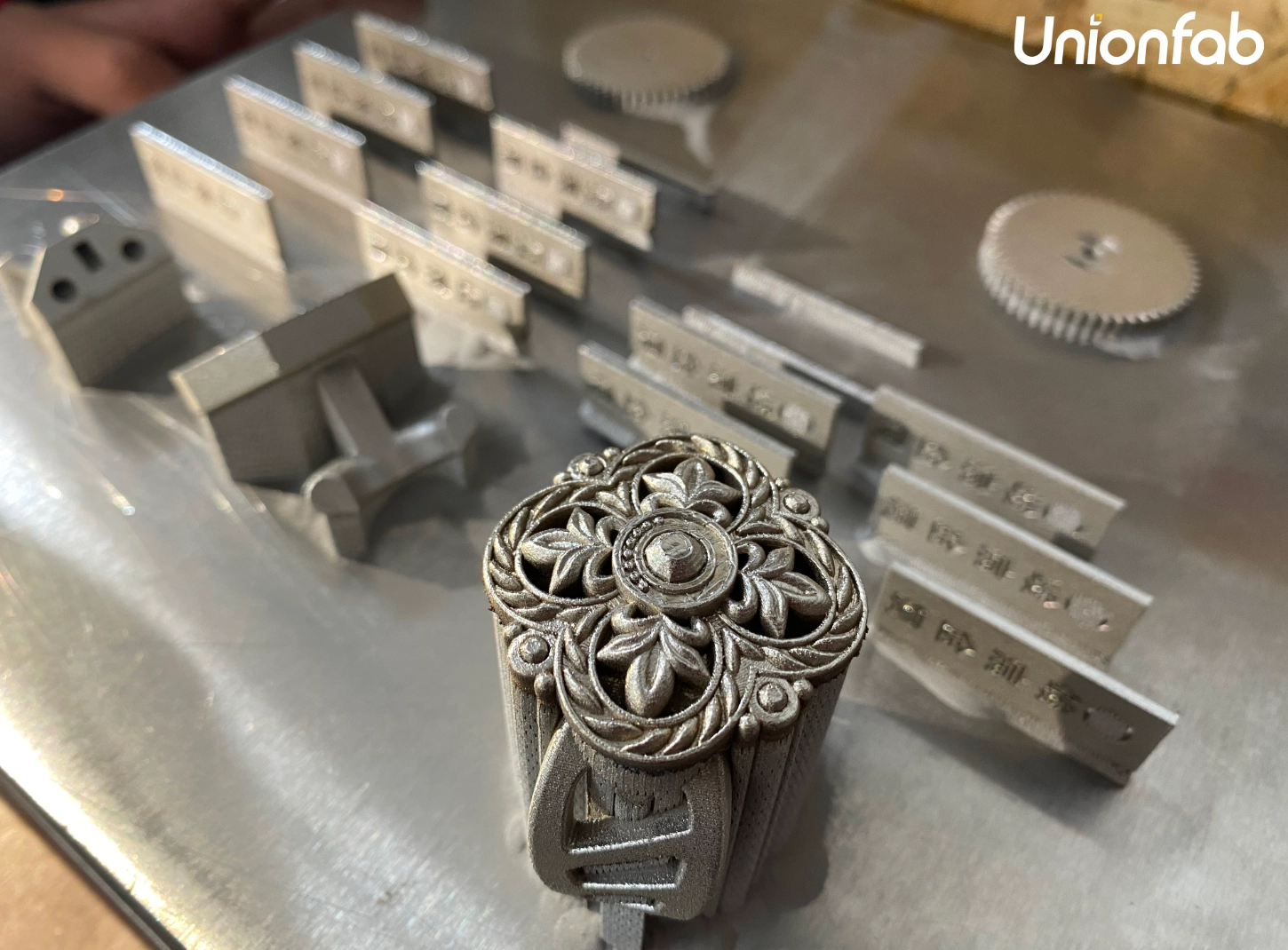
For jewelry that’s both elegant and robust, 316L stainless steel is the perfect choice. Known for its polished finish and hypoallergenic properties, 316L is ideal for those seeking lasting shine and resistance to tarnish.
Conclusion
316L stainless steel combines excellent corrosion resistance, weldability, and mechanical durability—making it the preferred material for marine, medical, food-grade, and industrial applications. Its low-carbon content provides superior performance in welded structures and harsh environments where failure is not an option.
Whether you need high-performance components for corrosive conditions or precision-welded assemblies, Unionfab offers expert support and advanced manufacturing solutions using 316L stainless steel.
Frequently Asked Questions (FAQ)
What is the difference between 316 and 316L stainless steel?
The primary difference lies in carbon content:
● 316 contains up to 0.08% carbon
● 316L contains a maximum of 0.03% carbon
This makes 316L more resistant to intergranular corrosion after welding, making it the preferred choice for welded parts exposed to harsh environments.
Can 316L stainless steel rust?
While 316L stainless steel is highly corrosion-resistant, it is not completely rust-proof. In environments with high concentrations of chlorides or poor maintenance, surface corrosion (such as tea staining) may occur. However, 316L performs significantly better than 304 and other common stainless grades in aggressive environments.
Is 316L stainless steel safe for medical implants?
Yes. 316L stainless steel is widely used in medical and surgical implants due to its biocompatibility, low carbon content, and resistance to body fluids. It complies with ASTM F138 and ISO 5832‑1 standards, making it suitable for temporary or permanent implantation in the human body.