
Compare phosphate coating vs black oxide for steel parts. Learn the differences in corrosion resistance, paint adhesion, dimensional impact, appearance, and best-use applications.
Introduction
If you work with steel parts, whether they're cast, or CNC machined, you've likely faced this question at some point: should this component be phosphated, or should it get a black oxide finish?
Both are common surface treatments for steel, and both are often mentioned in the same breath. But they work in different ways, protect parts differently, and are suited to different applications. Choosing the wrong one can mean paying for corrosion resistance you don't need, or under-protecting a part that will spend years outdoors.
This guide breaks down what each process actually does, how they compare, and how to decide which one fits your parts.
What Is Black Oxide?
Black oxide coating (sometimes called bluing or blackening) is a conversion process that forms a thin oxide layer, mainly magnetite (Fe₃O₄), on the surface of steel. It's typically produced by immersing parts in a hot alkaline bath, usually a solution of sodium hydroxide and sodium nitrite, held at around 135–145°C.
A few things make this process distinctive:
Minimal dimensional impact: The oxide layer is very thin, typically just a few microns or less, so it has virtually no effect on part dimensions, which means masking usually isn't necessary even on precision components.
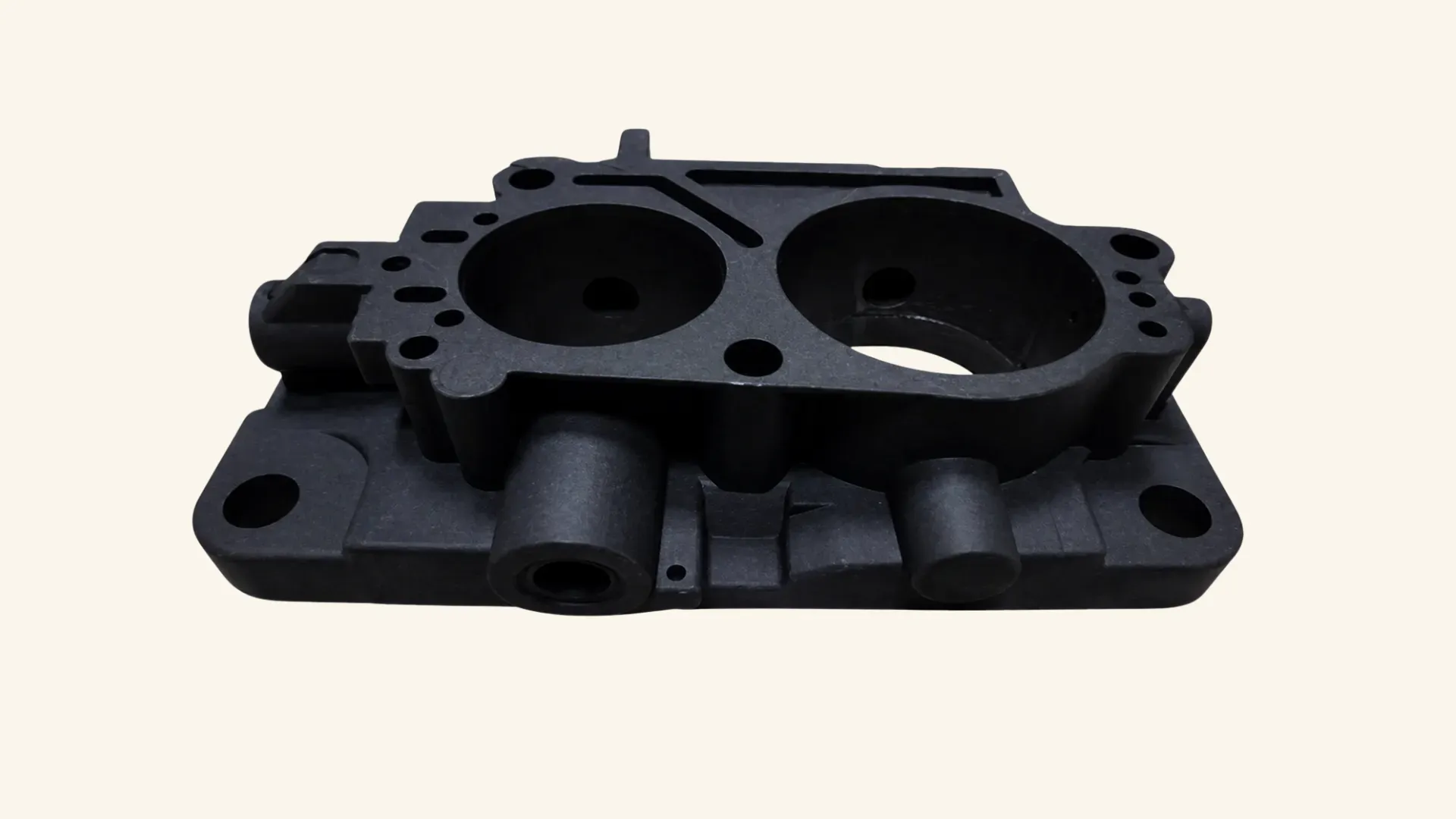
Smooth, matte appearance: The finish is typically a clean, uniform black, without adding a noticeable coating layer. Actual appearance can vary slightly with alloy composition, but black is by far the most common result in industrial use.
Mild corrosion resistance alone: On its own, black oxide offers only modest protection. It's almost always followed by a topcoat of oil, wax, or lacquer; oil gives a glossier finish, wax a duller one, and lacquer dries quickly. This post-treatment step is what meaningfully improves both corrosion resistance and wear performance.
What Is Phosphate Coating?
Phosphating is a chemical conversion process that reacts a metal surface with a phosphate-based solution, forming a thin, tightly bonded phosphate layer rather than depositing a separate metallic coating. It's typically applied to carbon steel, alloy steel, and cast iron after machining or forming is complete.
A few things make this process distinctive:
Porous structure with functional benefits: The coating's slightly porous surface retains oils well and gives paint or powder coating a mechanical surface to key into, which is why phosphate is widely used as a pretreatment step rather than a standalone finish.
Moderate corrosion resistance alone: On its own, phosphate coating offers basic to moderate protection depending on the system used, and is typically paired with oil, sealant, or paint for outdoor or more demanding environments.
Process flexibility: Compared to black oxide, phosphate coatings generally run at lower process temperatures, though exact conditions vary by chemistry and supplier.
Key Differences at a Glance
Both black oxide and phosphate coating are conversion coatings, but they differ in thickness, corrosion performance, process conditions, and typical applications.
The table below highlights the practical differences that most engineers and buyers consider when selecting a surface treatment for steel components.
Factor | Black Oxide | Phosphate Coating |
|---|---|---|
Coating type | Oxide conversion film (magnetite) | Phosphate conversion film |
Typical thickness | Very thin — a few microns or less | Varies by system; generally thicker, porous structure |
Dimensional impact | Minimal — ideal for tight tolerances | Slightly more surface texture change |
Corrosion resistance (standalone) | Modest; usually improved with oil, wax, or another post-treatment | Generally better, depending on chemistry and post-treatment |
Process temperature | ~135–145°C | Generally lower than hot black oxide, depending on chemistry |
Common applications | Precision-machined parts, fasteners, tools, general steel components | Paint pretreatment, corrosion-focused applications, wear/lubrication-focused systems |
Which One Should You Choose?
The best choice depends on what matters most for your application, whether that's appearance, dimensional stability, corrosion resistance, paint adhesion, or surface functionality.
If your parts require a dark finish, minimal dimensional change, and light corrosion protection, black oxide is often the better option, especially when sealed with oil or wax.
If your parts require better paint adhesion, enhanced corrosion resistance, or a surface designed to support lubrication and wear, phosphate coating is usually the better choice. The best phosphate system depends on whether the priority is paint pretreatment, corrosion protection, or wear-related performance.
In practice, many manufacturers use both treatments for different types of components. Black oxide is often chosen where appearance and tight dimensional control are the priorities, while phosphate coating is preferred when paint performance, corrosion protection, or functional surface properties are more important. Rather than competing processes, they serve different purposes.
If you're unsure which treatment is right for your application, talk to our engineering team for expert guidance tailored to your parts and requirements.
New to working with us? Enjoy 10% off your first order.