
Explore vacuum casting: process, available materials, service pricing, pros and cons, and design tips for prototypes and low-volume production.
Introduction
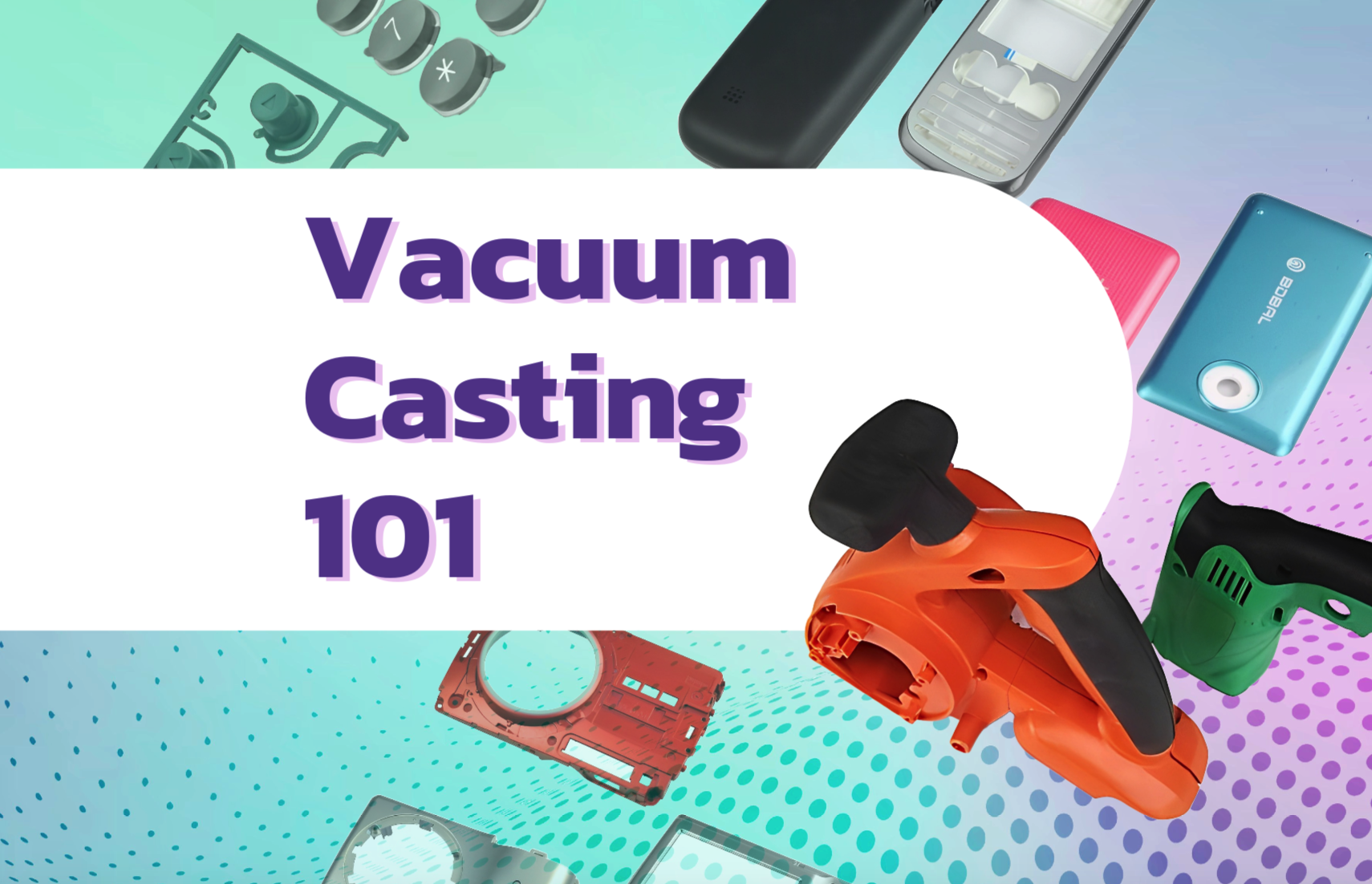
Vacuum casting (also called Urethane Casting) is a flexible method for producing high-quality plastic parts in low to medium volumes. It’s perfect for functional prototypes, design validation, and short-run production where appearance, material performance, and lead time matter.
Often seen as a bridge between prototyping and mass production, vacuum casting uses silicone molds to create parts that match injection-molded quality while avoiding the high cost of metal tooling.
Whether you need a few cosmetic models for marketing or several functional housings for testing, this process offers a fast, cost-effective, and accurate solution.
Vacuum Casting vs. Urethane Casting
You might have heard the terms vacuum casting and urethane casting used interchangeably. The main reason is simple: most parts manufactured by vacuum casting are made using polyurethane resins.
To understand the difference more clearly, it helps to look at the process and the material separately.
Vacuum casting refers to the process:
Liquid resin is poured into a silicone mold under vacuum conditions
The vacuum removes trapped air, improving surface quality and dimensional accuracy
Urethane casting refers to the material:
Most resins used in vacuum casting are polyurethane-based
Different formulations can mimic common plastics such as ABS, PP, rubber-like materials, or transparent plastics
Relationship summary:
Vacuum casting = how the part is made
Urethane casting = what material is typically used
In practice, urethane casting is a subset of vacuum casting. While the process can also use other resin systems, polyurethane remains the industry standard, which is why the two terms are often used interchangeably.
Pros and Cons of Vacuum Casting
To determine whether vacuum casting is the right manufacturing method for your project, it’s important to understand both its strengths and its limitations.
Pros | Cons |
|---|---|
High design flexibility | Not suitable for high-volume production |
Injection-mold-like appearance | Limited mold lifespan |
Cost-effective for short production runs | Lower dimensional stability than CNC or injection molding |
Wide range of material options | Material constraints |
Multiple finishing possibilities | Size and geometry limitations |
Relatively fast turnaround | Potential visual imperfections |
How Does Vacuum Casting Work?
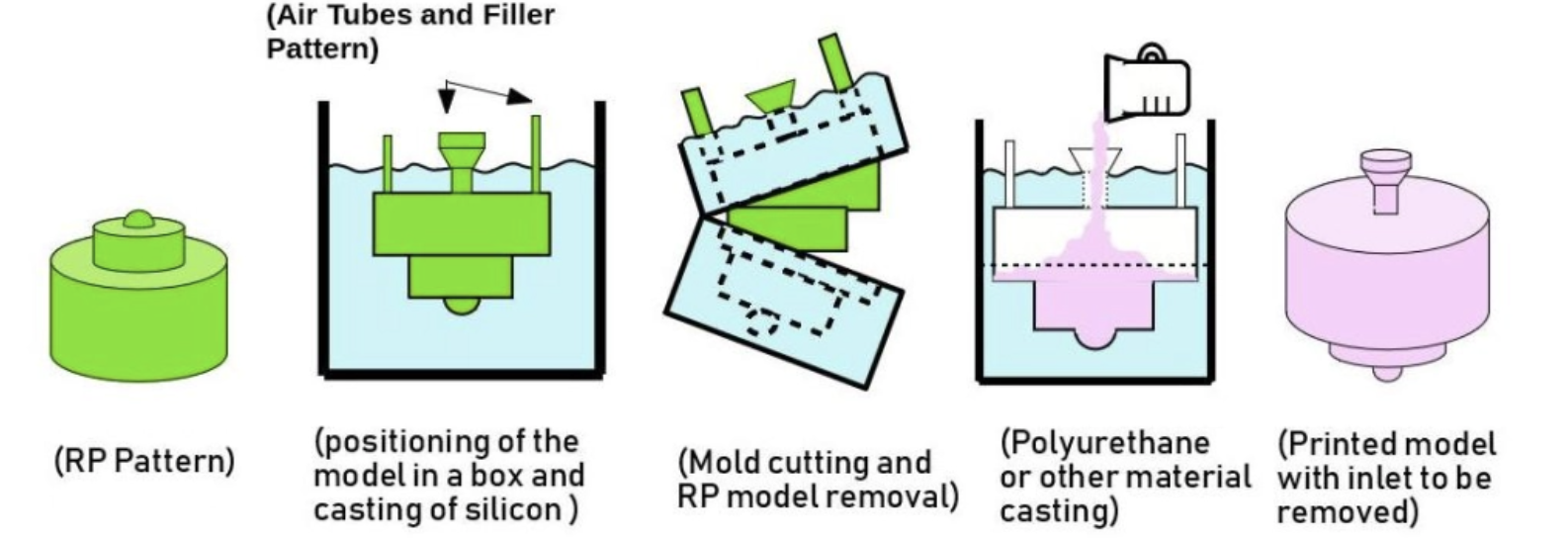
Source: Marmax Design
Vacuum casting is a manufacturing process used to create high-quality plastic or rubber parts with smooth surfaces and fine details. It relies on silicone molds and a vacuum environment to minimize air bubbles and casting defects.
Here’s a simplified, step-by-step overview of how vacuum casting works.
Step 1: CAD Design
Every project starts with a digital 3D model. Using CAD software such as SolidWorks, CATIA, or AutoCAD, engineers design and optimize the part for casting.
To ensure a successful result, the model should feature uniform wall thickness and appropriate draft angles, allowing the part to be released from the mold cleanly.
Step 2: Creating the Master Model
A physical master model is then created from the CAD design. This master defines the final shape, dimensions, and surface quality that will be replicated in every cast part.
Master models are typically fabricated using methods such as 3D printing or CNC machining, depending on the required accuracy, surface finish, and project timeline.
Step 3: Making the Silicone Mold
The master model is placed inside a mold box and carefully positioned to define the overall mold layout.
Liquid silicone is mixed and poured over the master, fully capturing its geometry and surface details.
The silicone is degassed under vacuum to remove trapped air and prevent surface defects.
After the silicone has fully set, the mold is opened along a planned cut line.
The master model is removed, leaving a flexible silicone mold with a precise negative cavity, ready for vacuum casting.
Step 4: Casting the Parts Under Vacuum
The finished silicone mold is prepared for casting and placed inside a vacuum casting machine.
The mold is securely closed and fitted with a pouring inlet and air vents to control resin flow and allow trapped air to escape.
A liquid casting resin, most commonly polyurethane, is measured and mixed. Color pigments can be added if required.
The mixed resin is degassed to remove air introduced during mixing.
Under vacuum conditions, the resin is poured into the mold. The reduced pressure helps the material flow smoothly into thin walls, sharp corners, and fine surface details.
This controlled vacuum pouring ensures uniform material distribution and minimizes internal voids.
Step 5: Curing, Demolding, and Finishing
After the mold cavity is fully filled, the resin is allowed to cure until it reaches sufficient strength.
The silicone mold is carefully opened, and the solidified part is removed.
Excess material such as gates or flash is trimmed away.
Additional finishing processes,such as sanding, painting, polishing, or surface coating, can be applied to achieve the desired appearance and functional performance.
The video below provides a visual overview of the complete vacuum casting process, helping illustrate how each step is carried out in practice.
Materials Available for Vacuum Casting
Vacuum casting depends heavily on the selection of casting materials, as they directly determine the appearance, mechanical performance, and functional behavior of the finished parts.
Overview of Vacuum Casting Materials
Vacuum casting uses a range of materials throughout the process, each contributing to part quality and performance. The focus here is on casting materials, primarily polyurethane (PU) resins, poured into silicone molds under vacuum.
The table below highlights key differences in hardness, heat resistance, mechanical properties, and typical applications, making it easier to compare material options and identify the best fit for your specific application.
Material | Color | Hardness | Heat Resistance | Key Properties | Typical Applications |
|---|---|---|---|---|---|
ABS-like | Beige / Black / White | 83 Shore D | 70–80°C | Mechanical properties similar to ABS thermoplastics | Enclosures, housings, consumer product shells, functional prototypes |
PC-like | Transparent (custom colors available) | 80 Shore D | 70–80°C | High transparency, low shrinkage | Transparent covers, light housings, display components, visual prototypes |
PP-like | White / Black | 83 Shore D | ~70°C | High impact strength, high elongation at break, excellent flexibility | Snap-fit parts, living hinges, automotive interior components |
Nylon-like | White / Black | 87 Shore D | Up to 120°C | High heat resistance, chemical resistance, high strength, good wear resistance | Gears, brackets, mechanical parts, industrial functional prototypes |
PMMA-like | Transparent (higher clarity than PC-like) | 87 Shore D | 70–80°C | High transparency, low shrinkage, excellent UV resistance | Optical parts, lenses, light guides, premium transparent components |
POM-like | White | 80 Shore D | Up to 120°C | High impact strength, properties similar to thermoplastic POM | Precision components, sliding parts, gears, bushings |
Flame-resistant ABS | White / Black | 82 Shore D | 60–70°C | Flame-retardant with ABS-like mechanical performance | Electronic housings, electrical enclosures, safety-related components |
Heat-resistant 6160 | Black | 80 Shore D | 100–120°C | High heat resistance, ABS-like mechanical behavior | High-temperature housings, thermal test parts, under-hood prototypes |
Heat-resistant PX-223 | Black | 80 Shore D | 120–130°C | Medium heat resistance, ABS-like properties | Automotive components, industrial housings, heat-exposed functional parts |
Rubber / Silicone-like | White / Black / Translucent | 20–90 Shore A | Up to 100°C | Elastic, flexible, wide hardness range | Seals, gaskets, soft-touch grips, vibration-damping components |
How to Choose the Right Vacuum Casting Material
Material selection plays a key role in determining the success and cost-effectiveness of a vacuum casting project. By understanding how different resins affect performance, aesthetics, and production efficiency, you can make informed decisions based on these four key factors:
1. Functional Requirements
Start by evaluating the mechanical stress and operating environment your part will endure:
Strength & Rigidity: For electronic housings, brackets, or load-bearing parts, ABS-like materials provide excellent impact resistance and dimensional stability.
Flexibility: For gaskets, seals, soft-touch grips, or wearable products, Rubber / Silicone-like materials are ideal. They offer a wide hardness range (Shore A to Shore D) to match specific elasticity needs.
Thermal Resistance: For heat-exposed applications—such as automotive components or industrial housings—Heat-resistant 6160 or PX-223 resins are recommended for their superior thermal stability (up to 120°C).
2. Visual and Optical Goals
Appearance is often just as important as functionality, especially for customer-facing prototypes:
Transparency & Clarity: PC-like and PMMA-like materials are the top choices for lenses, light guides, and transparent covers, delivering high clarity and a glass-like finish.
Fine Details: Low-viscosity resins flow easily into the silicone mold, capturing microscopic textures and features from the master pattern.
Color Matching: Most polyurethane resins can be pigmented before pouring, allowing for precise brand color matching without the need for painting.
3. Environmental Compatibility
Consider how and where the part will be used to prevent premature degradation:
Outdoor Applications: For parts exposed to sunlight, PMMA-like materials offer the best UV resistance to prevent yellowing.
Chemical Exposure: If the part contacts oils, fuels, or industrial solvents, Nylon-like and POM-like materials provide superior chemical resistance and durability.
Skin Contact: For medical devices, ergonomics, or wearables, Rubber / Silicone-like materials are commonly used for their soft-touch feel and safety.
4. Cost and Production Volume
Your material choice directly influences both the unit cost and the lifespan of the silicone mold:
Budget-Friendly Options: ABS-like resins are generally the most cost-effective solution for standard prototypes.
Impact on Mold Life: High-performance materials (such as clear or flame-retardant resins) can be more aggressive chemically, potentially shortening mold life.
Typical Yield: regardless of material, a standard silicone mold typically produces 15–20 parts before surface quality begins to decline.
Technical Specifications of Vacuum Casting
Vacuum casting is widely used for functional prototypes and low-volume production because it offers a strong balance between accuracy, material flexibility, and short lead times.
The technical specifications below provide a practical overview of what you can expect in a typical vacuum casting project, helping you quickly assess whether this process meets your design, performance, and production requirements.
Feature | Specification |
|---|---|
Typical Lead Time | 10–15 business days |
Maximum Part Dimensions | Limited by vacuum chamber size |
Minimum Wall Thickness | ≥ 0.75 mm required (1.5 mm recommended for best results) |
Standard Accuracy | ± 0.3% (with a lower limit of ± 0.3 mm on dimensions smaller than 100 mm) |
Typical Quantities | 15–20 parts per mold |
Tolerances | ± 0.3 mm typical |
Surface Finish Options | Polishing/Painting/Matte/Frosted/Semi-Gloss/High-Gloss/Textured |
Design Flexibility | High (supports undercuts, thin walls, fine details) |
Note: These values serve as general guidelines rather than fixed limits. Actual capabilities may vary depending on part geometry, material selection, and mold design.
How Vacuum Casting Services Are Priced
Understanding the cost structure of vacuum casting is essential for budgeting your prototyping or small-batch production. Unlike injection molding, which has high upfront costs, or 3D printing, which is priced per volume, vacuum casting is a hybrid model.
Here is the breakdown of how service providers calculate your quote.
Total Cost = Master Model Fee + Silicone Mold Fee + Product Replication Fee + Post-Processing Fee + Logistics Fee
1. Master Model Fee
Before making a mold, we must create a perfect physical "original." The method depends on your precision requirements:
SLA 3D Printing: The standard choice for most geometries, offering excellent surface smoothness.
CNC Machining: Used for parts requiring higher structural complexity, tighter tolerances, or specific metal-like properties.
Manual Finishing: Regardless of the method,the master model must be hand-sanded and polished to the exact texture you desire, as the silicone mold will replicate every detail.
2. Silicone Mold Fee
This is the fixed cost for the tooling itself.
Silicone Volume: Larger parts require larger mold boxes and more silicone material.
Complexity: Intricate designs may require multi-part molds or manual inserts to handle complex undercuts, increasing labor time.
Mold Life: A standard silicone mold typically lasts 15–20 shots. Production runs of 50+ pieces will require multiple molds (and thus multiple mold fees).
3. Product Replication Fee
This covers the material and labor for producing each individual copy.
PU Resin: Costs vary based on the material properties (e.g., standard ABS-like, transparent clear, flame-retardant, or rubber-like resins).
Vacuum Processing: The labor-intensive process of mixing, degassing, pouring, and curing the resin under a vacuum to ensure bubble-free parts.
4. Post-Processing Fee
This includes all post-processing and secondary operations required to achieve your final specifications:
Cosmetic Finishes: Spray painting (Pantone/RAL matching), Silk screening, and Pad printing for logos or text.
Texture & Polish: Sanding, Polishing (for clear parts), and specific Matte or High-Gloss surface treatments.
Assembly & Mechanics: Secondary machining operations such as Tapping (threading), Riveting, and installing metal inserts.
5. Logistics Fee
For international orders, these final steps ensure your parts arrive safely and legally:
Packaging: High-quality PU parts (especially clear or high-gloss ones) require custom foam to prevent scratches.
Shipping: Calculated based on dimensional weight and delivery speed (Express vs. Economy).
Customs Duty: Import taxes may apply depending on your country’s regulations and the declared value.
Cost Breakdown Summary
Component | Cost Type | Primary Drivers |
|---|---|---|
Master Model Fee | One-time | Choice of SLA vs. CNC; Polishing labor. |
Silicone Mold Fee | Fixed (Per ~20 units) | Part size and geometric complexity. |
Product Replication Fee | Variable (Per Unit) | Resin type and vacuum casting labor. |
Post-Processing Fee | Variable | Painting, texture, tapping, and assembly. |
Logistics Fee | Variable | Package dimensions, destination, and tax. |
Wondering how much vacuum casting will cost for your parts?
Talk to Unionfab experts today for a detailed quote and see how you can save time and money.
Design Guidelines for Vacuum Casting
To achieve optimal results and avoid costly rework, please review your 3D model against the following vacuum casting design guidelines before submission.
Design Feature | Recommended Specification | Purpose / Design Impact |
|---|---|---|
Minimum Wall Thickness | 0.75 mm – 1.0 mm | Ensures structural integrity and prevents thin-wall short shots. |
Wall Uniformity | Constant thickness | Prevents internal stress and part warping during the curing process. |
Draft Angles | 1° – 2° | Reduces friction during demolding to protect the silicone tool and surface finish. |
Rib & Boss Thickness | ≤ 60% of nominal wall | Critical to preventing sink marks and visible shadows on exterior surfaces. |
Rib Height | ≤ 3 × base thickness | Maintains part stiffness while preventing cooling-related deformation. |
Undercut Depth | Recommended Max < 15 mm | Allows for safe extraction without tearing the flexible silicone mold. |
Text & Logos | ≥ 1.0 mm (width & depth) | Ensures branding and fine details are clearly captured by the liquid resin. |
Character Spacing | ≥ 1.0 mm gap | Prevents resin bleeding or merging between adjacent letters/elements. |
Want to make sure your design is fully optimized for vacuum casting?
Get free DFM feedback from our experts to catch potential issues early and improve manufacturability.
Unionfab's Vacuum Casting Service
Unionfab provides professional vacuum casting service (also known as silicone molding or urethane casting), well suited for small- to medium-volume production.
From high-quality prototypes and concept models to low-volume end-use parts, Unionfab supports batch sizes from 10 to 1,000 units, with a maximum part size of 1500 × 1000 mm.
All vacuum casting processes are supported by ISO 9001:2015, ISO 13485, and AS9100D certifications, ensuring consistent quality, traceability, and process reliability.
Service Capabilities & Advantages
Fast Turnaround Most projects can be completed within 7–12 business days, depending on part complexity and order volume.
Material and Finish Options Unionfab offers a broad selection of casting materials, including ABS-like, PC-like, PP-like, and Rubber / Silicone-like options, covering hardness ranges from flexible Shore A to rigid Shore D. Available surface finishes include matte, frosted, semi-gloss, high-gloss, textured, as well as custom painting.
Cost-Effective for Low Volumes Vacuum casting delivers production-like quality without the high upfront tooling cost of injection molding, making it an efficient solution for prototyping, bridge production, and low-volume manufacturing.
Ready to bring your designs to life with high-quality vacuum cast parts?
Get started today and enjoy 10% off your first order!
FAQs
What is the difference between vacuum casting and injection molding?
The main difference lies in the tooling and pressure. Injection molding uses high pressure to force molten plastic into permanent metal molds, making it ideal for mass production. Vacuum casting uses a vacuum to pull liquid resin into flexible silicone molds, making it far more cost-effective for short runs (10–100 parts) and complex prototypes.
What types of plastic can be used in the vacuum casting process?
Vacuum casting doesn’t use standard production pellets like ABS or polypropylene. Instead, it relies on specialized polyurethane resins designed to replicate the mechanical and visual properties of common plastics. Materials are available to simulate rigid, impact-resistant ABS, transparent PC, and even flexible, rubber-like TPU for versatile prototyping and low-volume production.
Why is silicone the preferred material for vacuum casting molds?
Silicone is used because of its flexibility and detail reproduction. Because the mold is elastic, it can be easily peeled away from the cured part, even if the design has complex undercuts or textures. This flexibility eliminates the need for expensive "slide" mechanisms required in metal tooling.
How does the vacuum casting process work?
Master Model: A high-quality pattern is created (usually via 3D printing or CNC).
Mold Making: The master is suspended in a container and liquid silicone is poured around it.
Curing: Once the silicone hardens, it is cut open, and the master is removed, leaving a hollow cavity.
Casting: Polyurethane resin is poured into the mold inside a vacuum chamber to remove all air.
Demolding: After curing in an oven, the final part is removed from the silicone tool.