
Here are two 3D models of the same part in different shapes: a solid cube (a) and a lattice structure (b).
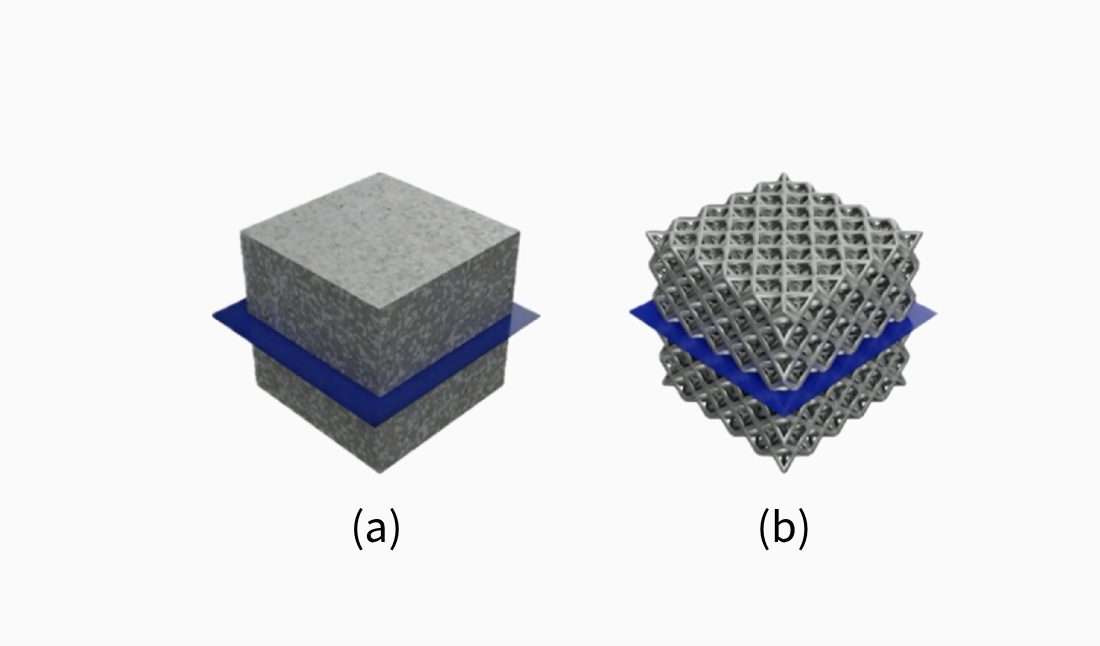
Source: sciencedirect.com
Which one do you think is easier to print and costs less using metal 3D printing?
You might expect the simple solid cube to be cheaper, while the intricate-looking lattice structure would cost more. Surprisingly, the opposite is generally true.
In fact, the lattice structure can be easier and more cost-effective to 3D print than the cube in many cases when using the same material. Here’s why:
Less material: the lattice has many gaps, using less material while maintaining strength, whereas the cube requires more material to fill.
Faster printing: the lattice has smaller print areas per layer, reducing print time; the cube needs to fill each layer, taking longer.
Better cooling: the lattice distributes material evenly, reducing overheating or warping and lowering failure rates.
No supports needed: the lattice is cleverly designed with built-in support, while the cube may require extra support, increasing costs and post-processing time.
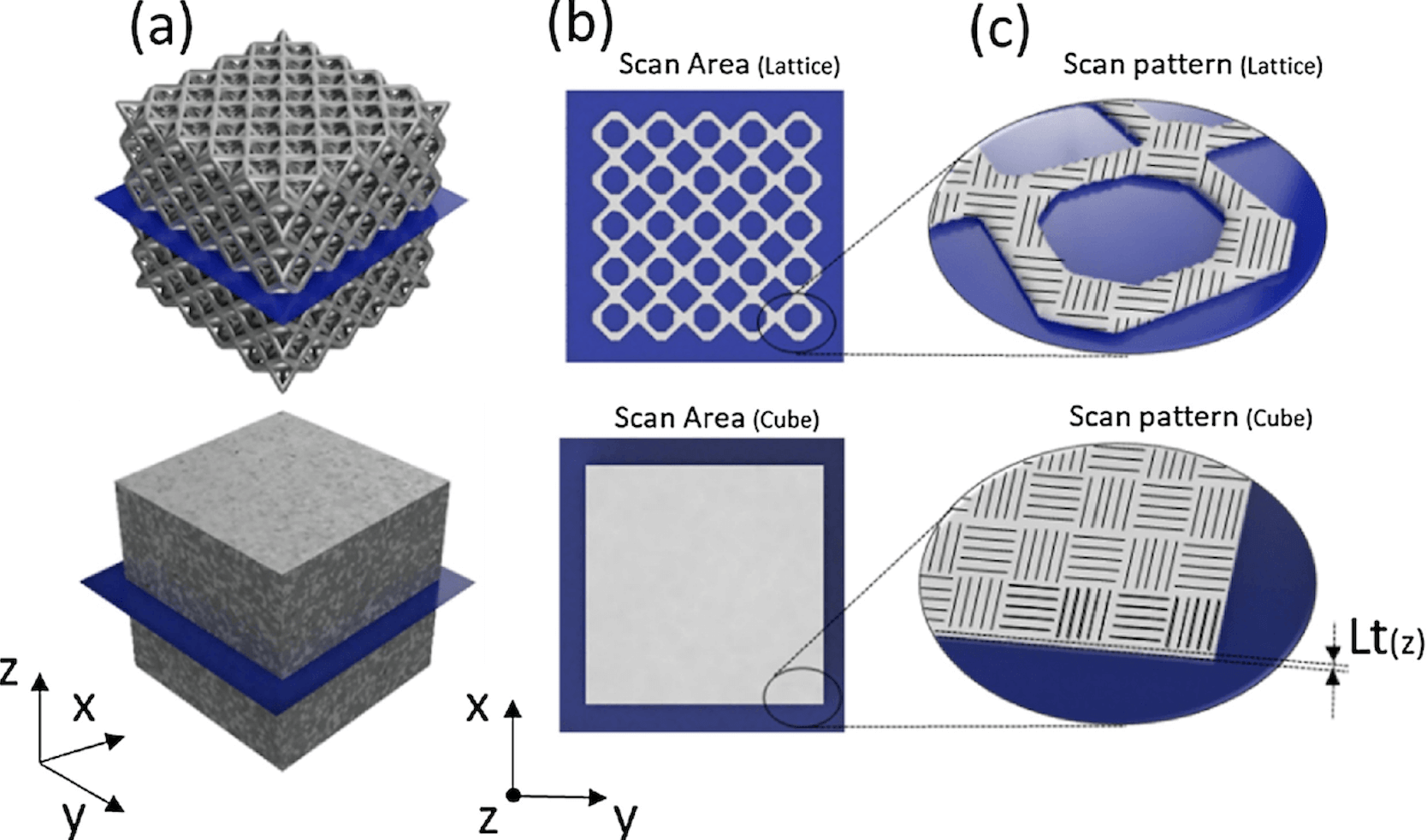
This example shows that a part’s appearance alone does not determine how difficult or expensive it is to manufacture. The lattice shown here is a regular, repeating structure that reduces material use and laser scanning time.
Note: In metal 3D printing, manufacturing complexity refers to design features that require additional supports, increase the risk of print failure, demand intensive manual handling, or reduce the efficient use of the build chamber. These features may result in a complexity surcharge.
But part geometry is only one piece of the puzzle. The cost of a metal 3D printing service is also influenced by factors such as printing technology, material, build time, post-processing, and more.
In this guide, we’ll break down the major cost factors and show you how to estimate and potentially reduce the cost of your metal 3D printed parts.
What is Metal 3D Printing?
Metal 3D printing, also known as metal additive manufacturing, builds metal parts layer by layer from a digital 3D model. Compared with conventional manufacturing methods such as CNC machining or casting, it offers greater design freedom and eliminates the need for dedicated tooling.
Metal 3D printing includes different technologies, such as SLM/DMLS and Metal Binder Jetting, as well as a wide range of metal 3D printing materials. Each technology and material has its own characteristics, making them suitable for different applications and requirements.
Key Cost Drivers of Metal 3D Printing Services
The cost of a metal 3D printing service depends on several factors. The table below provides a detailed breakdown of the key cost drivers and how they affect the final price.
Factor | How It Affects Cost |
|---|---|
Material Selection | Powder price differences: High-performance alloys such as Titanium and Inconel are generally more expensive than standard alloys such as Stainless Steel and Aluminum. |
Technology Selection | Process cost differences: Different technologies have different equipment, operating, and processing costs. SLM/DMLS is generally more expensive than Metal Binder Jetting, especially for larger production runs where Binder Jetting can benefit from batch processing. |
Part Design (DfAM) | Size, volume & weight: Solid, bulky parts generally consume more material and may require more printing time, whereas lightweight or lattice designs can reduce both. |
Order Quantity | Build efficiency: Producing multiple parts in the same build can distribute production costs across more parts and lower the cost per part when the build is packed efficiently. |
Post-Processing | Processing requirements: Support removal, depowdering, heat treatment, machining, polishing, and other surface finishing can all add to the final service cost. |
Material Cost for Metal 3D Printing
Material selection has a direct impact on metal 3D printing cost, as different alloys have different raw material and processing costs.
Material | Approx. Powder Price* |
|---|---|
Stainless Steel | $50–$150/kg |
Aluminum | $50–$150/kg |
Titanium | $300–$800/kg |
Inconel | $300–$1,000+/kg |
*Note: These are approximate raw material/powder prices, not metal 3D printing service prices. Actual prices vary by alloy, powder specification, supplier, and purchase volume.
More expensive powders generally result in higher material costs for the same amount of material used. This is why titanium 3D printing cost and Inconel 3D printing cost are generally higher than those of stainless steel or aluminum.
Metal 3D Printing Technology Selection
The choice of metal 3D printing technology can have a significant impact on the final service cost, as different processes require different equipment, production times, and post-processing.
SLM/DMLS uses a laser to melt metal powder layer by layer and is widely used for complex, high-performance parts. Metal Binder Jetting, on the other hand, uses a binder to form the part before debinding and sintering, making it well suited to producing multiple parts in a batch.
In general, SLM/DMLS tends to cost more for individual parts, while Binder Jetting can become more cost-effective for larger production runs. The most suitable option ultimately depends on the part’s requirements, quantity, and desired properties.
Part Design and Its Impact on Cost
In metal 3D printing, part complexity does not necessarily increase cost. Factors such as part mass, build height, support requirements, and powder removal can have a greater impact on production cost. Design for Additive Manufacturing (DfAM) helps optimize these factors before printing.
Design Factor | Impact on Cost | Cost-Saving Approach |
|---|---|---|
Solid Mass vs. Optimized Geometry | Solid regions generally require more material, laser scanning, and machine time than lightweight or lattice structures. | Use topology optimization, internal hollows, or lattice structures where appropriate to reduce material use and build time. |
Build Height & Orientation | Taller parts require more layers and recoater passes, increasing machine runtime. | Optimize build orientation to reduce overall build height where practical. |
Overhangs & Supports | Unsupported overhangs may require additional support material and increase post-processing labor. | Use self-supporting features such as chamfers, teardrop holes, or arched ceilings to reduce support requirements. |
Powder Traps & Drainage | Enclosed cavities can trap unused powder, making depowdering more difficult and increasing material waste. | Add appropriately sized escape holes or drainage channels to facilitate powder removal. |
Now that you know the key factors that affect metal 3D printing costs, you can use Unionfab’s cost calculator to get a quick estimate for your project.
How Is Metal 3D Printing Cost Calculated?
The total cost of a metal 3D printing order includes the printing itself, any applicable complexity surcharge, post-processing, and delivery-related expenses. A simplified cost estimation formula is:
Total Cost = Printing Cost (Material Unit Price × Part Weight) + Complexity Surcharge + Post-Processing + Packaging + Shipping + Customs Duty
Cost Component | What It Includes |
|---|---|
Printing Cost | Material unit price × part weight |
Complexity Surcharge | Additional machine time, support material, manual labor, specialized handling, or lost build capacity caused by certain design features |
Post-Processing Cost | Support removal, heat treatment, machining, polishing, inspection, and other finishing |
Packaging Fees | Standard or specialized packaging for safe transportation |
Shipping Fees | Transportation based on package weight, size, destination, and shipping method |
Customs Duty | Import duties or taxes, where applicable |
Printing Cost
Material Unit Price: The unit price of the metal material, typically measured per gram or kilogram. Materials such as stainless steel, titanium, and aluminum can vary significantly in price.
Part Weight: The actual or estimated weight of the finished part, depending on its geometry and material usage.
Example:
Model Volume: 10 cm³
Material Used: 316L Stainless Steel
Density of Material: 7.9 g/cm³
Material Unit Price: $0.4/g
Printing Cost = Model Volume × Material Density × Material Unit Price
Printing Cost = 10 cm³ × 7.9 g/cm³ × $0.4/g = $31.6
Note: The material price is for illustration only. Actual prices vary by material, quantity, supplier, and other production factors.
Complexity Surcharge
A part that looks geometrically complex is not necessarily more expensive to print. For example, a regular, repeating lattice structure may use less material and require less laser scanning time than a solid part made from the same material.
In metal 3D printing, a Complexity Surcharge may apply when specific design features create additional manufacturing challenges beyond standard printing conditions. These challenges may include increased support requirements, longer machine time, a higher risk of print failure, intensive manual handling, or inefficient use of the build chamber.
This is not a fee for design consulting. It reflects the additional production resources, machine capacity, and manual work required to manufacture the part successfully. Below are three common scenarios where a complexity surcharge may apply:
Manufacturing-Intensive Geometry: Certain designs—such as inaccessible internal channels, deep cavities, non-self-supporting lattices, or intricate features that require extensive supports—can increase material waste, laser scanning time, and manual post-processing work. By contrast, a well-designed, self-supporting lattice does not automatically incur a surcharge.
Thin-Walled and Fragile Features: Delicate or thin-walled features are highly prone to warping and breakage, significantly increasing the risk of print failure. A surcharge may apply to account for the additional process control, potential resource waste, and specialized handling required to manage these structural risks.
Elongated Dimensions: If a part is exceptionally long or tall, it may occupy a disproportionate amount of space within the build chamber. This awkward footprint can prevent other parts from being efficiently nested into the same production batch. Because the part reduces the machine’s overall throughput efficiency, a surcharge may be necessary to cover the lost production capacity.
To better understand why certain designs create additional manufacturing costs, read our full article: Why Complex Designs Cost More in 3D Printing?
Post-Processing Cost
Post-processing costs vary depending on several factors, including the type of post-processing required, the size and complexity of the part, the material used, and the printing technology applied. Below are three common methods for pricing post-processing services:
Hourly Rate: This is commonly used when post-processing tasks involve time-intensive procedures like surface treatments or mechanical machining.
Per Part Rate: For simpler post-processing steps, such as polishing or basic finishing, a fixed fee per part is applied.
Weight or Volume Rate: For processes that require significant resources, such as heat treatment, some providers charge based on the weight or volume of the part.
Packaging Fees
Packaging fees are an important consideration in the overall cost of metal 3D printing, especially for parts that are heavy, have intricate geometries, or are particularly sensitive to impact during transit. Given the nature of metal parts, proper packaging is essential to avoid any damage during shipping, especially when they have delicate features or are made of materials that can be prone to surface damage.
Standard Packaging (Free): For smaller and less complex metal parts, standard packaging is typically sufficient. This includes corrugated boxes with bubble wrap or foam padding to cushion the items during transit.
Protective Packaging (Paid): More complex or heavier metal parts, or parts with intricate geometries, may require additional protective packaging to ensure safe delivery. This can include wooden crates or custom-made flight cases. Below is a cost breakdown:
1. Wooden Crates:
For small to medium-sized metal parts, simple wooden crates generally range from $50 to $300.
For larger or more complex metal parts, the cost of crates can increase to $500 or more, depending on the size, material, and reinforcement required.
2. Custom-Made Flight Cases:
Basic custom flight cases for smaller metal parts can cost around $200 to $500.
For larger, highly specialized metal parts requiring tailored padding and advanced materials, prices for custom flight cases can range from $800 to $2,000 or more.
Shipping Fees
Shipping fees are another important factor in the total cost of metal 3D printing, especially for international shipments. Shipping costs can vary depending on the size, weight, and destination of the metal parts. Different carriers (e.g., FedEx, UPS, DHL) will offer varying rates based on the urgency and delivery service selected.
Customs Duty
For international shipments of metal 3D printed parts, customs duties may apply according to the destination country's import regulations. These duties typically range from 5% to 20% of the total product value, depending on the specific tariffs and regulations of the destination country.
How to Reduce Metal 3D Printing Costs
Reducing metal 3D printing costs starts with making the right decisions before production. From part design and material selection to build orientation, order quantity, and post-processing, small adjustments can reduce material use, machine time, and additional processing costs.
The following strategies can help you lower the overall cost while still meeting your part requirements:
Cost-Saving Strategy | How It Helps |
|---|---|
Optimize Part Geometry with DfAM | Reduce unnecessary material, build time, and production complexity. |
Reduce Support Structures | Lower support material usage and post-processing labor. |
Choose the Right Material and Technology | Meet performance requirements without unnecessarily increasing material or processing costs. |
Optimize Build Orientation | Reduce build height, supports, and machine time. |
Increase Order Quantity | Spread setup and other shared production costs across more parts when build packing is efficient. |
Avoid Unnecessary Tolerances and Finishes | Reduce machining, finishing, and inspection requirements where they are not essential. |
Reduce Post-Processing Requirements | Avoid unnecessary heat treatment, machining, polishing, or other finishing steps. |
Comparison of Metal 3D Printing Service Providers
When choosing a metal 3D printing service provider, it’s important to consider various factors such as the technologies they offer, available materials, build volume, pricing, and customer reviews. The table below compares leading service providers based on these aspects to help you make an informed decision.
Service Provider | One-line Profile | Technology | Material | Max Build Size | Online Instant Quoting System | *Sample Cost | Trustpilot Score |
|---|---|---|---|---|---|---|---|
Xometry | A US-based global factory-less 3D printing supply chain platform | SLM/DMLS, Metal Binder Jetting | SLM/DMLS: | SLM/DMLS: | ✅ | $575.26 | 4.6 |
Unionfab | A China-based global 3D printing service provider with six in-house 3D printing factories | SLM/DMLS, Metal Binder Jetting | SLM/DMLS: | SLM/DMLS: | ✅ | $45.49 | |
Facfox | A China-based global factory-less 3D printing supply chain platform | SLM/DMLS | SLM/DMLS: | SLM/DMLS: | ✅ | $46.93 | 4.2 |
Additive3dasia | A Singapore-based 3D printing company | SLM/DMLS | SLM/DMLS: | Not mentioned | ✅ | / | / |
Zelta3d | A Singapore-based 3D printing company | SLM/DMLS | SLM/DMLS: | Not mentioned | ✅ | $92.07 | / |
Addimen | A Spain-based 3D printing company | SLM/DMLS | SLM/DMLS: | Not mentioned | ❌ | / | / |
Jellypipe | A Germany-based global factory-less 3D printing supply chain platform | SLM/DMLS | SLM/DMLS: | Not mentioned | ✅ | $439.56 | / |
Rapidobject | A Germany-based global 3D printing service provider with factories | SLM/DMLS | SLM/DMLS: | Not mentioned | ✅ | $583.56 | / |
*Note: The Sample cost is calculated via the online instant quoating systems of each company above.
Volume: 74.62 cm³; Material: Stainless Steel 316L; Tech: Selective Laser Melting (SLM)
In summary,
Xometry and Unionfab offer both SLM/DMLS and Metal Binder Jetting Technologies.
Xometry, Unionfab, and Facfox provide relatively rich metal materials.
Facfox has the largest build size for SLM/DMLS: 500 x 500 x 1000 mm.
Xometry, Facfox, and Jellypipe are factory-less supply chain platforms, while Unionfab and Rapidobject have self-owned factories.
Metal 3D Printing Case Studies by Unionfab
At Unionfab, we’ve successfully applied metal 3D printing across a wide range of industries. Below, you’ll find examples of our completed projects showcasing the versatility and precision of metal 3D printing in automotive, aerospace, industrial, medical, and design applications.
Industry | Case |
|---|---|
Automotive | 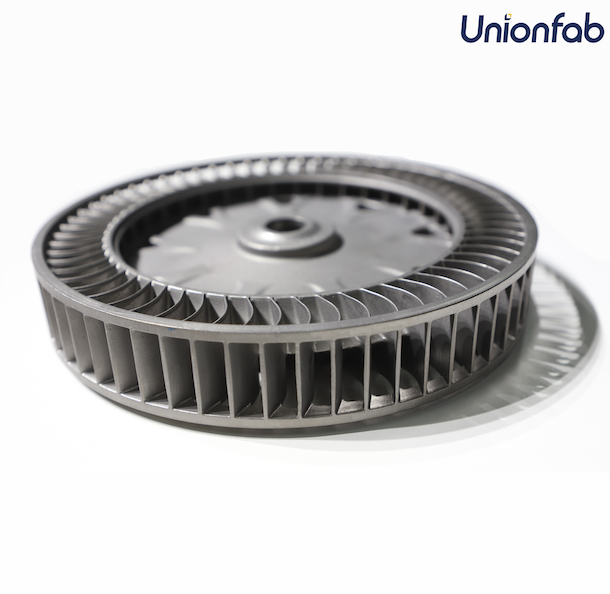 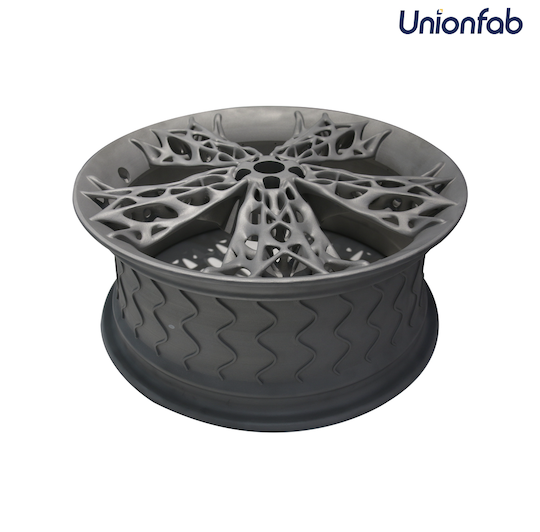 |
Aerospace | 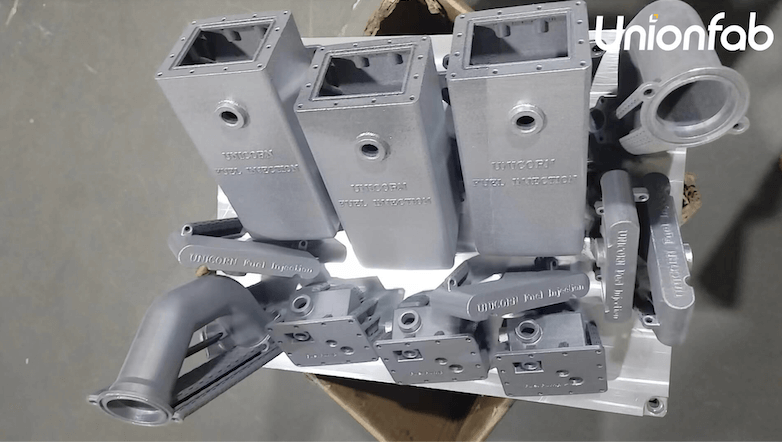 |
Industrial | 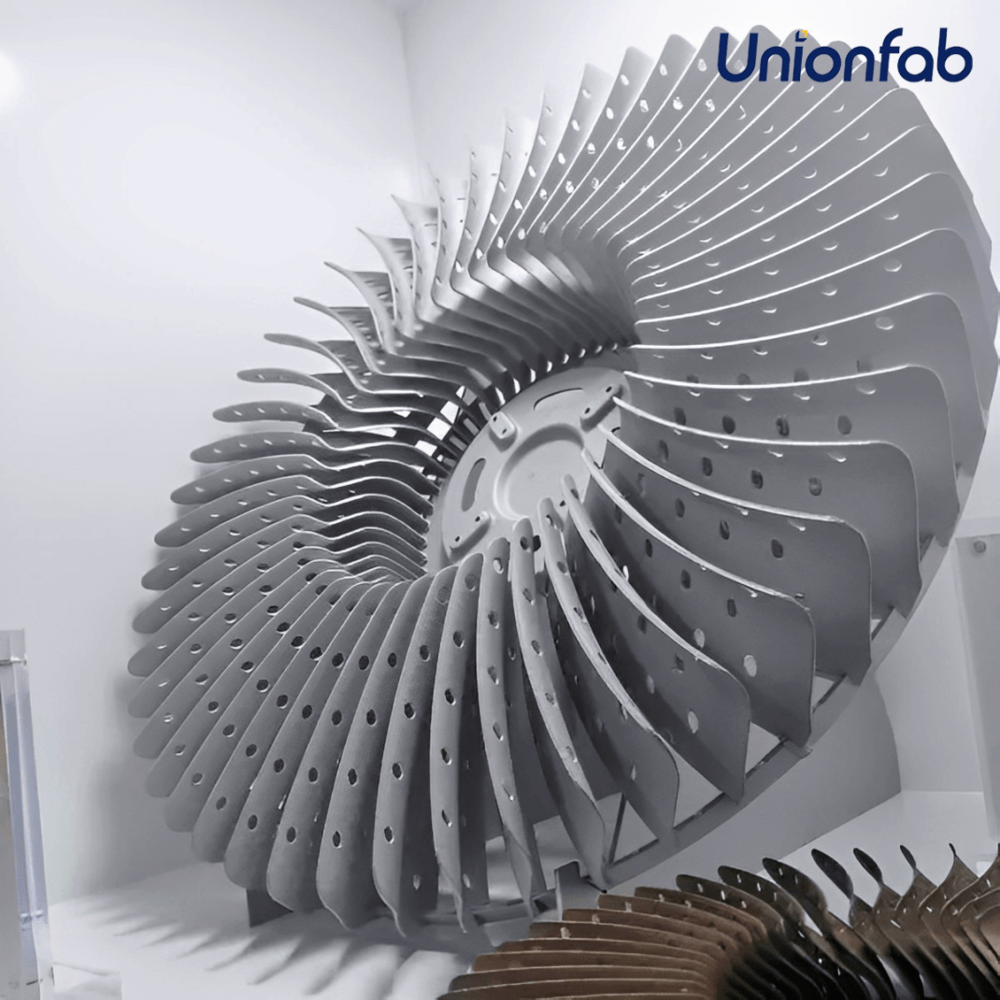 |
Medical | 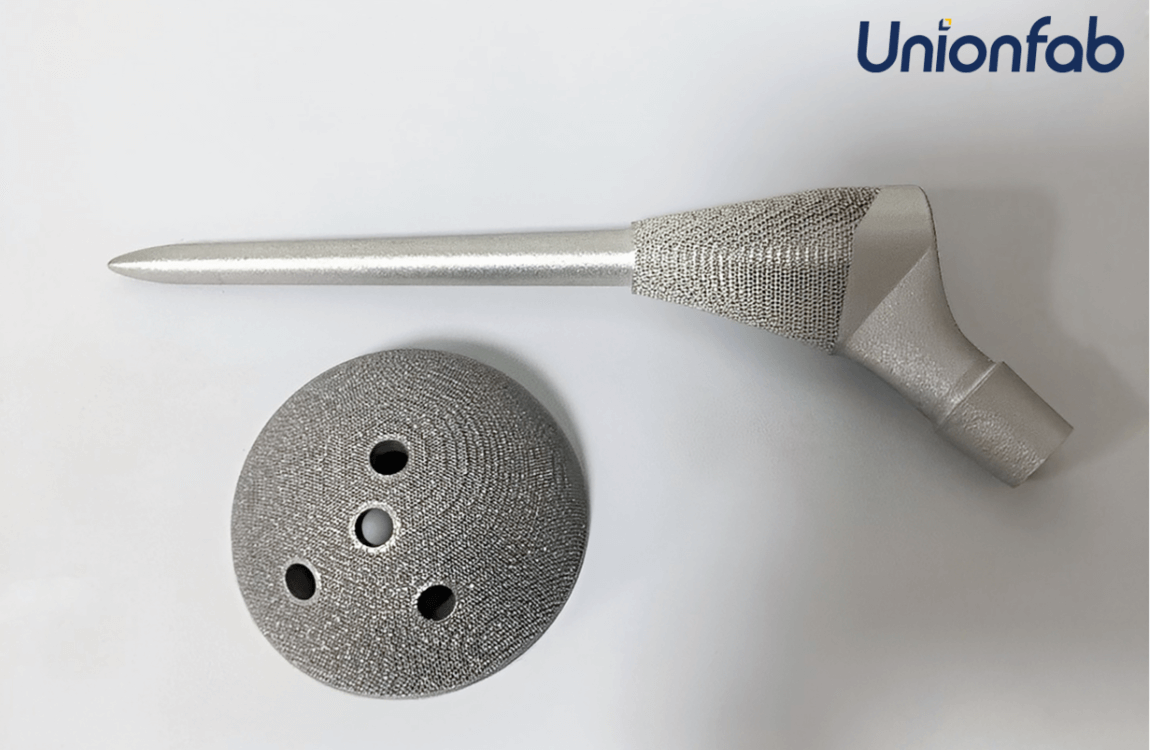 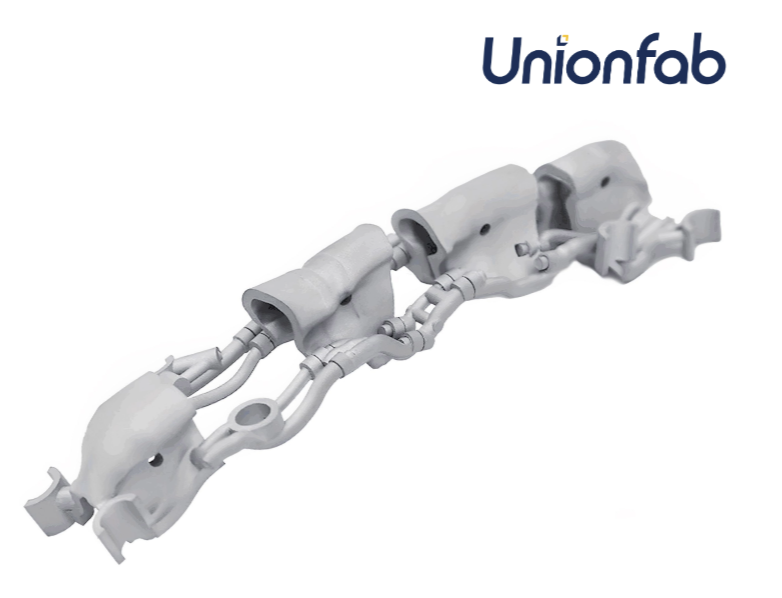 |
Design | 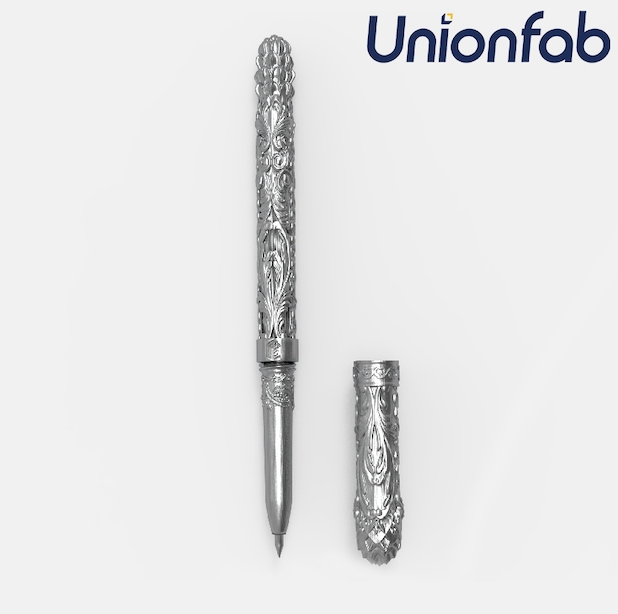 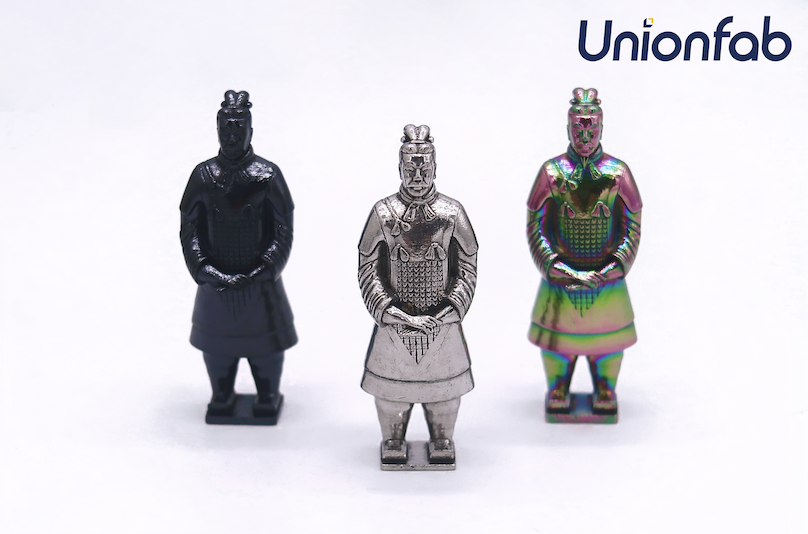 |
Unionfab's Metal 3D Printing Services
Unionfab offers advanced metal 3D printing services with a range of materials and technologies, including SLM/DMLS and Binder Jetting. With state-of-the-art equipment and high-quality standards, we ensure precise and reliable results for your metal parts.
Whether you need complex geometries or high-performance materials, our services provide a variety of options to meet your needs.
Below is a summary of our metal 3D printing capabilities:
Feature | SLM / DMLS | Binder Jetting |
|---|---|---|
Materials | Aluminum (AlSi10Mg, 6061), Titanium (TC4), Stainless Steel 316L, Stainless Steel 17-4PH, Maraging Steel, Inconel 625, Inconel 718, CuCrZr | Stainless Steel 316L, Stainless Steel 17-4PH |
Build Size | Up to 400 × 300 × 400 mm | Up to 430 × 300 × 140 mm |
Layer Thickness | 0.035 mm | 0.05 mm |
Dimensional Tolerance | ±0.2 mm | ±0.3 mm |
Minimum Wall Thickness | 0.5 mm | 2.0 mm |
Pass Rate | 99.5% | 99.5% |
Lead Time | As fast as 4-5 days | As fast as 4-5 days |
On-Time Delivery Rate | 98% | 98% |
Certification | ISO 9001, 14001, 13485 & IATF 16949 | ISO 9001, 14001, 13485 & IATF 16949 |
Post-Processing Service
At Unionfab, we offer more than just high-quality printing. Our comprehensive finishing services, including sandblasting, electroplating, polishing, and more, are designed to improve the smoothness, strength, and appearance of your parts. This ensures that every component is ready for production and customized to meet your specifications.
Quality Assurance Report
In addition to affordable 3D printing, we provide quality assurance services to ensure the highest standards. If requested, we can include a detailed QA report with your shipment to guarantee consistency and reliability.
New to Unionfab? Enjoy a special discount! Sign up now and get 10% off your first order!
FAQs
Is Metal 3D Printing Worth It?
Metal 3D printing is worth it for businesses needing high-precision, complex, and customized metal parts. Although it can be more expensive upfront, the benefits, including faster prototyping, reduced waste, and greater design flexibility, often justify the cost.
What is a Metal 3D Printing Cost Calculator?
A metal 3D printing cost calculator helps you estimate the cost of your project quickly. By uploading your 3D model, the calculator factors in material, part weight, complexity, and post-processing requirements to give you an accurate price.
What is the Cost of Metal 3D Printing per Gram?
Metal 3D printing costs are typically calculated per gram of material. For example, stainless steel may cost around $0.4 per gram, while materials like titanium range from $2 to $4 per gram, depending on the type.
What is the Cost of Metal Powder for 3D Printing?
The cost of metal powder for 3D printing varies depending on the material. Stainless steel powders can cost between $60 to $100 per kilogram, while premium materials like titanium or Inconel can range from $500 to $1000 per kilogram.