
Explore Unionfab's latest automotive customization case study. See how SLA 3D printing ensures exact fitment and premium surface finishes for custom car parts.
Introduction
In high-end automotive customization, transforming a conceptual vision into a physical reality requires flawless execution across design, assembly, and manufacturing.
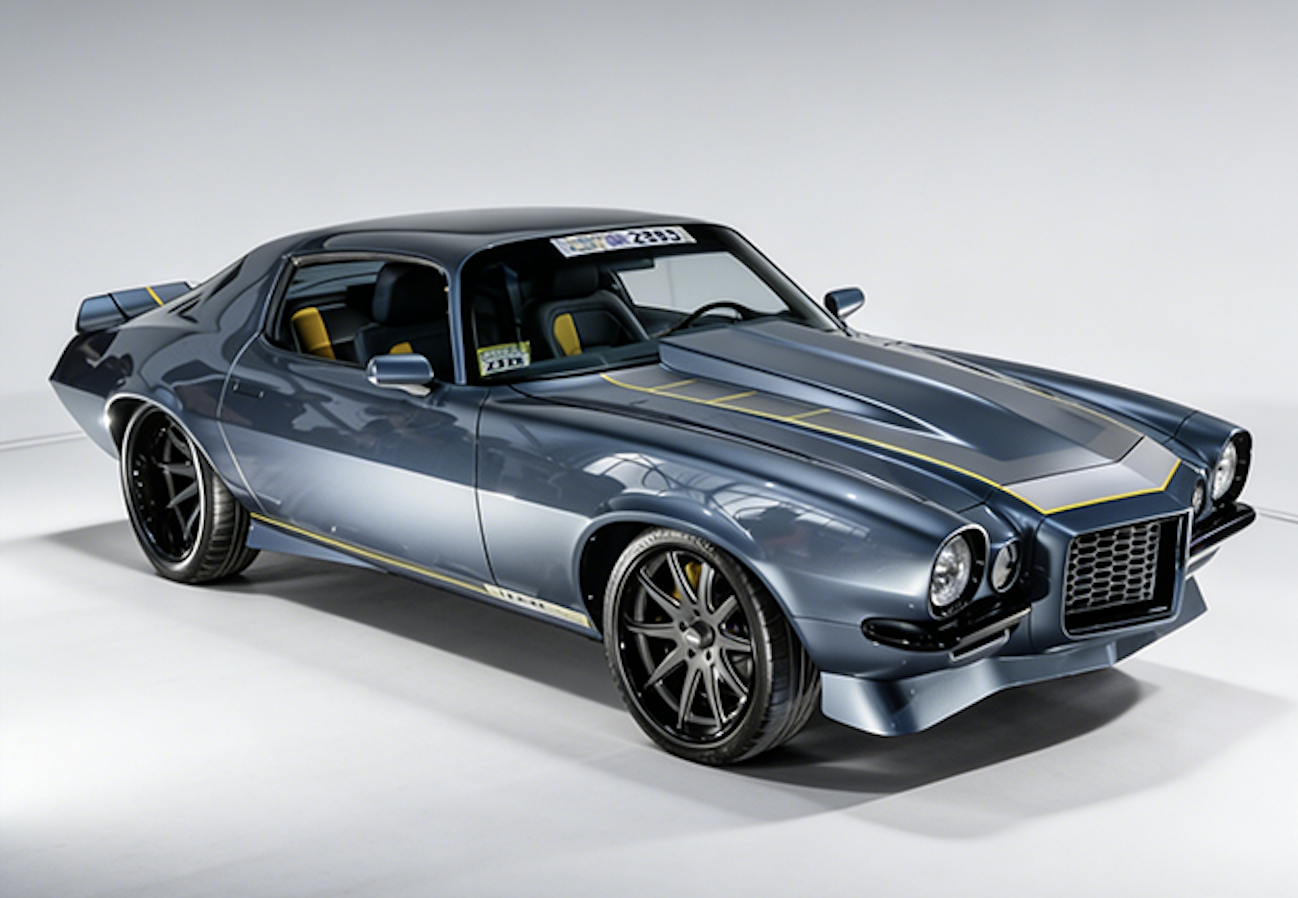
This case study explores a recent collaboration where Unionfab provided precision 3D printing support for a premium aftermarket vehicle build, working alongside designer Aidan Donald at ADI and the expert build team at Pat's Pro Restos and Refinishing.
To bring vehicle owner Andrew McArtney's vision to life, the project demanded exact fitment, showroom-ready surface finishes, and highly predictable production timelines.
By leveraging advanced SLA 3D printing technology, we successfully delivered a custom grille and interior suite that seamlessly bridged the gap between complex digital blueprints and physical installation, eliminating the need for traditional tooling while keeping the rigorous build schedule strictly on track.
Project Overview
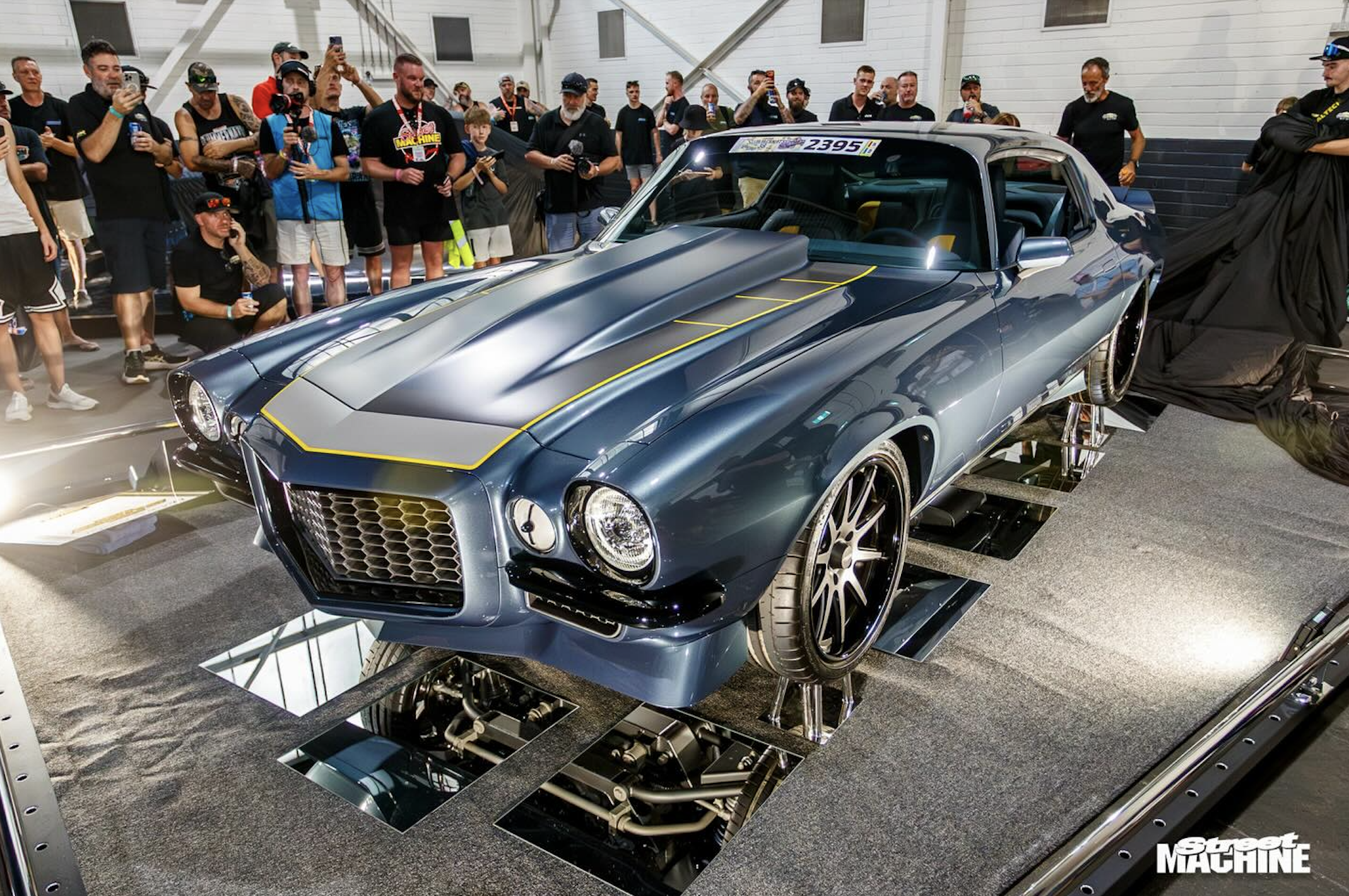
The table below outlines the key information about this project, including the components produced, manufacturing technology, and project collaborators.
Category | Details |
|---|---|
Project Type | High-end automotive customization project |
Components Produced | Custom grille, dashboard inserts, center console inserts |
Manufacturing Technology | |
Materials Used | |
Car Owner | Andrew McArtney |
Car Designer & CAD | Aidan Donald at ADI (Aidan’s Design & Illustration) (Facebook|Instagram) |
Car Builder | |
Manufacturing Partner | Unionfab |
Project Background & Challenge: Precision in High-End Customization
This project involved producing a set of custom 3D-printed interior and exterior components for a high-end vehicle customization build.
The design was developed by Aidan Donald at ADI, who created detailed CAD models with tight fitment tolerances and intricate geometry. The challenge for manufacturing was to translate these digital designs into physical parts while preserving their accuracy and fine details.
At the same time, the build team at Pat's Pro Restos and Refinishing needed components that could integrate smoothly with the vehicle during assembly. Any inconsistency in the parts could lead to additional adjustments and delays in the build schedule.
To support both the design and build teams, the manufacturing process needed to focus on three key requirements:
Tight Dimensional Control: Maintaining accurate tolerances so the parts fit correctly during installation.
Clean Surface Quality: Producing smooth finishes suitable for visible interior and exterior components.
Predictable Delivery: Ensuring reliable production timelines aligned with the vehicle build schedule.
Solution: SLA 3D Printing for Custom Car Parts
To meet the requirements of precise fitment, refined surface quality, and predictable production timelines, SLA 3D printing was selected as the manufacturing method for this project.
SLA Technology Advantages
High Accuracy and Premium Finish: SLA technology is well suited for producing detailed components with high dimensional accuracy and smooth surface finishes. These characteristics are particularly important for custom automotive parts installed in visible areas of a vehicle's interior or exterior.
Agile Small-Batch Production: The technology supports efficient low-volume manufacturing. This is often necessary for customization projects where design refinement and part iteration may occur during the build process.
Targeted Material Selection
Nylon-like Resin was selected for all components in this project, providing an optimal balance of dimensional stability, clean visual finish, and consistent print quality.
This choice directly addresses the fitment, surface, and delivery requirements established at the outset of the project.
Project Results
The completed components were successfully integrated into the vehicle during the final assembly stage. The printed parts maintained strong consistency with the original CAD models, allowing them to be installed with minimal adjustment while preserving the intended design details.
Below are several key components from the project, highlighting the premium surface quality of the 3D printed parts and their seamless integration into the final vehicle build.
Grille
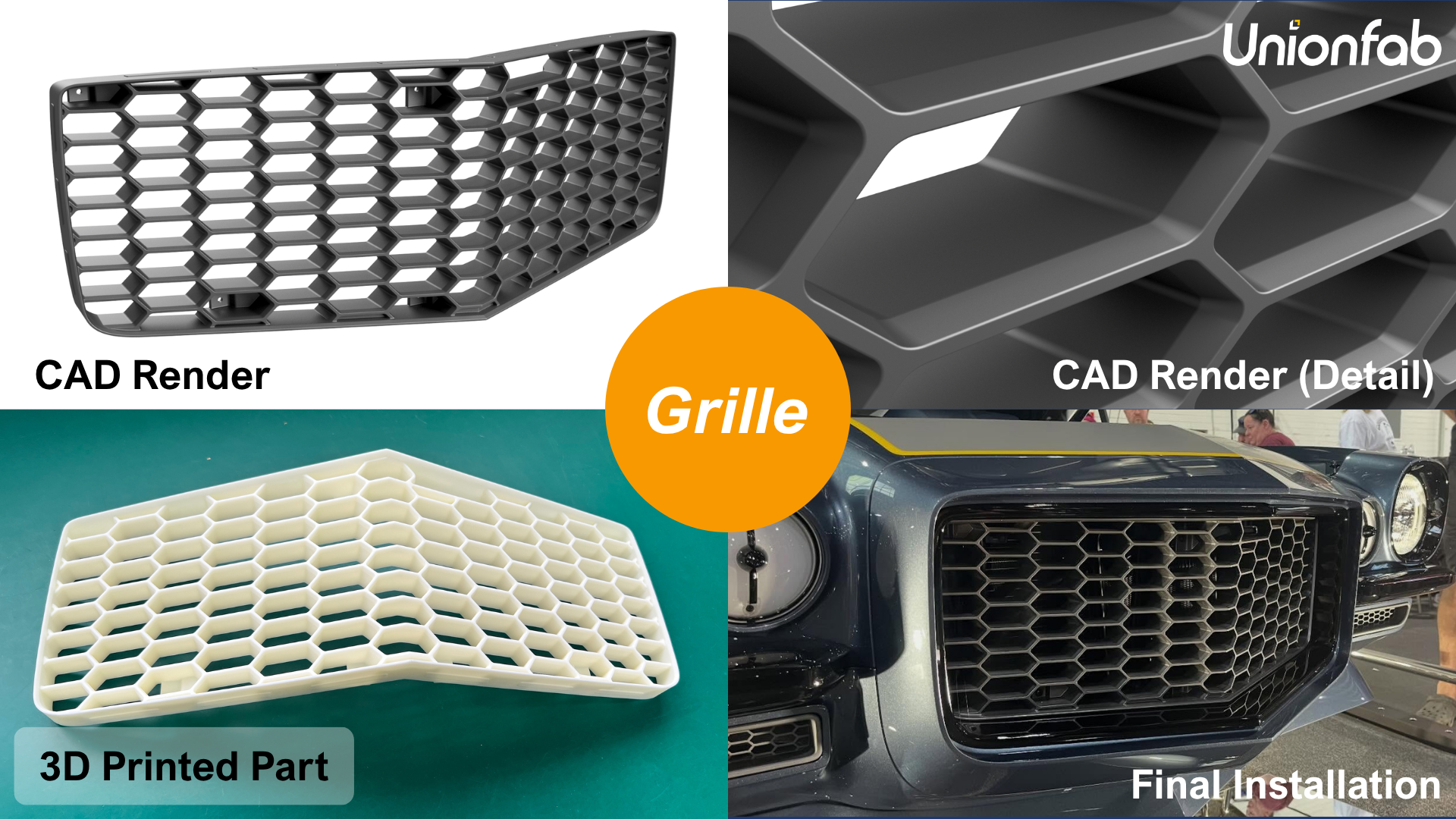
The grille was printed using Nylon-like Resin to ensure exceptional dimensional stability and a premium surface finish for this prominent exterior component. The complex hexagonal mesh structure was reproduced with consistent cell dimensions and sharp, clean edges across the entire surface, accurately preserving the visual character of the original design.
Dashboard Insert
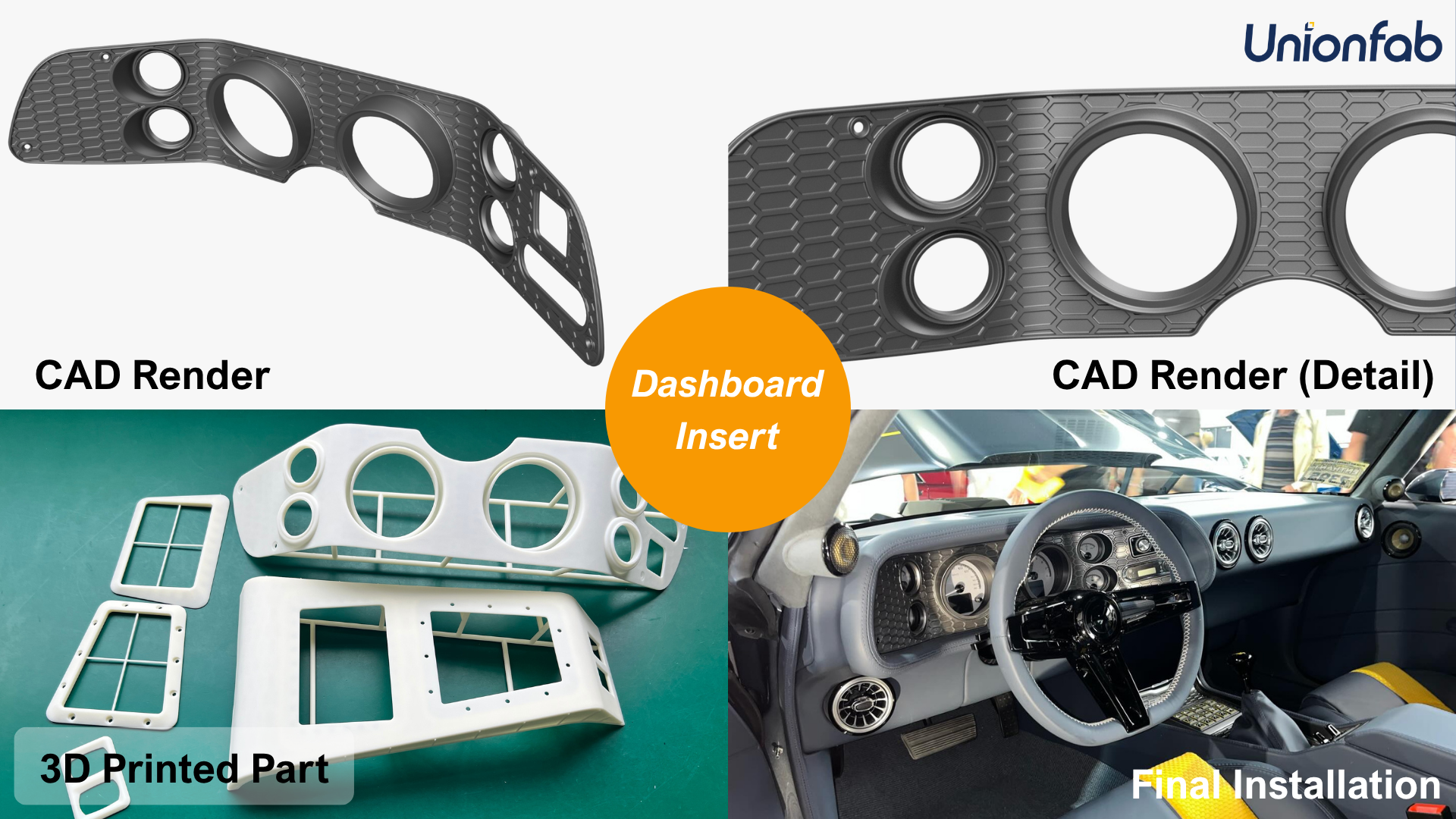
The dashboard inserts were printed in Nylon-like Resin, selected for its dimensional stability and structural consistency for mounting interior instruments. The printed parts maintained strict alignment with the original CAD geometry, integrating smoothly with the surrounding interior components.
Console Insert
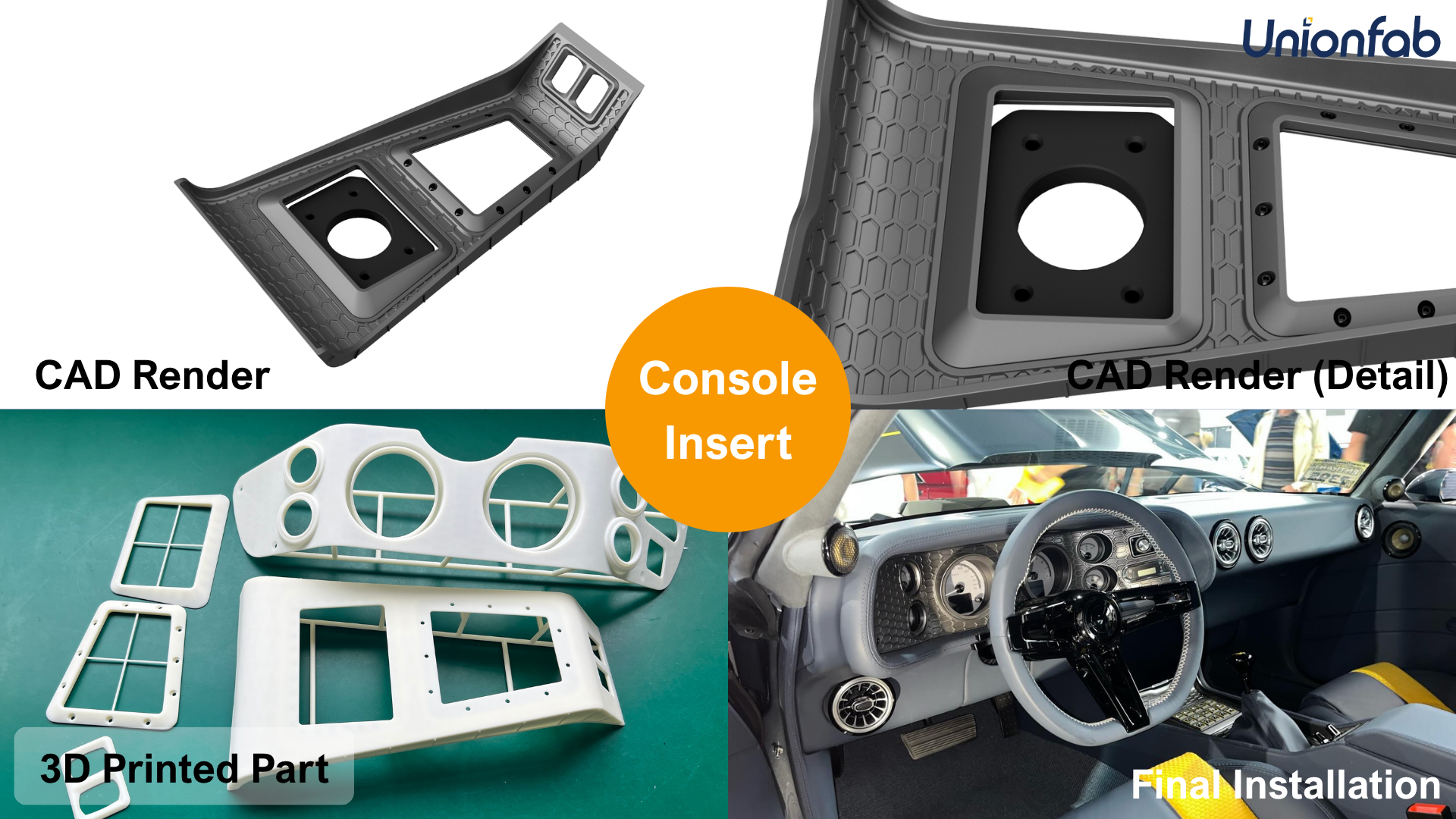
The console inserts were printed in Nylon-like Resin to achieve the high dimensional accuracy required across multiple complex interface points. The excellent stability of this material ensured that the printed parts aligned perfectly with the vehicle’s existing framework, enabling seamless installation without the need for additional manual adjustments.
Quality Verification
To ensure reliability before delivery, each component underwent dimensional and visual inspection. This verification process confirmed that the printed parts matched the design specifications and met the surface quality requirements for visible automotive components.
The final components were well received by both the design and build teams, confirming that the parts met expectations for fit accuracy, surface finish, and installation efficiency.
Client Feedback
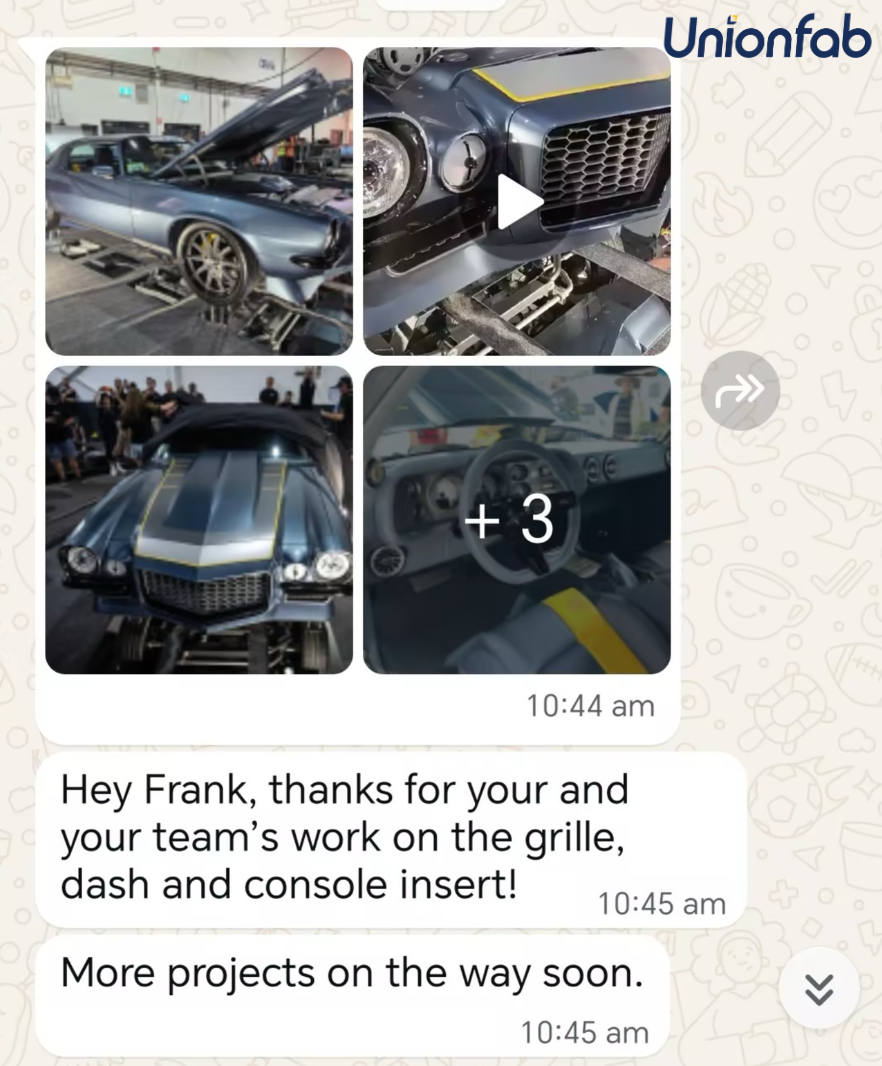
The client expressed appreciation for the work and mentioned that more projects are already on the way.
Industry Insight: The Role of 3D Printing in Modern Automotive Customization
The high-end automotive aftermarket is undergoing a noticeable shift in how custom components are manufactured. While traditional methods such as CNC machining and injection molding remain effective for large-scale production, they often lack the flexibility required for premium, low-volume vehicle builds.
In custom automotive projects, several practical challenges frequently arise:
Tooling costs for one-off parts: Creating molds or specialized fixtures for a single vehicle build can quickly increase project costs.
Limited flexibility during design iterations: Late-stage design adjustments can require significant rework when using traditional manufacturing methods.
Long lead times: Custom tooling and machining processes may delay vehicle build schedules.
3D printing helps address these challenges by providing a more adaptable manufacturing approach. For automotive customization studios, it offers several practical advantages:
Tooling-free production: Eliminates the need for molds or specialized fixtures, making it ideal for one-off builds and small-batch parts.
High design freedom: Enables complex geometries such as meshes, vents, and decorative structures that are difficult to achieve with traditional methods.
Fast iteration cycles: Allows rapid design adjustments during the vehicle build process.
Consistent dimensional accuracy: Ensures reliable fitment and easier installation of custom components.
As a result, many automotive customization teams now incorporate additive manufacturing into their workflow. It provides a practical bridge between digital design and physical vehicle assembly while maintaining the precision expected in premium automotive builds.
How Unionfab Supports Custom Automotive Projects
With 20+ years of expertise, 1,000+ industrial 3D printers, and 6 cutting-edge factories, Unionfab is equipped to handle everything from one-off bespoke car mods to repeatable, low-volume automotive parts production.
Technologies & Materials
Unionfab supports custom automotive projects with a range of additive manufacturing technologies and engineering materials suitable for both visual and functional components.
Core Technologies: SLA (Stereolithography) for ultra-smooth interior components, alongside SLM, SLS, and MJF for functional and structural automotive parts.
Automotive-Grade Materials: Nylon-like Resin, Tough Resin, ABS-like materials, and a range of high-performance metals, including aluminum, titanium, and stainless steel.
Reliability: A 99.5% production pass rate and a 98% on-time delivery rate help ensure predictable production timelines for custom vehicle builds.
Post-Processing Capabilities
In automotive customization, surface finish is just as critical as dimensional accuracy. Our post-processing capabilities include:
Painting & Coating: Custom color matching, Powder Coating, Clear Coating
Surface Refinement: Polishing, Sandblasting, Shot Peening
Plating: Chrome Plating, Nickel Plating, Zinc Plating
Detailing: Texture Finishing (VDI, SPI, MOLD Texture) and Laser Engraving
Ready to start your custom automotive project? New customers enjoy 10% off their first order!
Want to estimate the cost of your next build? Get a transparent instant quote in minutes!
Acknowledgement
We extend our sincere appreciation to the exceptional teams who brought this vehicle to life. It was a privilege to provide the precision manufacturing support for their collaborative vision: