
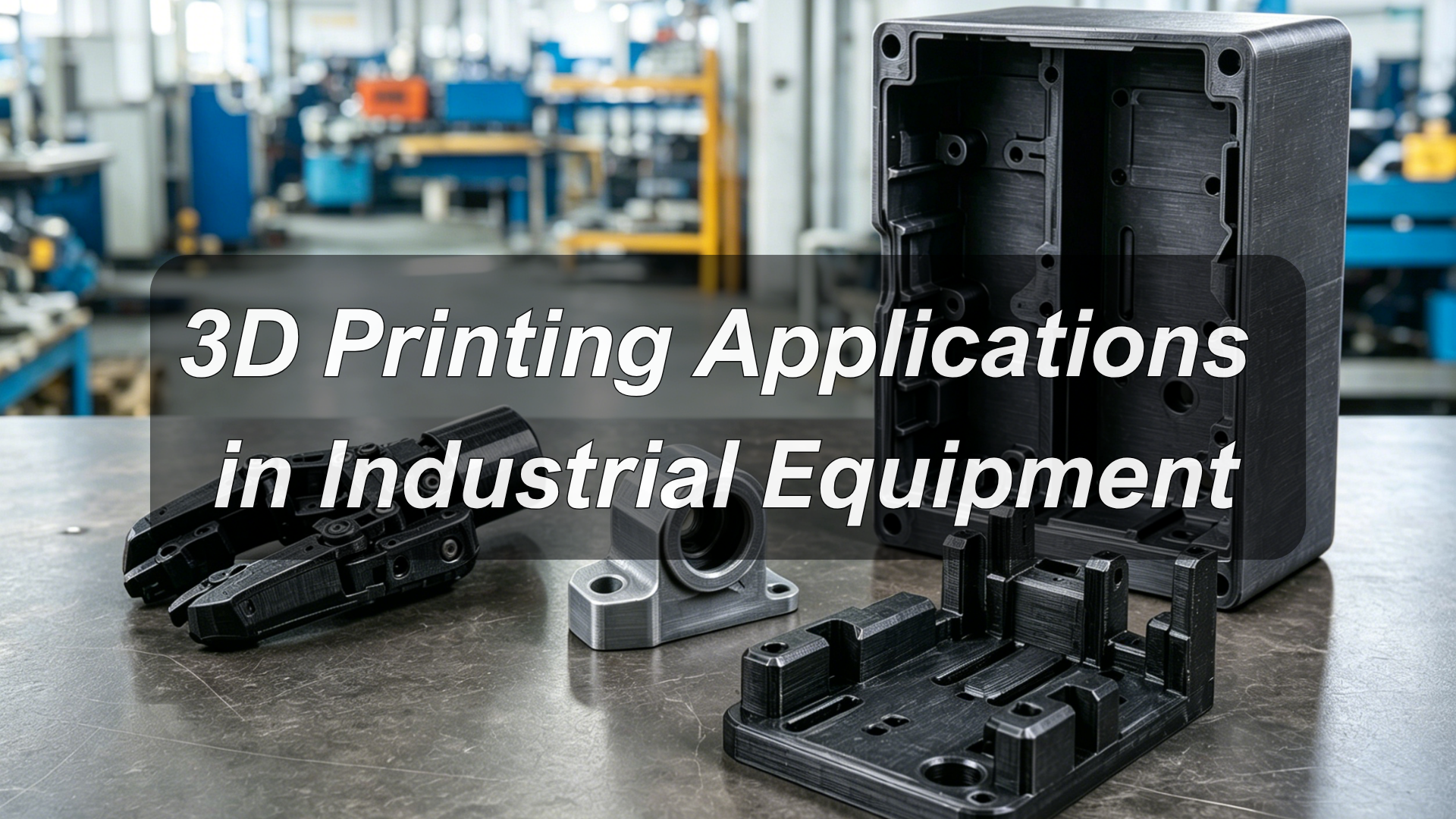
Discover how 3D printing supports industrial equipment: from early-stage prototypes and shop-floor jigs to machine components, robotic tooling, and on-demand spare parts.
Introduction
In industrial equipment manufacturing, production delays often come down to small, hard-to-source parts. Whether it's a discontinued component, a custom part stuck in machining queues, or costly prototype iterations, low-volume customization creates real bottlenecks.
Traditional manufacturing methods lack the flexibility to handle these non-standard, small-batch needs efficiently. 3D printing services bridge this gap by providing on-demand access to industrial processes and materials, without requiring in-house equipment or expertise.
This article examines how 3D printing services can support five distinct stages across the full industrial equipment lifecycle:
Step 1 - Prototype Testing & Design Validation (R&D Phase): Print prototypes to verify fit and form before the design is finalized, catching issues early before tooling or production commitments are made.
Step 2 - Jigs & Fixtures (Production Preparation): Once manufacturing begins, produce custom assembly aids on demand to guide and accelerate machine construction on the shop floor.
Step 3 - End-Use Machine Components (Core Manufacturing): Print low-volume brackets, housings, and selected machine internals without minimum order quantities, integrated directly into the equipment you build.
Step 4 - End-of-Arm Tooling & Grippers (Automation Integration): After the machine is built, customize lightweight grippers and EOAT for robotic handling and automation cells, enabling flexible, application-specific integration.
Step 5 - On-Demand Spare Parts (Aftermarket & Maintenance): Once equipment is in the field, maintain a digital parts library to print legacy replacement parts on demand, eliminating long lead times and costly downtime for your customers.
1. Prototype Testing & Design Validation
For large or complex equipment, physical prototypes are essential for reviewing ergonomics and internal layouts that CAD alone may not fully capture. This proactive approach accelerates iteration cycles and significantly reduces the risk of costly design errors during the late stages of development.
Examples: equipment housings, enclosure panels, airflow ducts, full-scale mockups, and assembly-validation models.
Case 1: Airbus: Prototype Iteration for Aircraft Interior Components
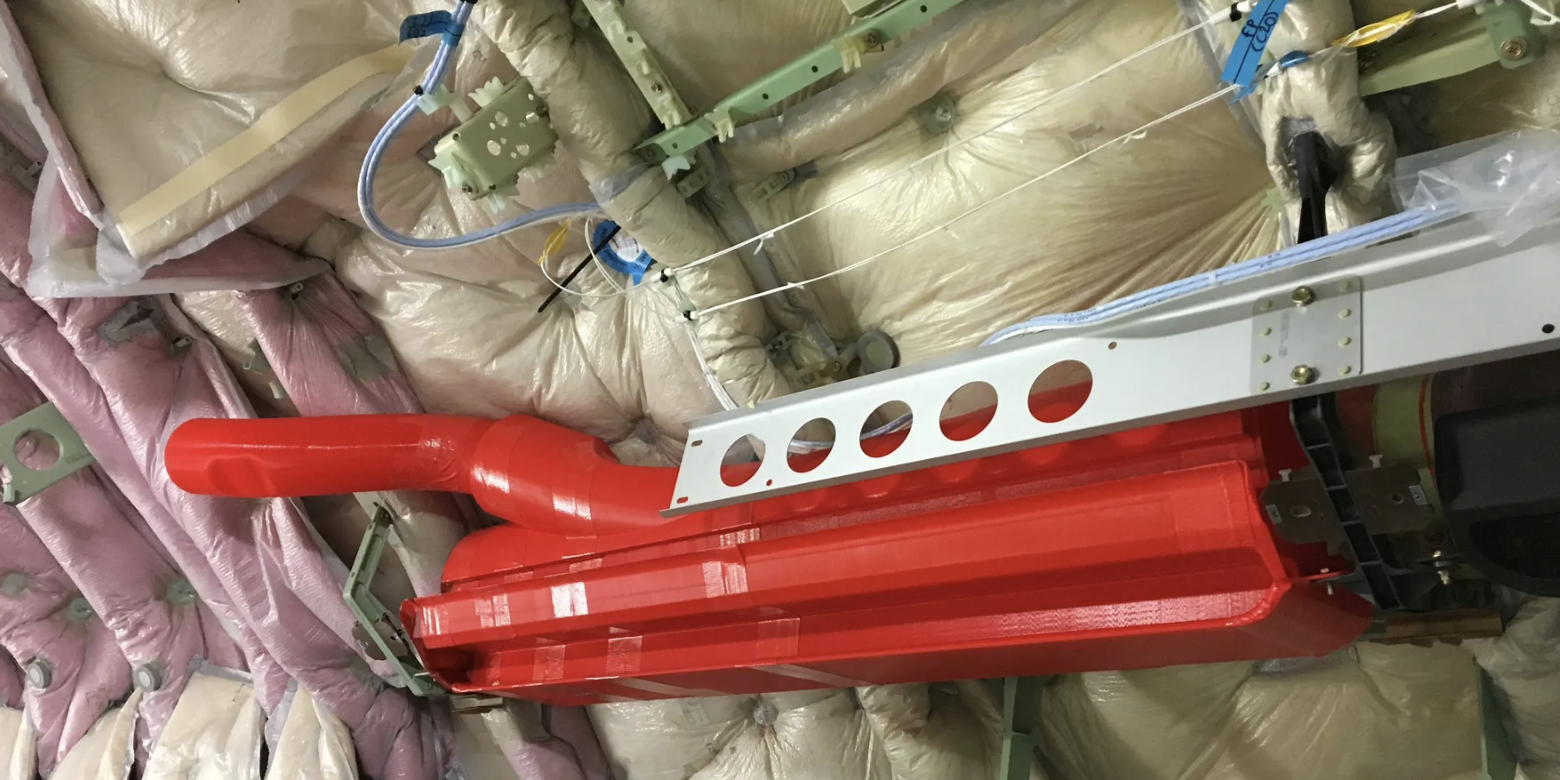
Airbus uses 3D printing to prototype aircraft interior components such as panels, linings, and covers in full scale. Previously, each design iteration required outsourcing CNC machining to create molds, which is a process that took weeks per cycle.
With 3D printing, engineers can print a part, evaluate it, redesign it, and repeat the cycle in-house until the design is finalized, significantly compressing development time.
Source: www.airbus.com
Case 2: Siemens Energy: Rapid Prototyping and Proof-of-Concepts
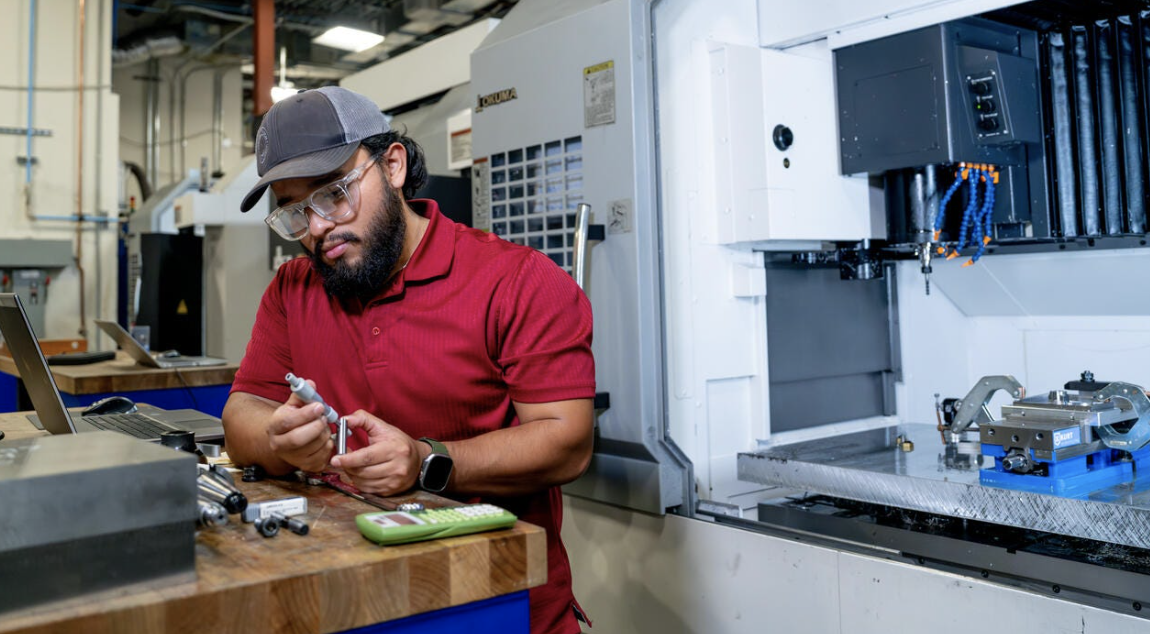
At its Orlando Innovation Campus, Siemens Energy uses 3D printing for rapid prototyping, proof-of-concepts, and custom engineering solutions. The goal is straightforward: help teams validate ideas and test designs earlier in development, before committing to more costly processes.
2. Jigs & Fixtures
Efficient machine construction depends on specialized tools for assembly, positioning, and inspection. Because these aids are highly task-specific, 3D printing offers a faster and more ergonomic alternative to traditional machining.
This agility is particularly valuable for teams managing custom equipment builds or frequent production-line updates, where tools must be revised quickly to match evolving workflows.
Examples: assembly fixtures, positioning jigs, inspection tooling, and drill-protection templates.
Case 1: Airbus Crisa: 3D Printing Lab for Manufacturing Tooling
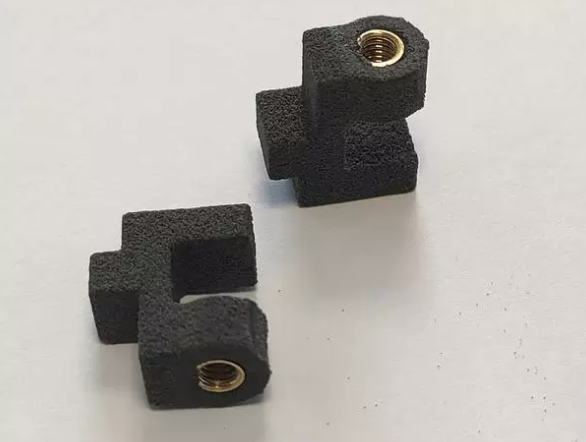
Airbus Crisa offers one of the clearest official examples of this workflow. Its internal Mechanical Printing Lab produces shop-floor tooling for manufacturing, covering handling, testing, and setup applications. These are practical tools that improve day-to-day operations without waiting on conventional tooling lead times.
Case 2: Alstom: Machine Tools and Jigs for Rail Manufacturing
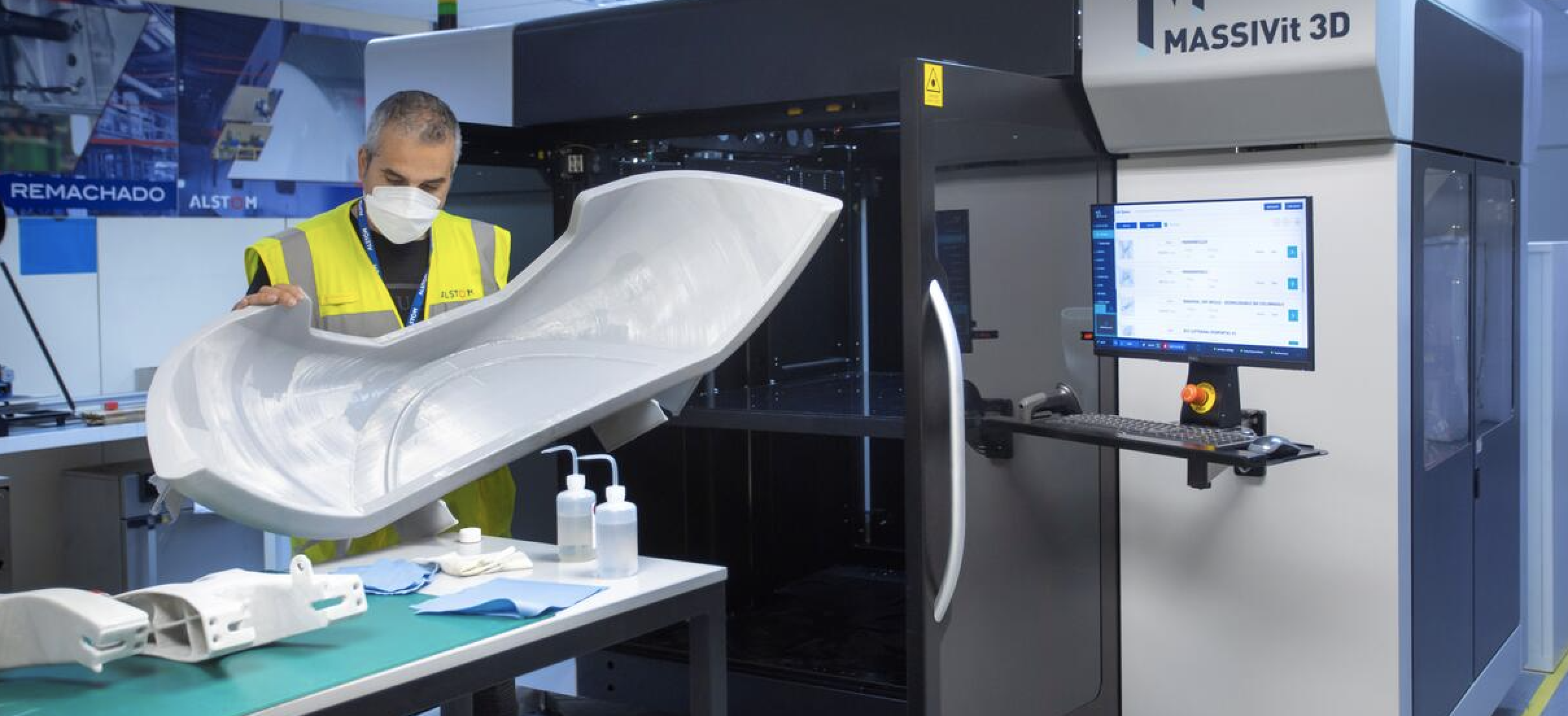
In rail manufacturing, Alstom reported in 2023 that it uses 3D printing to produce machine tools and jigs, including a jig designed to ease screwing holes in carbody shells in Germany. This shows additive manufacturing being used directly on the production floor to support assembly efficiency, not just early-stage prototyping.
3. End-Use Machine Components
For end-use components, the focus shifts from simple printability to long-term operational reliability. 3D printing is most effective for low-volume, custom parts where complex geometries or part consolidation offer a clear advantage over expensive conventional tooling.
While ideal for brackets and housings, components with high cyclic loads or strict regulatory requirements still require rigorous validation before deployment.
Examples: brackets, sensor mounts, protective covers, small housings, and machine internals such as manifolds.
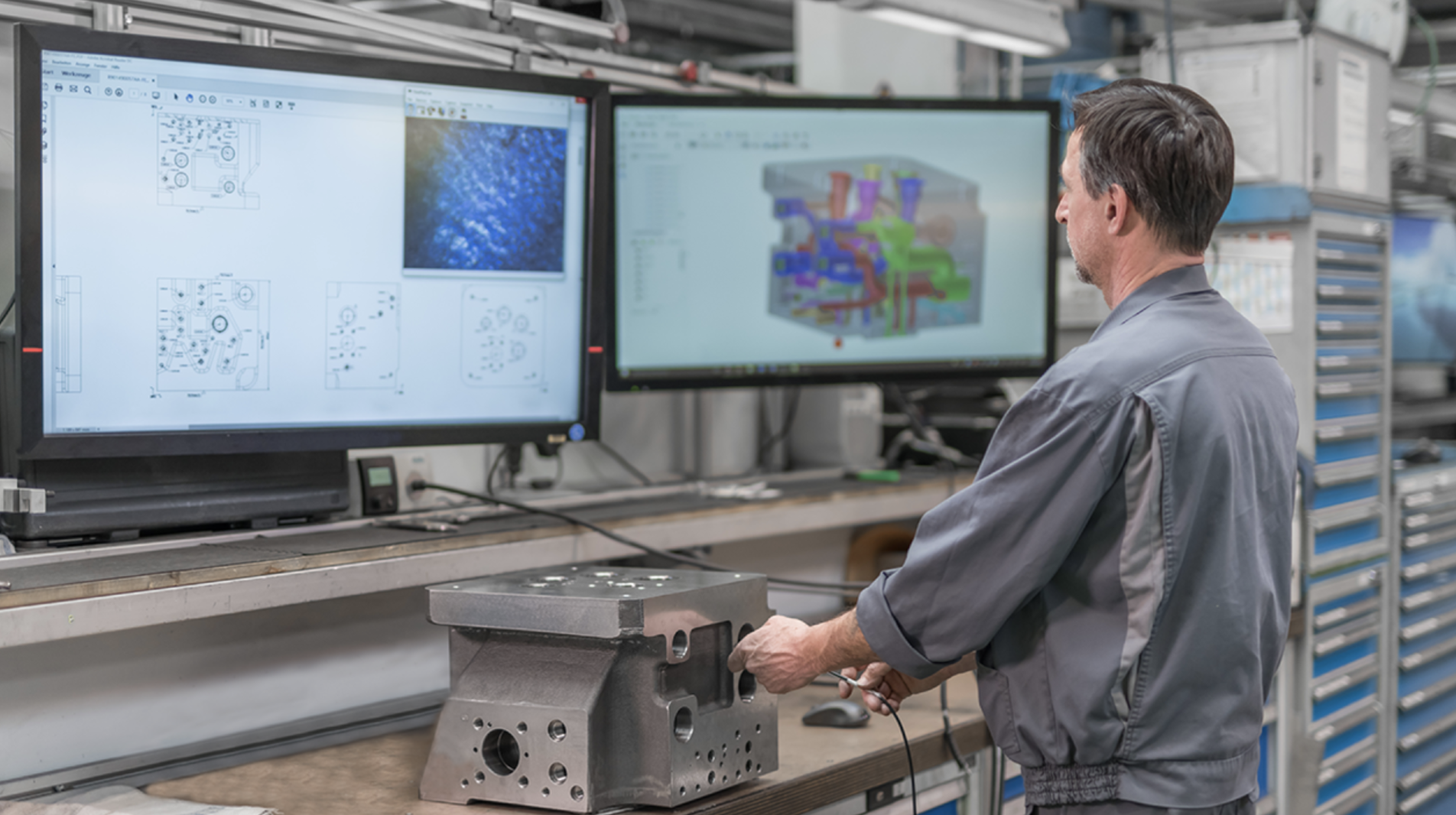
Case 1: Bosch Rexroth: Additively Manufactured Manifolds for Recycling Systems
Bosch Rexroth provides a strong end-use component example with custom hydraulic manifolds produced for recycling systems in 2022.
The company highlights benefits such as lower weight (approximately 30% reduction), better flow characteristics through optimized internal geometry, and easier machine integration due to a more compact design.
The key point is that the printed part is a real machine component installed on operating equipment rather than a temporary prototype, which delivers measurable savings in energy and CO₂ emissions throughout its operational lifespan.
Case 2: ABB: 3D-Printed Paint Manifolds for Industrial Robots
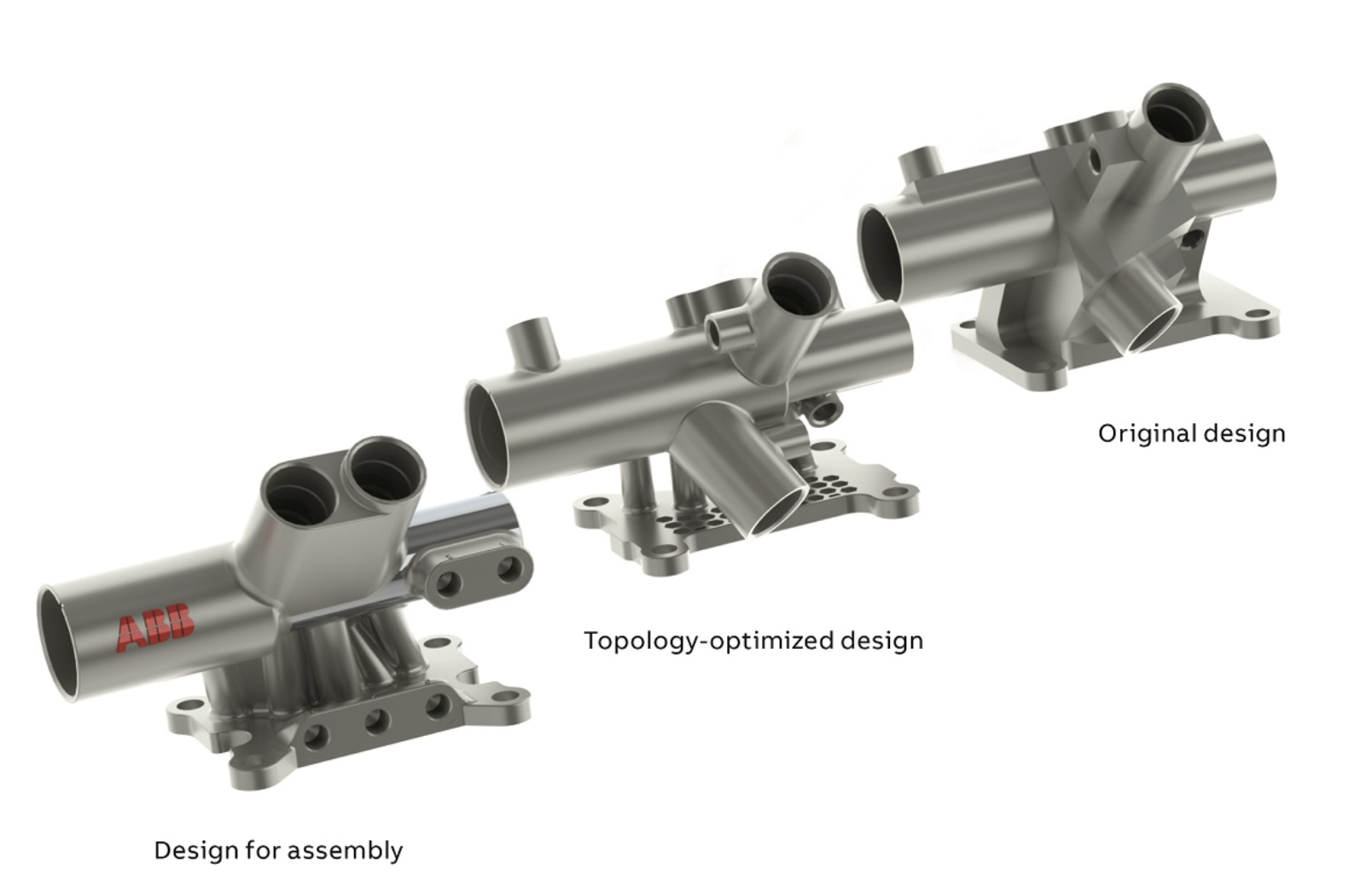
ABB used metal 3D printing to redesign the paint manifold on its industrial paint robots, a component traditionally machined from solid stainless steel using CNC, resulting in high material waste and long delivery times.
By switching to additive manufacturing, ABB reduced the weight of the manifold by 43% while preserving full functionality and structural stiffness, with the optimized geometry also improving ease of assembly and cleaning.
4. End-of-Arm Tooling & Grippers
As a critical component integrated into the automated systems you deliver, End-of-Arm Tooling (EOAT) directly impacts the equipment's payload and cycle time.
3D printing allows engineering teams to move beyond off-the-shelf limitations by creating task-specific grippers and vacuum tools that are optimized for the end-user's unique production requirements.
Examples: robotic grippers, vacuum suction plates, gripper fingers, and tool bodies tailored to specific motion paths.
Case 1: BMW Group: 3D-Printed Robot Grippers for Production Lines
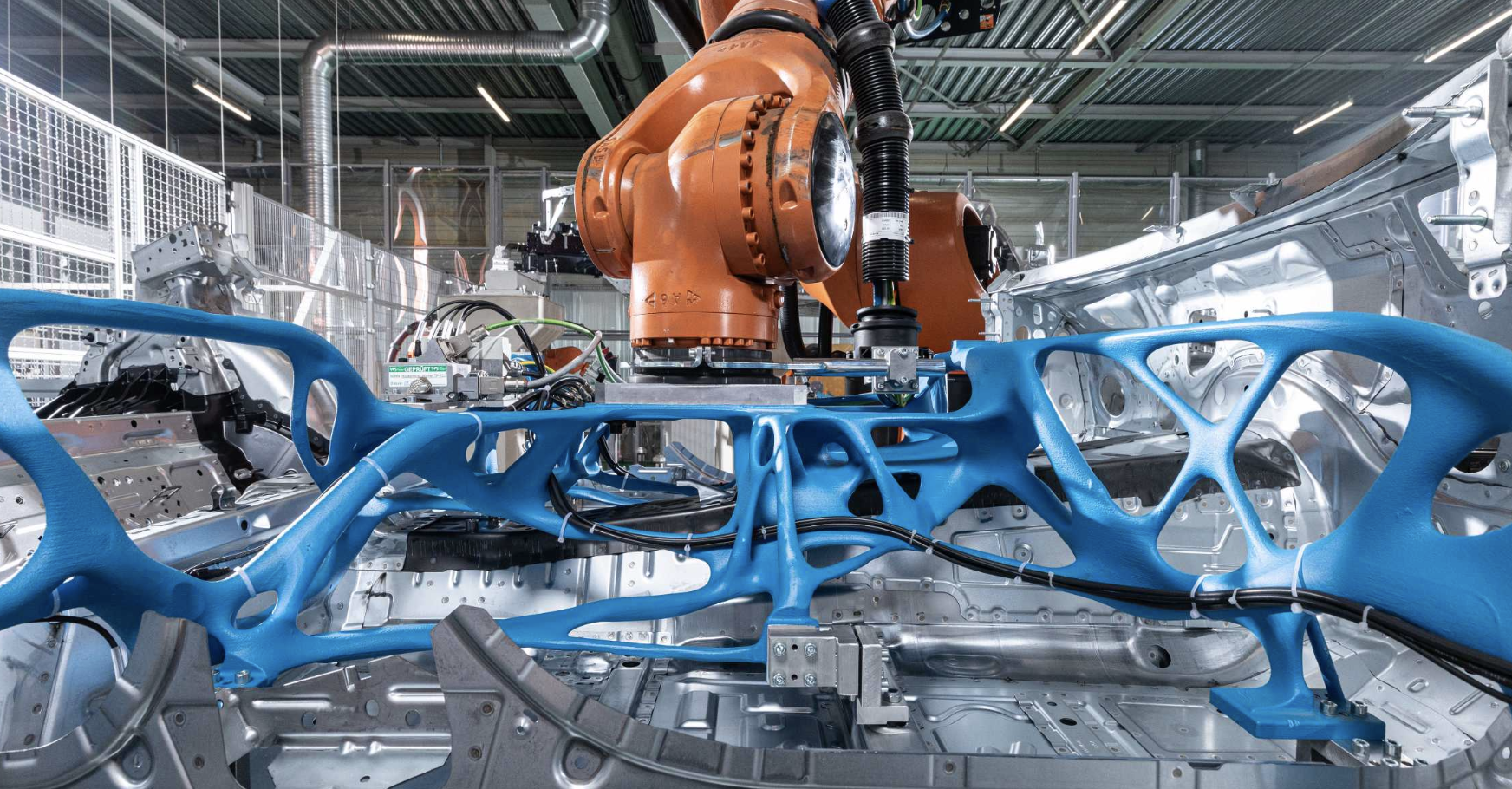
In 2024, the BMW Group reported using 3D-printed robot grippers across its production facilities, including a large gripper element for handling carbon fiber reinforced polymer (CFRP) roofs at its Landshut plant.
The gripper, weighing around 120 kilograms, can be manufactured in just 22 hours and is approximately 20% lighter than a conventional equivalent, reducing wear on the robot and extending its operating life.
Case 2: Schmalz and Lang Metallwarenproduktion: Lightweight Gripper for Sheet-Metal Parts
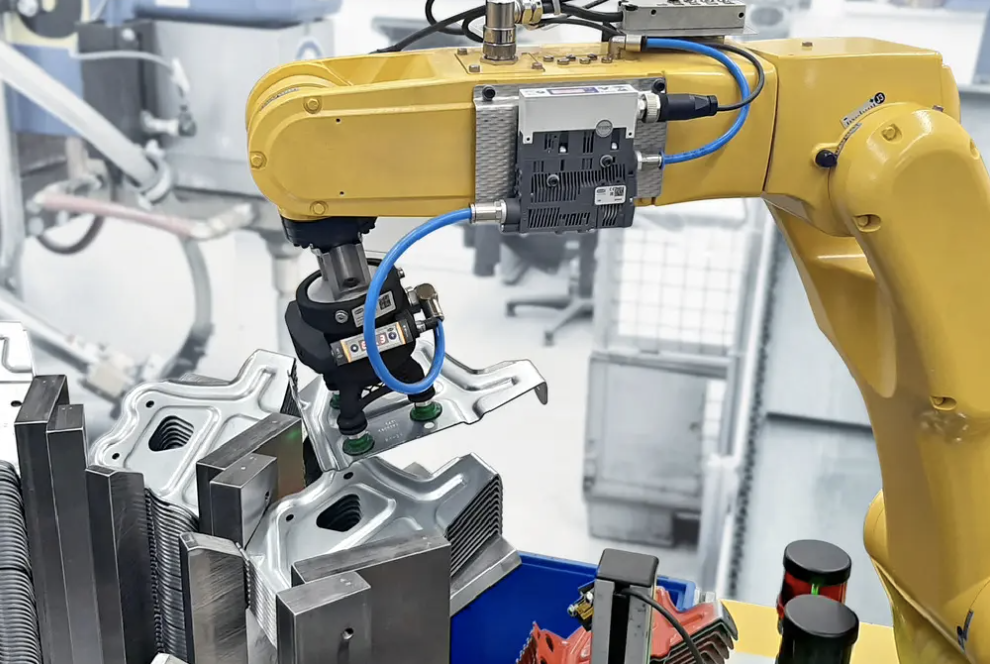
Schmalz documents a custom lightweight gripper (SLG) designed for Lang Metallwarenproduktion to handle thin-walled stamped and bent parts with complex geometry.
The gripper was additively manufactured and assembled within a few days based on the STL file of the target part, resulting in a 140 percent increase in productivity.
The case ties 3D-printed EOAT directly to measurable handling performance, which is exactly why automation teams adopt custom additive tooling.
5. On-Demand Spare Parts
3D printing enables a "print-on-demand" model that solves the availability issues of legacy and low-frequency spare parts.
By transitioning from physical to digital inventory, manufacturers can produce replacement components locally and only when needed, significantly reducing lead times and storage costs.
Examples: obsolete brackets, covers, connectors, and specialized packaging-machine change parts.
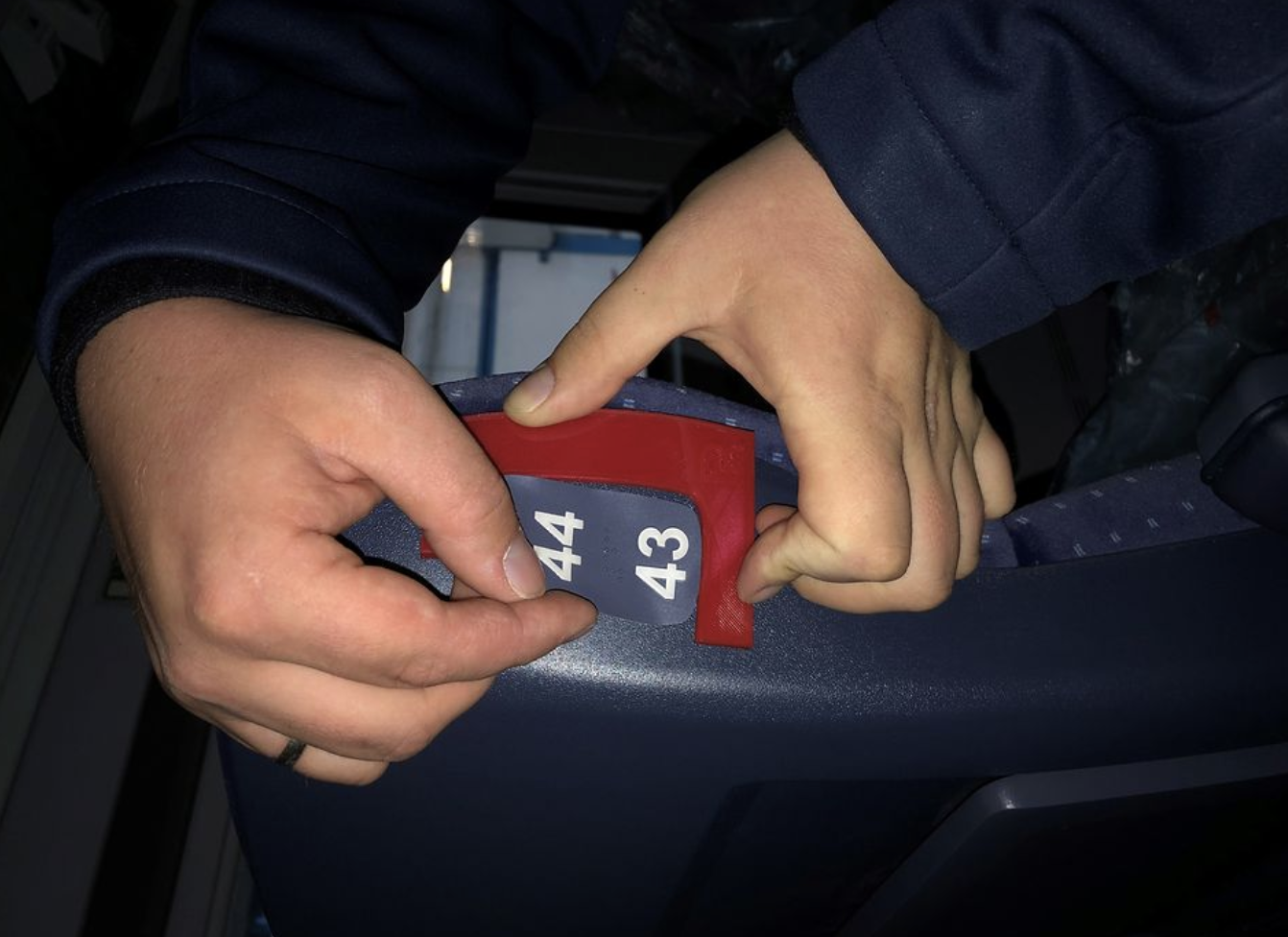
Case 1: Deutsche Bahn: On-Demand Spare Parts for Railway Maintenance
Deutsche Bahn, one of the world's largest railway operators, has been using 3D printing since 2015 to produce spare parts on demand across its maintenance network.
Rather than storing large physical inventories, the company maintains a digital warehouse of part designs that can be printed locally when needed, covering everything from coat hooks and braille handrail signs to safety-critical braking components.
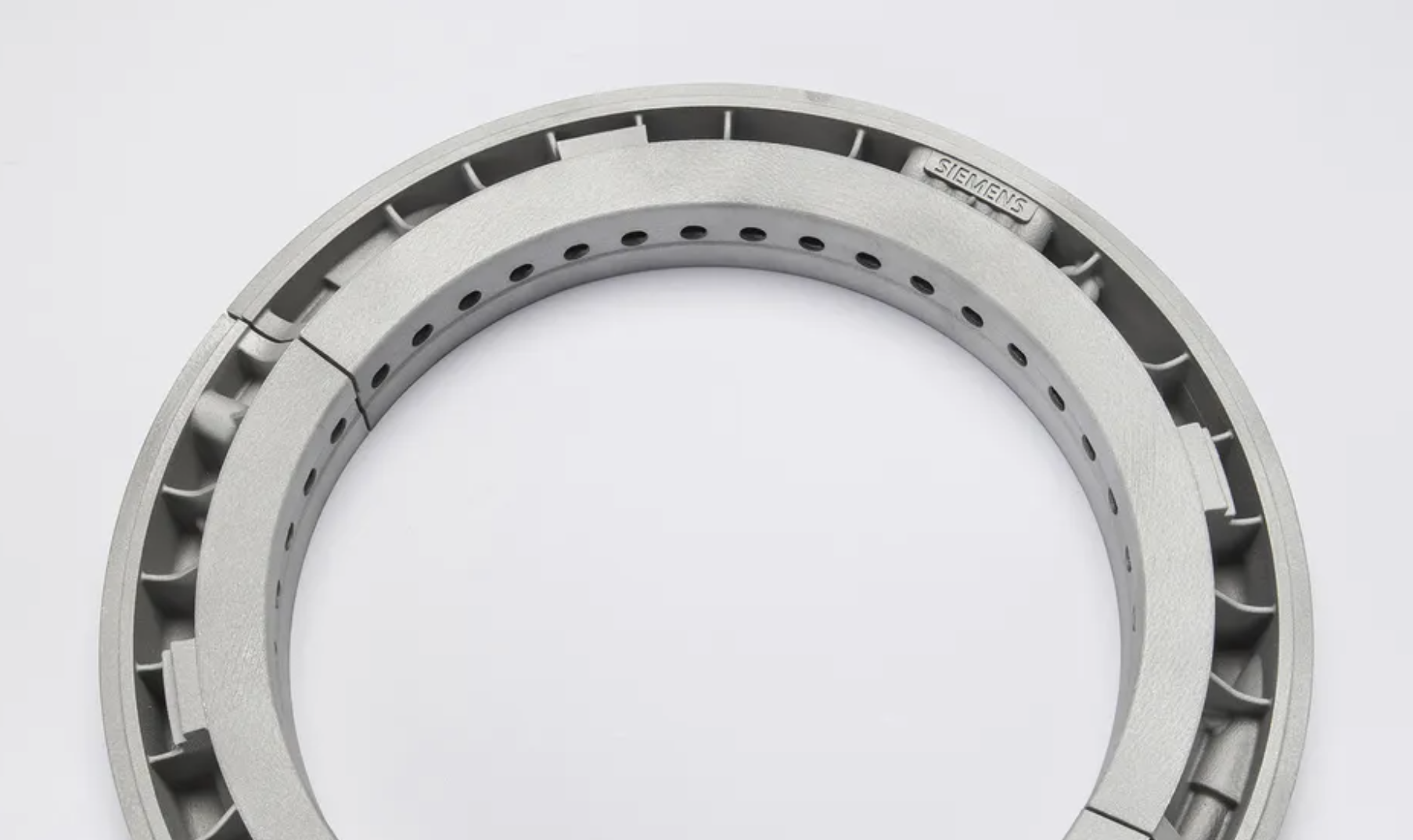
Case 2: Siemens: 3D-Printed Replacement Parts for Industrial Steam Turbines
In 2018, Siemens reported installing metal 3D-printed oil sealing rings as replacement parts on an SST-300 industrial steam turbine operating in India, reducing lead time by as much as 40 percent.
This shows that on-demand spare-part manufacturing can extend into higher-value industrial equipment when the part, process, and validation pathway are appropriate.
Decision Matrix: Matching Applications with Tech & Materials
The table below translates those application needs into a simpler selection guide.
Application | Top Tech Choice | Go-To Material | The Core Value |
|---|---|---|---|
Design Validation | ABS / Tough Resin | Supports fast, low-cost iteration for large housings, complex ducts, and tight-tolerance assembly checks. | |
Jigs & Fixtures | Carbon Fiber Filled (PA-CF) | Delivers high stiffness and wear resistance for robust shop-floor jigs, fixtures, and positioning tools. | |
Machine Components | PA12 / Aluminum & Titanium | Creates durable low-volume machine parts or lightweight metal internals while eliminating dedicated tooling investment. | |
Industrial Automation | PA12 / TPU (Flexible) | Produces lightweight, durable EOAT and flexible custom grippers that help reduce payload constraints and support efficient handling. | |
Digital Inventory | PA11 / PA12 | Makes on-demand production of obsolete brackets and low-frequency spare parts practical, reducing warehouse costs. |
Upload your file to estimate the cost of your next industrial equipment 3D printing project. No login required.
Why Partner with Unionfab?
While some large manufacturers build internal 3D printing labs, most industrial teams don't want the burden of heavy capital expenditure (CapEx), machine maintenance, or hiring dedicated additive manufacturing operators.
Unionfab acts as your on-demand digital factory, providing enterprise-level capacity without the overhead of owning the equipment. Backed by 20+ years of expertise and more than 1,000 industrial machines, we are equipped to handle everything from one-off functional prototypes to repeatable, low-volume production runs.
1. Advanced Industrial Material Portfolio
Industrial environments demand more than standard plastics. Unionfab supports a broad range of engineering-grade materials for tougher use cases:
High-strength polymers: PA12, PA11, and carbon-fiber-filled nylons for durable end-use parts and rugged shop-floor fixtures.
Elastomers: TPU for custom robotic grippers, seals, and impact-resistant bumpers.
Metals: Aluminum, titanium, and stainless steel via SLM for high-stress machine internals and custom manifolds.
Engineering thermoplastics: PC, ABS, and ASA for heat-resistant and UV-stable housings.
2. From Prototype to Production Scale
Unionfab’s production capacity scales instantly to match your project needs:
Prototyping: Single full-scale enclosure mockups or complex assemblies printed with FDM or SLA for fast design validation.
Low-Volume Production: Hundreds of complex brackets or custom components manufactured with MJF, SLS, or SLM, ensuring consistent quality and fast turnaround.
3. Engineering & DfAM Support
Not every machined part should be printed as-is. Our engineering team helps you optimize designs for additive manufacturing (DfAM), consolidating assemblies, reducing weight, and selecting the exact process to match your load and environmental requirements.
Ready to place your first order? New customers get 10% off.
FAQs
Are 3D printed parts durable enough for industrial equipment?
3D printed parts can be durable enough for industrial equipment when the material, process, and operating environment are matched correctly. Depending on the application, industrial teams may use nylon, carbon-filled polymers, TPU, or metal additive manufacturing for tooling, guards, brackets, EOAT, and selected end-use parts.
Can 3D printing be used for end-use machine components?
Yes. It is now common for low-volume production. Engineers use it for parts like sensor mounts, guards, manifolds, and change parts. With technologies like SLS and metal printing, these components offer strong, stable, long-term performance.
How does 3D printing help with spare parts for legacy equipment?
It enables a digital inventory. Instead of storing physical parts, companies keep CAD files and print replacements on demand. This reduces storage costs, avoids MOQs, shortens lead times, and extends the life of legacy equipment.