
Explore how 3D printing supports robotics with lightweight structures, custom grippers, metal joints, gears, and fast prototyping.
Introduction
3D printing is reshaping the robotics industry — enabling engineers to design, test, and manufacture complex components faster than ever.
At Unionfab, we provide high-performance 3D printing solutions that accelerate R&D, enhance structural performance, and reduce production costs for robotic systems.
Whether you need functional prototypes or end-use components, our metal and polymer additive manufacturing technologies deliver precision, repeatability, and design freedom for modern robotics applications.
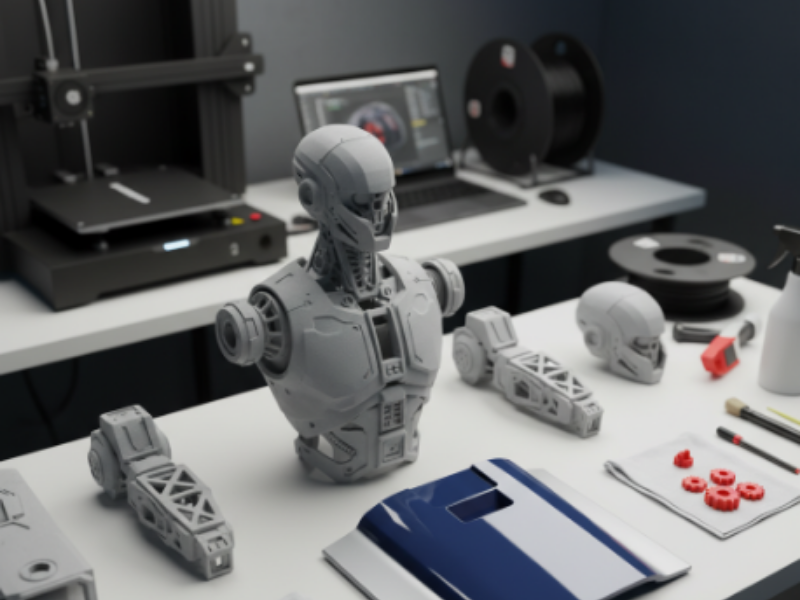
Custom 3D Printed Robot Shells & Frames
3D printing enables rapid fabrication of complex robot shells and housings, significantly shortening the design iteration cycle.
Designers can create and test multiple geometries, sizes, and configurations with minimal lead time — ideal for customized or low-volume robot production.
Typical Applications:
Protective enclosures and lightweight frames
Modular shell assemblies and decorative panels
Rapid prototype validation during R&D
These applications are crucial for protecting internal components, reducing overall weight, achieving aesthetic customization, and rapidly validating prototypes or conducting small-batch trials during the R&D phase, meeting both functional and visual demands.
Challenges Addressed:
Traditional fabrication methods can make it harder to balance strength, weight, and dimensional consistency, especially for customized shells and low-volume robotic housings.
With SLS 3D printing using PA12, PA11, or PA-CF, Unionfab delivers dimensionally accurate, high-strength shells that meet industrial requirements.
Cost: For one-off and low-volume robotic housings, 3D printing can reduce tooling needs and support faster iteration. Overall cost depends on material, geometry, finishing, and quantity.
Lead Time: 4–6 days │ Batch Size: 1–1000 units
Benefit: Enables fast validation of appearance, size, and assembly, and supports small-batch production.
Lightweight Metal Joints & Structural Connectors
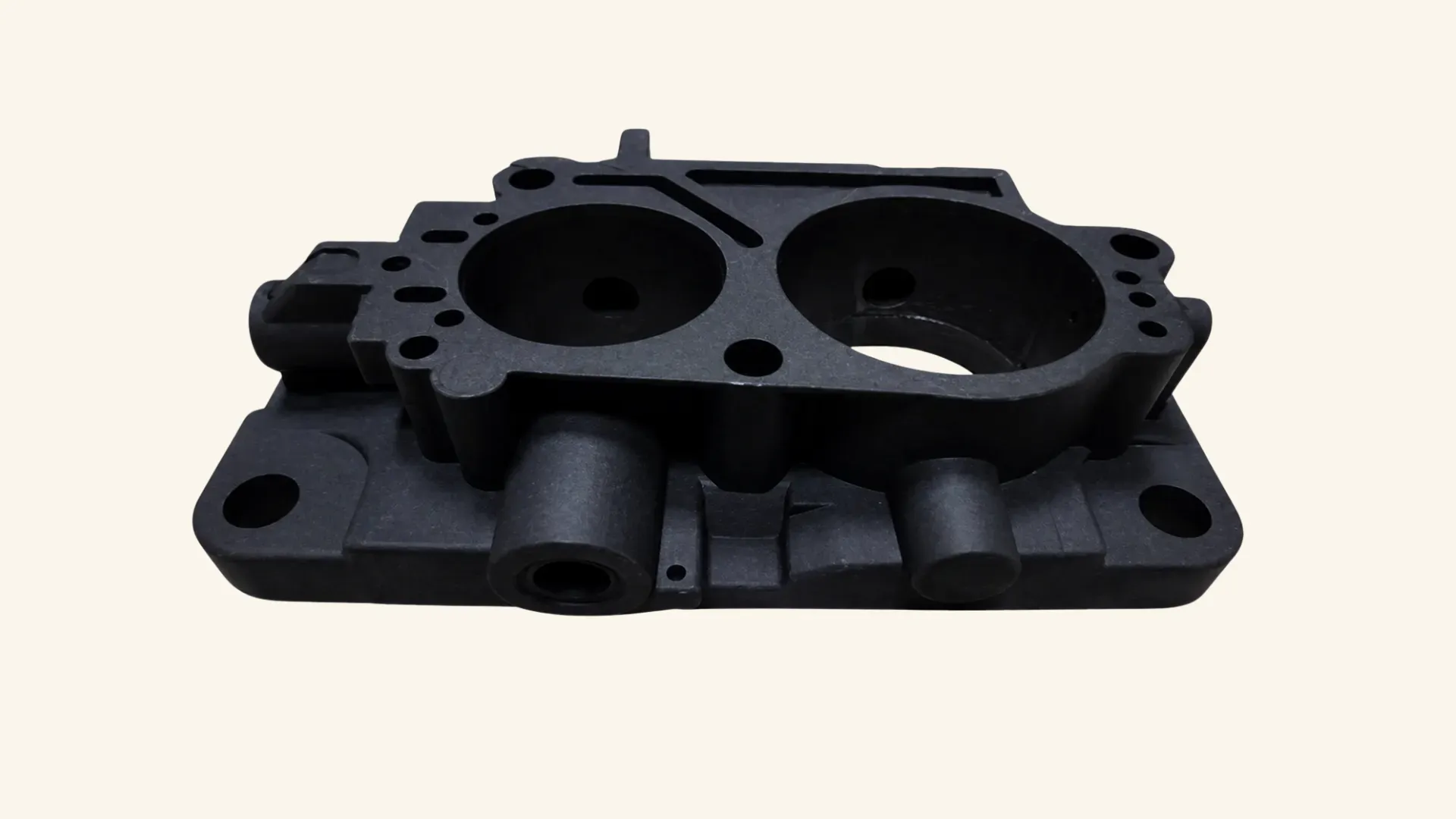
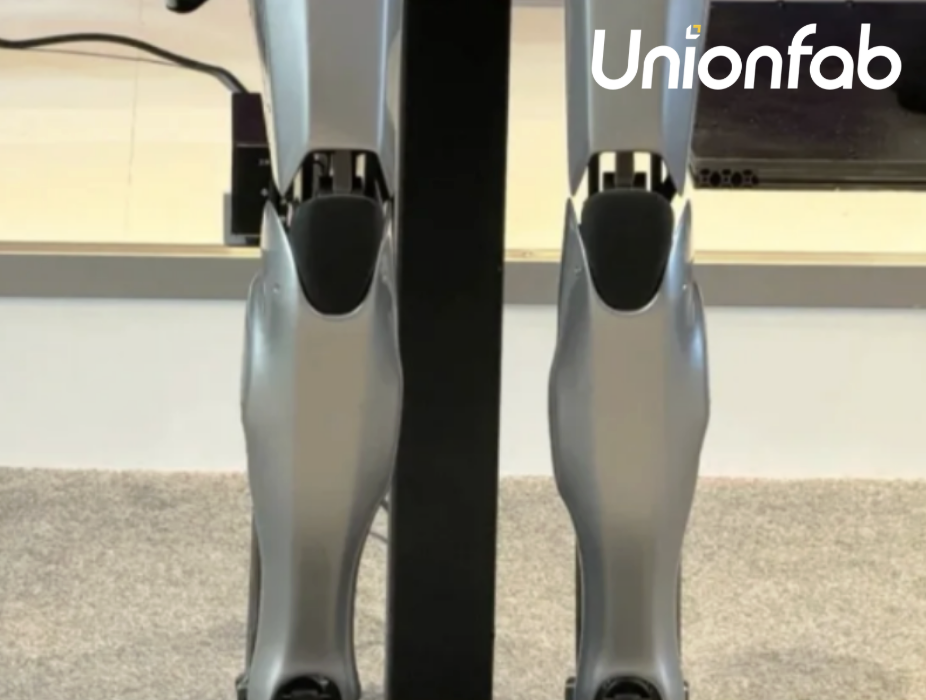
Robot joints and connectors are critical components that bear loads and enable movement. 3D printing technology, especially metal additive manufacturing, makes it possible to produce lightweight robotic parts with complex internal lattice structures or hollow designs.
These 3D printed metal components significantly reduce the overall weight of robots while maintaining high strength, thereby improving energy efficiency, motion speed, and robot performance.
Typical Applications:
Robot Arm Joints
Brackets, Ball Joints, and Frame Support Blocks
Challenges:
Robotic joints and connectors require a high strength-to-weight ratio, good fatigue performance, and precise assembly to support stable, repeatable motion.
Solutions:
Using SLM metal 3D printing with aluminum and titanium alloys, complex and integrated structures can be produced quickly and cost-effectively. This approach supports fast production, strong mechanical performance, and lightweight designs for selected robotic components.
Cost: For customized or low-volume metal robotic parts, 3D printing can reduce upfront tooling costs and support faster design updates. Overall cost depends on material, geometry, post-processing, and quantity.
Lead Time: 5–10 days │ Batch Size: 1–1000 units
Benefit: By applying topology optimization and lightweight 3D printing design, the overall weight of the robot is reduced, improving energy efficiency and load capacity.
3D Printed Robotic Grippers & End Effectors
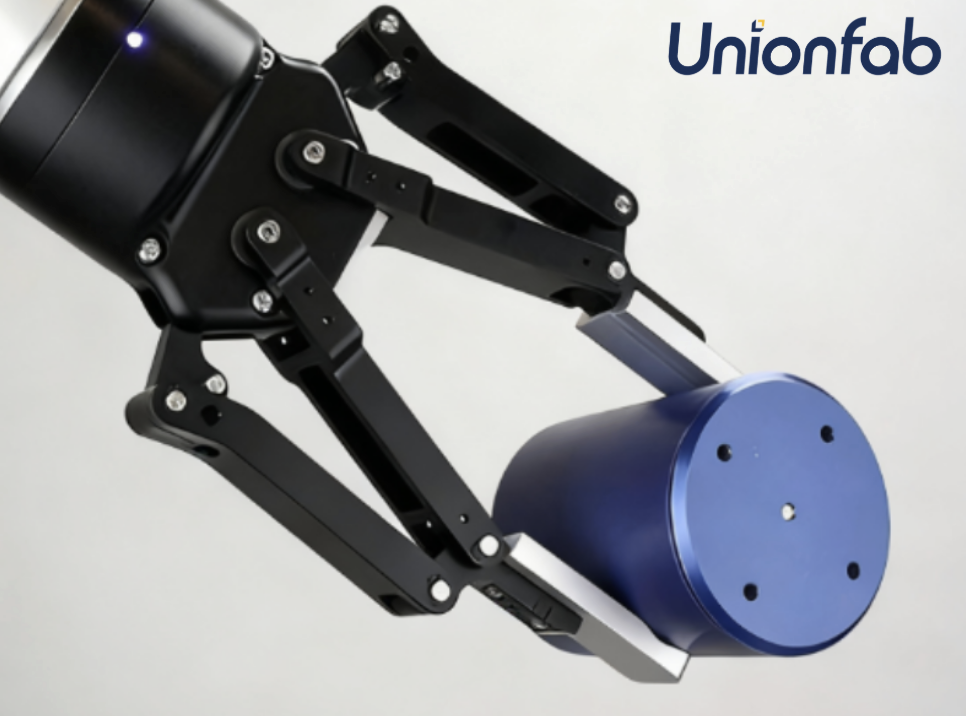
Robot grippers and end effectors require high customization to handle objects of varying shapes, materials, and sizes. 3D printing technology enables the rapid production of complex, custom-designed grippers, incorporating flexible materials or multi-functional integration. This customization capability allows robots to perform precise, safe, and versatile handling tasks, improving efficiency and adaptability across diverse industrial and automation applications.
Typical Applications:
Robot gripper bodies, finger joint segments, gears for finger motion, and biomimetic soft robotic fingers are essential components for precise and versatile robotic manipulation.
Challenges:
Material performance: Lower strength, wear resistance, and fatigue life; anisotropy can cause inconsistent results.
Precision & surface quality: Larger tolerances (±0.2 mm) and rough surfaces can affect gripping.
Functional integration: Multi-material and internal structures are hard to make reliable; sensor/actuator integration is complex.
Solutions:
SLS 3D Printing: TPU, Nylon, PA12 for flexible, durable custom fingers and grippers.
FDM 3D Printing: ABS for fast, cost-effective prototyping.
This enables lightweight, precise, and customizable robotic components for safe and versatile manipulation.
Cost: For one-off and low-volume robotic grippers, 3D printing can reduce tooling needs and speed up iteration. Overall cost depends on material, geometry, finishing, and quantity.
Lead Time: 4–6 days │ Batch Size: 1–1000 units
Benefit: Achieve greater dexterity and performance with 3D printed end-effectors optimized for specific tasks.
Internal Frames & Support Structures
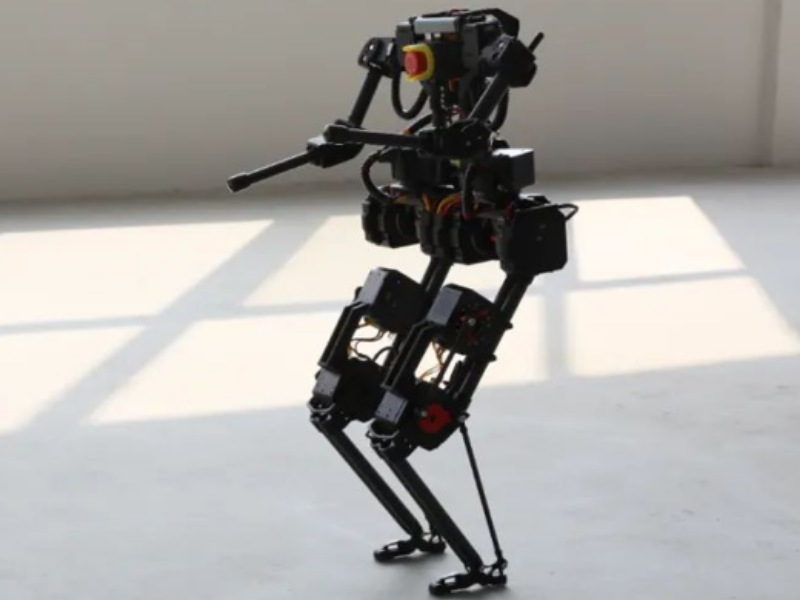
Internal support structures and frame components in robots require high space efficiency and overall rigidity. 3D printing technology enables the fabrication of complex topology-optimized internal supports, improving material distribution, enhancing strength-to-weight ratio, and maximizing robot structural performance.
Typical Applications:
● Robotic arms, support brackets
● Sensor bracket
Challenges:
Complex structures make support design and removal difficult.
Thermal deformation and residual stress can reduce dimensional accuracy and reliability.
Intricate internal geometries limit post-processing options.
Surface roughness and defects significantly reduce fatigue life.
Solutions:
● SLS 3D Printing with carbon fiber reinforced composites provides strong, lightweight, and durable support components.
● SLM 3D Printing using aluminum alloys enables precise, high-strength robotic frame parts with optimized internal structures.
These approaches enhance strength-to-weight ratio, structural rigidity, and long-term reliability of robotic arms, brackets, and internal supports.
Cost: For customized or low-volume robotic structures, 3D printing can reduce upfront tooling costs and support faster design updates. Overall cost depends on material, geometry, finishing, and quantity.
Lead Time: 4–6 days │ Batch Size: 1–1000 units
Benefit:
Topology optimization and lattice structure design reduce the weight of robotic components. 3D printing enables complex supports and skeletons that are both lightweight and high-strength, enhancing robot performance.
High-Precision Gears & Transmission Components
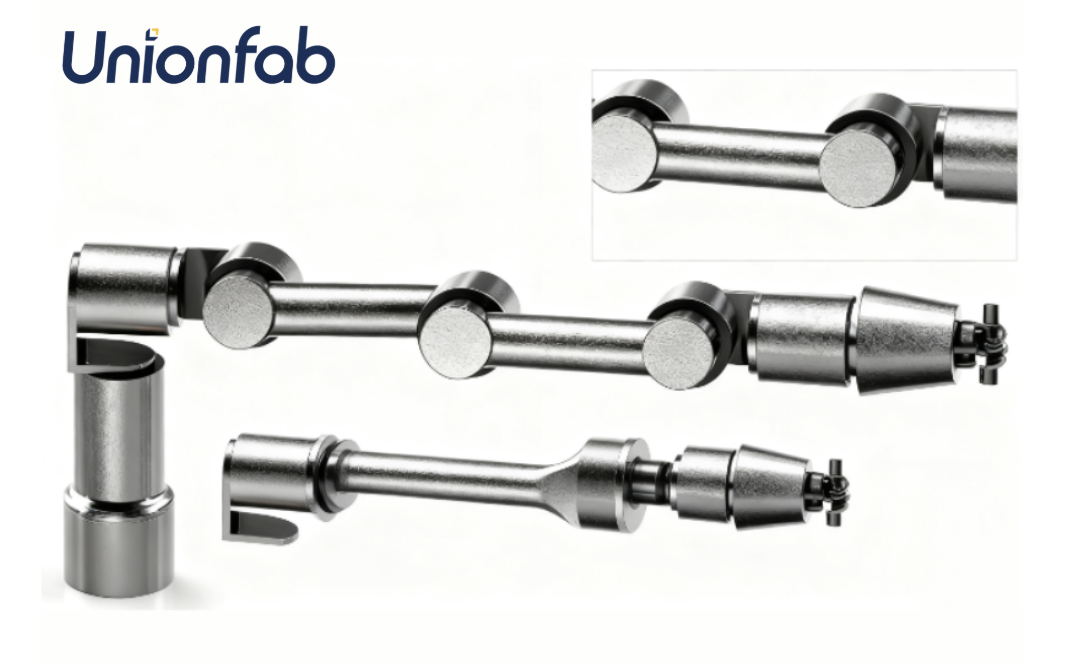
3D printing enables fully customizable gears with any tooth profile, number of teeth, and module. One-step fabrication reduces assembly steps, allowing more compact robotic designs with higher functional integration. This is particularly valuable for precision-controlled, miniaturized robots and specialty robotic applications.
Typical Applications:
● Gear, Joint connecting rod, Coupling
● Production of robot components in small batches, highly customized, structurally complex or requiring rapid iteration
Challenges:
● Material limitations: High-performance polymers often have lower strength, wear resistance, fatigue life, and high-temperature tolerance compared to metals or engineering plastics, limiting their use in high-load or harsh environments.
● Precision and surface quality: Printing accuracy and surface roughness may not meet the strict requirements of gears and transmission components, potentially reducing efficiency and increasing wear.
Solutions:
● SLS printing: Nylon, PA12 for durable, lightweight polymer components.
● SLM printing: Stainless steel and titanium alloys for high-strength, precision metallic gears and links.
These approaches enable custom, high-performance robotic components with improved durability, efficiency, and load-bearing capability.
Cost: By avoiding tooling, 3D printing can be cost-effective for small-batch or highly customized transmission components. Overall cost depends on material, precision, finishing, and quantity.
Lead Time: 5–7 days │ Batch Size: 1–1000 units
Benefit: 3D printing enables the fabrication of complex gears, racks, and functional components, supporting rapid prototyping and lightweight designs for efficient robotic systems.
Rapid Prototyping for Robotic Systems
In the early design stages, engineers use 3D printing to quickly produce physical prototypes of components for fit, assembly, and functional testing. This reduces development time, lowers mold and production costs, and allows rapid iteration to identify and fix potential issues, ensuring reliable and high-performance robotic products.
Typical Applications:
● Robotic arm rapid prototypes
● Mobile robot chassis
● Humanoid robot joint test pieces
Challenges:
Material limitations: Low strength, limited dimensional accuracy, and poor adaptation to dynamic loads.
Printing issues: Parts can deform, rough surfaces can affect fit, and complex assemblies can be harder to debug. Printed prototypes may also have lower durability and dimensional stability than final production parts, depending on material, geometry, and test conditions.
Solutions:
● FDM 3D Printing: PLA, ABS, PETG for rapid, cost-effective prototyping, enabling fast design iteration and functional testing.
This approach helps engineers validate designs quickly, optimize assembly fit, and improve early-stage robot development efficiency.
Cost: For prototyping and low-volume robotic parts, 3D printing can reduce tooling needs and accelerate iteration. Overall cost depends on material, geometry, finishing, and quantity.
Lead Time: 1–3 days │ Batch Size: 1–100 units
Benefit: Rapid 3D printing of robot parts and enclosures enables functional and assembly validation, supporting fast prototyping and design iteration.
Partner with Unionfab for Industrial-Grade 3D Printing
Unionfab empowers robotics engineers and manufacturers to turn ideas into real, functional components — without tooling, delays, or excessive cost.
Our engineering team specializes in optimizing designs for additive manufacturing, ensuring your robotic parts achieve the ideal balance of strength, precision, and performance.
Bring your ideas to life — upload your 3D model to get an instant quote and start your project with ease.
New users enjoy 10% off their first order!