
Learn how to choose the right additive manufacturing process for prototypes, functional parts, and low-volume production in this practical guide for engineers, product developers, procurement teams, and manufacturing decision-makers.
Introduction
Selecting the right 3D printing process is one of the most important decisions in a custom manufacturing project.
A design may be technically printable, but that does not always mean it is suitable for the selected process, material, tolerance requirement, surface finish, budget, or delivery timeline. Choosing the wrong process can lead to weak parts, poor surface quality, dimensional issues, failed assemblies, unnecessary post-processing, or higher production costs.
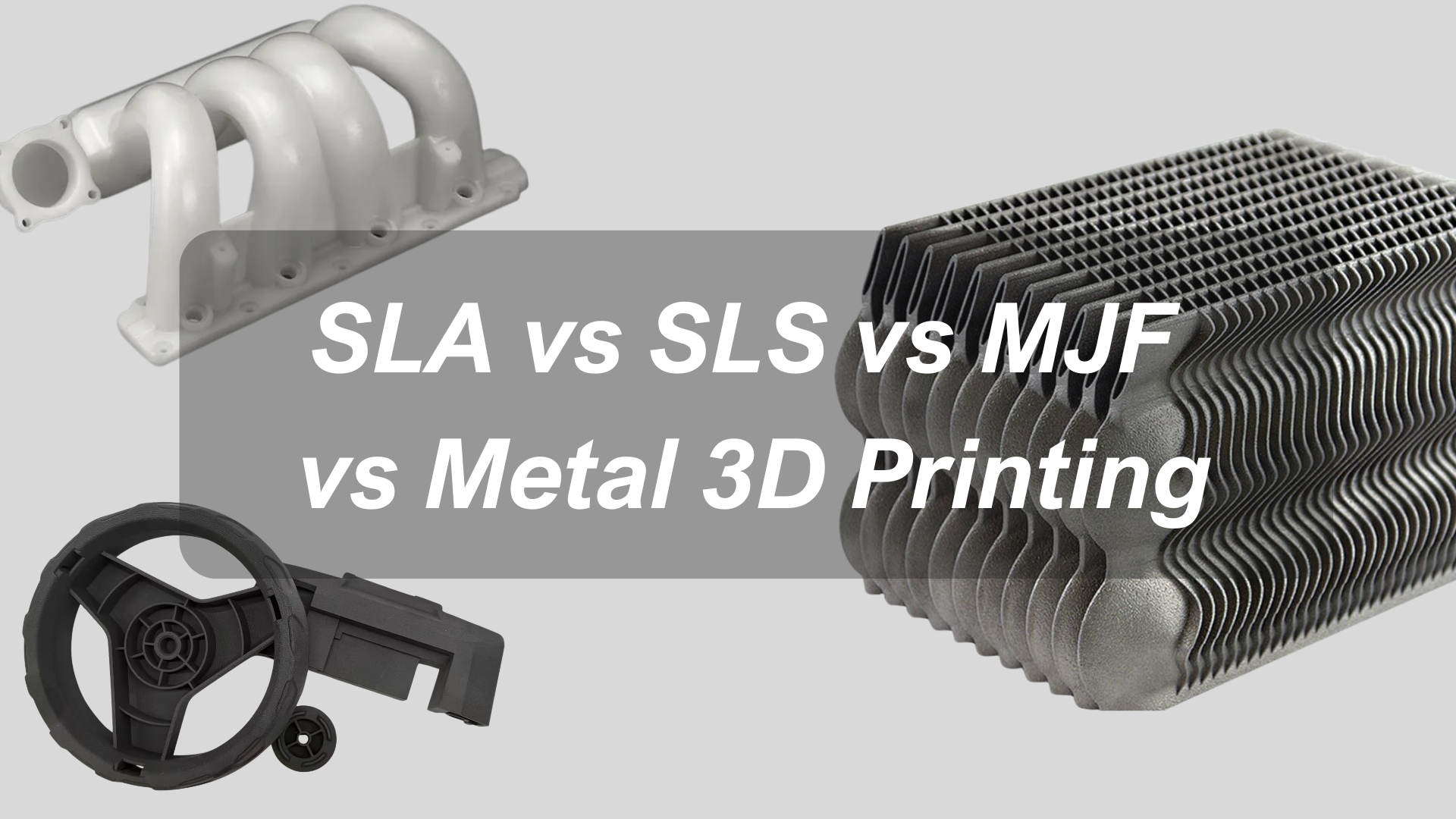
This guide compares four commonly used industrial 3D printing processes:
SLA — Stereolithography
SLS — Selective Laser Sintering
MJF — Multi Jet Fusion
Metal 3D Printing
It is designed to help engineering and procurement teams make better process decisions before requesting a quote or moving into production.
Why Process Selection Matters
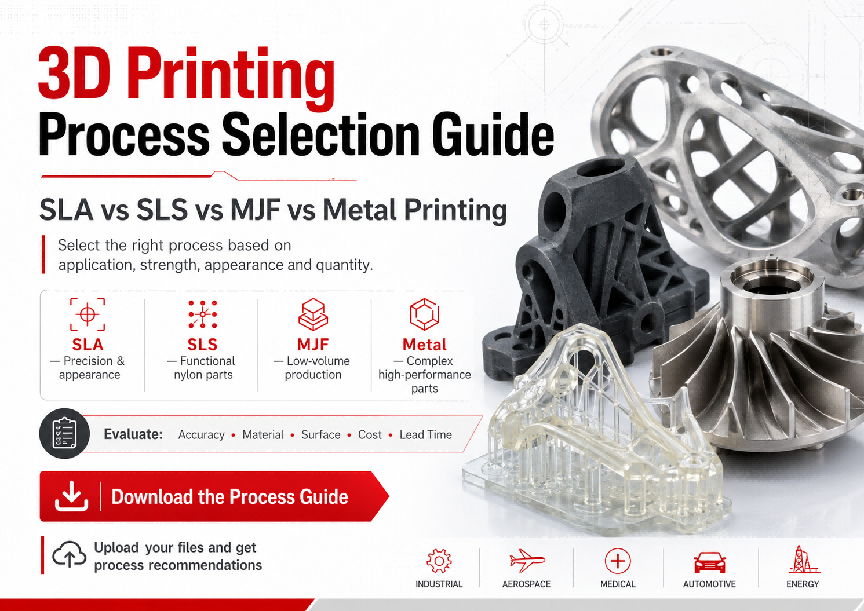
3D printing is not a single manufacturing method. Each process has different strengths, limitations, materials, surface characteristics, accuracy expectations, and cost drivers.
The right process should be selected based on the part’s function, geometry, material requirements, surface finish, tolerance needs, production quantity, and final application.
Decision Factor | Why It Matters |
|---|---|
Part Function | Determines whether the part is for visual review, functional testing, assembly, or end-use performance. |
Geometry Complexity | Influences whether supports, powder removal, or metal build constraints may affect manufacturability. |
Material Requirements | Determines whether resin, nylon, flexible material, or metal is more suitable. |
Surface Finish | Impacts appearance, painting, sealing, friction, and customer-facing quality. |
Mechanical Performance | Affects strength, flexibility, durability, heat resistance, and impact resistance. |
Tolerance Requirements | Different processes have different dimensional accuracy and repeatability capabilities. |
Quantity | Process economics change depending on whether the project is a single prototype or low-volume production. |
Lead Time | Some processes are faster for early prototypes, while others are better for functional or production-grade parts. |
Total Cost | Includes printing, support removal, powder cleaning, finishing, inspection, and rework risk. |
Quick Process Comparison
The table below provides a practical starting point for selecting a 3D printing process.
Process | Best Used For |
|---|---|
SLA | High-detail prototypes, visual models, transparent parts, smooth surface parts, form-fit validation. |
SLS | Durable nylon functional parts, complex geometries, housings, brackets, clips, and low-volume plastic parts. |
MJF | Strong nylon parts, functional testing, production-like plastic components, and low-volume batch production. |
Metal 3D Printing | Complex metal parts, lightweight structures, high-performance components, and designs difficult to machine. |
SLA: Best for High Detail and Smooth Surface Finish
What Is SLA?
SLA, or Stereolithography, is a resin-based 3D printing process that uses light to cure liquid photopolymer resin layer by layer. It is widely used for parts that require fine details, smooth surfaces, and strong visual appearance.
SLA is often selected when surface quality and detail resolution are more important than long-term mechanical durability.
SLA is a Strong Choice When:
Requirement | SLA Advantage |
|---|---|
High detail is required | SLA can produce fine features, sharp edges, and detailed geometry. |
Smooth surface is important | SLA typically offers one of the best surface finishes among plastic 3D printing processes. |
Visual appearance matters | Suitable for concept models, display parts, and presentation prototypes. |
Transparent or translucent parts are needed | Clear resin options can support visual testing and display applications. |
Form-fit validation is required | SLA is useful for checking geometry, appearance, and assembly concepts. |
Common SLA Applications
Application | Typical Use |
|---|---|
Concept Models | For visual review, product evaluation, and design communication. |
Display Parts | For marketing, exhibitions, internal reviews, and customer presentations. |
Transparent Prototypes | For optical models, fluid visualization, and clear housings. |
Form-Fit Testing | For checking shape, size, and assembly before production. |
Appearance Prototypes | For parts that require smooth finish, painting, or cosmetic review. |
SLA Considerations
SLA parts may be more brittle than nylon or engineering plastics. Some resins may be sensitive to UV exposure, heat, impact, or long-term outdoor use. SLA parts often require support structures, and support removal may affect the surface in contact areas.
Review Item | Key Notes |
|---|---|
Support Requirements | Check whether support marks may affect visible surfaces. |
Wall Thickness | Avoid overly thin walls that may warp, crack, or break. |
Material Behavior | Resin parts may not match injection molded plastic performance. |
Post-Processing | Consider sanding, painting, polishing, or clear coating if appearance is important. |
End-Use Suitability | Confirm whether the selected resin is suitable for the operating environment. |
SLS: Best for Durable Nylon Functional Parts
What Is SLS?
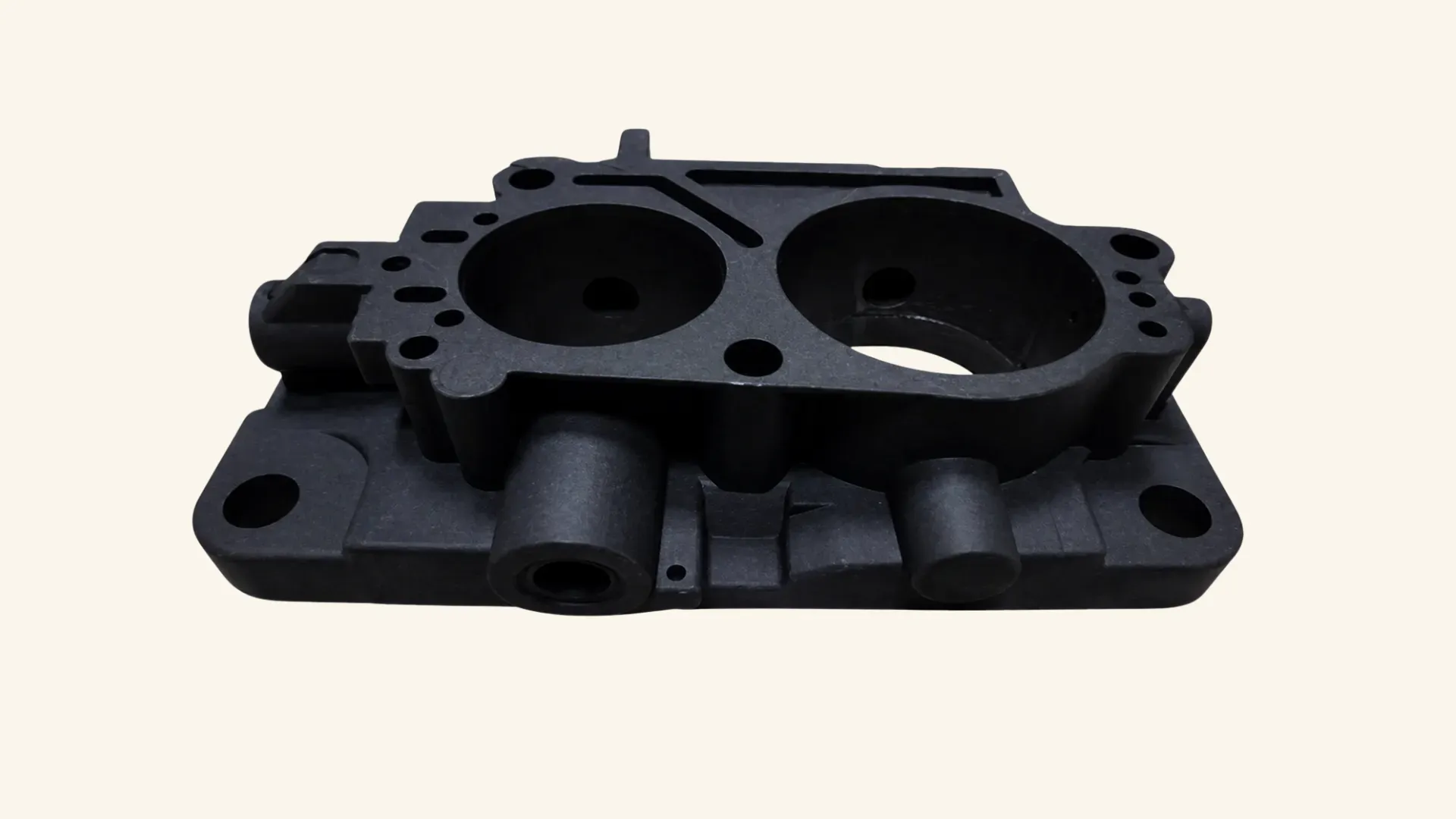
SLS, or Selective Laser Sintering, uses a laser to fuse nylon powder into solid parts. Unlike SLA, SLS does not usually require support structures because surrounding powder supports the part during printing.
SLS is well-suited for functional prototypes and durable plastic parts with complex geometries.
SLS is a Strong Choice When:
Requirement | SLS Advantage |
|---|---|
Functional nylon parts are needed | PA12 and PA11 materials offer durability and good mechanical performance. |
Complex geometries are required | Parts can be produced without many support-related restrictions. |
Internal structures are included | Hollow or complex parts may be possible if powder removal paths are considered. |
Low-volume plastic parts are needed | SLS is suitable for small batches without tooling. |
Strength and toughness are important | SLS nylon is often more practical for functional testing than standard resin. |
Common SLS Applications
Application | Typical Use |
|---|---|
Housings | Durable enclosures and protective covers. |
Brackets | Functional mounting and support parts. |
Clips and Snap Features | Flexible functional features, depending on geometry and material. |
Jigs and Fixtures | Lightweight production aids and assembly tools. |
End-Use Plastic Parts | Low-volume nylon components without injection molding tooling. |
SLS Considerations
SLS nylon parts usually have a slightly grainy or powder-like surface texture. They may require dyeing, bead blasting, sealing, coating, or other finishing depending on the final appearance and functional requirements.
Review Item | Key Notes |
|---|---|
Powder Removal | Hollow structures need drainage holes or powder removal paths. |
Surface Texture | SLS parts typically have a matte, slightly grainy finish. |
Dimensional Stability | Large flat areas, thin walls, and long parts may require DFM review. |
Color Options | Black dyeing is common, while custom color requirements need review. |
Assembly Features | Threads, inserts, and mating surfaces may require post-processing or design adjustment. |
MJF: Best for Functional Nylon Parts and Low-Volume Batches
What Is MJF?
MJF, or Multi Jet Fusion, is a powder-bed 3D printing process commonly used for nylon parts. It is often selected for functional prototypes, durable components, and low-volume production where repeatability and throughput are important.
MJF can be a strong option when engineering teams need robust plastic parts with consistent mechanical performance.
MJF is a Strong Choice When:
Requirement | MJF Advantage |
|---|---|
Functional plastic parts are needed | MJF nylon parts are strong, durable, and suitable for testing. |
Low-volume production is required | MJF can be efficient for batch production without tooling. |
Design iteration is needed | Parts can be produced quickly for testing and revision. |
Complex plastic components are required | Suitable for housings, brackets, ducts, clips, and fixtures. |
Consistent nylon performance is important | MJF is often used for production-like plastic parts. |
Common MJF Applications
Application | Typical Use |
|---|---|
Functional Prototypes | For mechanical testing, fit checks, and product validation. |
Production-Like Nylon Parts | For parts that need practical strength and durability. |
Housings and Covers | For durable plastic enclosures and protective components. |
Jigs and Fixtures | For assembly tools, positioning aids, and factory support parts. |
Low-Volume Manufacturing | For small batches before tooling or as bridge production. |
MJF Considerations
MJF parts typically have a matte surface and may require dyeing or additional finishing. As with SLS, part geometry, wall thickness, and powder removal should be reviewed before production.
Review Item | Key Notes |
|---|---|
Material Options | PA12 and related nylon materials are common. |
Surface Finish | Matte surface is typical; dyeing or smoothing may be required. |
Part Size | Large parts may require careful review for dimensional stability. |
Powder Removal | Internal channels and hollow areas must be cleanable. |
Batch Consistency | Good option for low-volume functional nylon parts. |

Metal 3D Printing: Best for Complex Metal Parts
What Is Metal 3D Printing?
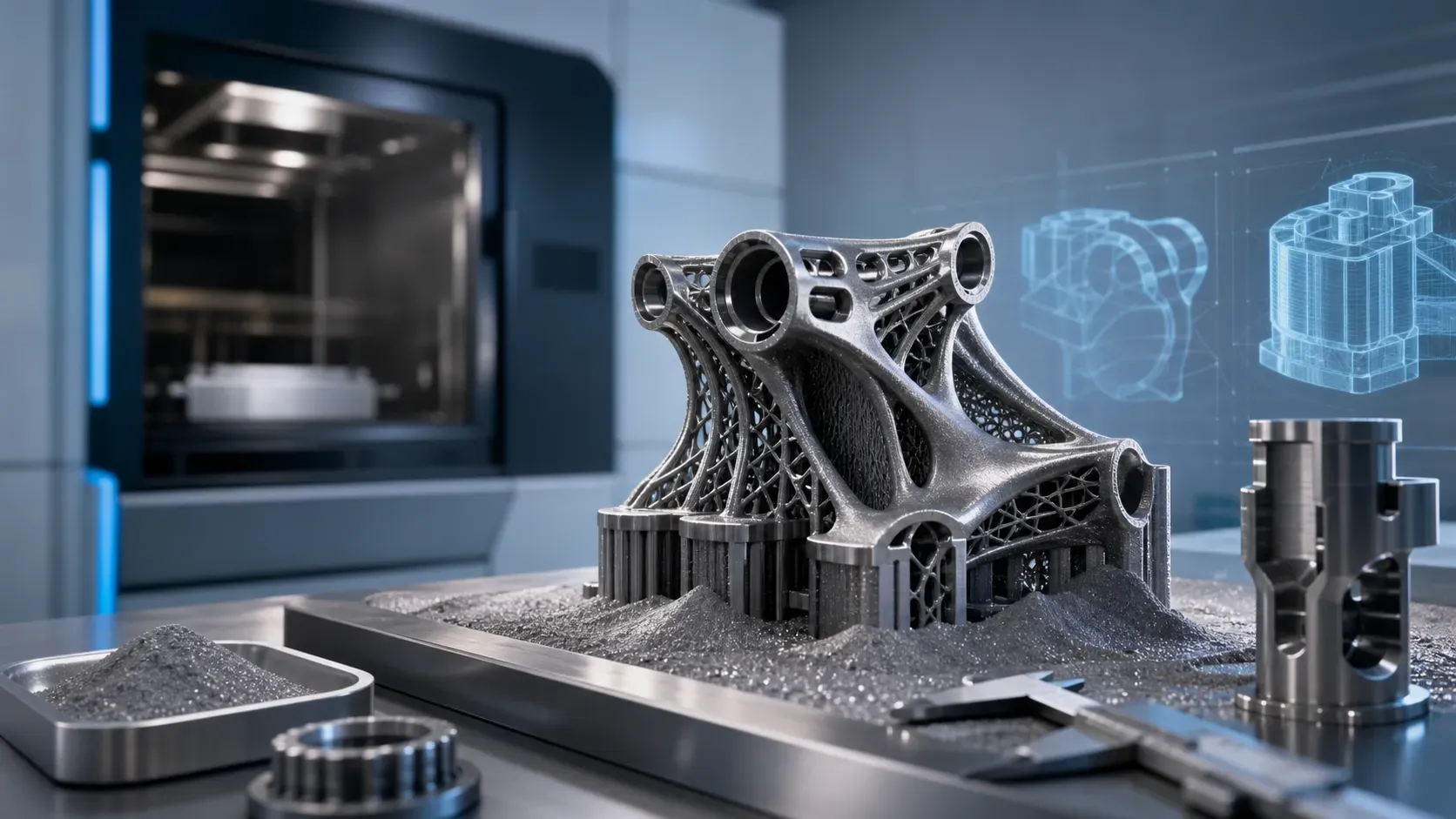
Metal 3D printing uses metal powder and high-energy fusion to produce metal parts layer by layer. It is often selected for complex parts that are difficult, expensive, or impossible to manufacture through traditional machining.
It is especially valuable for lightweight structures, internal channels, topology-optimized parts, and high-performance engineering components.
Metal 3D Printing is a Strong Choice When:
Requirement | Metal 3D Printing Advantage |
|---|---|
Complex metal geometry is required | Can produce shapes that may be difficult to machine. |
Lightweight structures are needed | Supports lattice structures and topology-optimized designs. |
Internal channels are required | Useful for cooling channels, flow paths, and integrated designs. |
Part consolidation is needed | Multiple components may be combined into one printed part. |
High-performance metal parts are required | Suitable for aerospace, medical, robotics, and industrial applications. |
Common Metal 3D Printing Applications
Application | Typical Use |
|---|---|
Aerospace Components | Lightweight brackets, ducts, structural parts, and complex assemblies. |
Medical Components | Titanium or stainless steel parts, implants, instruments, and prototypes. |
Robotics Parts | Lightweight metal structures, brackets, and custom mechanisms. |
Industrial Tooling | Inserts, fixtures, conformal cooling components, and complex tooling parts. |
High-Performance Parts | Components requiring strength, heat resistance, or corrosion resistance. |
Metal 3D Printing Considerations
Metal 3D printing is powerful, but it is not always the lowest-cost or fastest option. It often requires support removal, heat treatment, CNC finishing, surface finishing, and inspection.
Review Item | Key Notes |
|---|---|
Support Structures | Supports may affect surface finish, removal time, and cost. |
Build Orientation | Influences strength, surface quality, accuracy, and support strategy. |
Post-Processing | Heat treatment, machining, polishing, or bead blasting may be required. |
Critical Surfaces | Precision holes, threads, and mating faces may need CNC finishing. |
Cost Drivers | Cost depends on material, volume, build time, support removal, and finishing. |
Process Selection by Requirement
Use the table below as a practical guide when deciding between SLA, SLS, MJF, and metal 3D printing.
Requirement | Recommended Process Direction |
|---|---|
Best surface appearance | SLA is usually preferred for smooth, detailed, cosmetic prototypes. |
Durable plastic functional parts | SLS or MJF is usually preferred for nylon-based functional components. |
Flexible or impact-absorbing parts | TPU options may be considered through suitable 3D printing processes. |
Transparent or clear prototypes | SLA with transparent resin is usually the better starting point. |
Complex plastic geometry | SLS or MJF may be preferred, especially when supports would be difficult. |
Low-volume nylon parts | MJF or SLS can be suitable depending on geometry, quantity, and finish. |
Complex metal geometry | Metal 3D printing may be preferred for parts difficult to machine. |
High precision mating features | 3D printing may need CNC finishing or secondary machining. |
Lowest unit cost at higher volume | Review CNC machining, molding, or hybrid manufacturing options. |
Fast visual prototype | SLA is often a strong starting point. |
Fast functional plastic prototype | SLS or MJF is often a strong starting point. |
High-performance metal prototype | Metal 3D printing or CNC machining should be compared during DFM review. |
Process Selection by Application
Different applications require different process priorities. The table below provides a practical starting point.
Application | Process Guidance |
|---|---|
Visual Concept Models | SLA is often suitable due to smooth surface finish and high detail. |
Transparent Prototypes | SLA transparent resin is usually the preferred starting point. |
Functional Plastic Prototypes | SLS or MJF is often better for durable nylon parts. |
Housings and Covers | SLA, SLS, or MJF may be selected depending on appearance, durability, and quantity. |
Jigs and Fixtures | SLS, MJF, or CNC machining may be considered depending on strength and dimensional needs. |
Lightweight Structures | Metal 3D printing can support topology optimization and lattice designs. |
Medical Device Prototypes | SLA, SLS, MJF, or metal 3D printing may be used depending on material and documentation needs. |
Robotics Components | SLS, MJF, CNC, or metal 3D printing may be selected based on strength, weight, and precision. |
Automotive Prototypes | SLA for appearance; SLS/MJF for functional plastic; metal printing for complex metal parts. |
Fluid or Thermal Components | Process selection should consider sealing, pressure, temperature, and internal channel cleanability. |
Common Process Selection Mistakes
Mistake 1: Choosing a process based only on appearance
A part may look good in a rendering, but the selected process must also meet strength, tolerance, assembly, and environmental requirements.
Mistake 2: Using SLA for functional parts that require high durability
SLA is excellent for visual detail and smooth surfaces, but nylon processes such as SLS or MJF may be better for impact resistance, clips, brackets, or functional housings.
Mistake 3: Ignoring powder removal in SLS or MJF
Hollow structures, internal channels, and enclosed volumes must be designed so powder can be removed after printing.
Mistake 4: Assuming 3D printed metal parts need no machining
Metal 3D printed parts often need secondary machining for threads, precision holes, sealing surfaces, and critical assembly interfaces.
Mistake 5: Over-specifying tolerance too early
Tight tolerances increase cost and inspection requirements. Identify which dimensions are truly critical to function and which can follow standard process capability.
Mistake 6: Not considering post-processing
Surface finish, painting, dyeing, polishing, bead blasting, heat treatment, support removal, and inspection can all affect lead time and total cost.
What to Prepare Before Requesting a Quote
To receive a faster and more accurate quotation, provide the following information when submitting your project.
Information Type | Recommended Notes |
|---|---|
3D CAD Files | STEP, STP, STL, or native CAD files are recommended for review. |
2D Drawings | Include critical dimensions, tolerances, threads, and surface finish requirements. |
Intended Application | Explain whether the part is for visual review, functional testing, assembly, or end-use. |
Material Requirements | Specify resin, nylon, TPU, aluminum, stainless steel, titanium, or acceptable alternatives. |
Quantity | Indicate prototype quantity, testing quantity, or low-volume production requirements. |
Surface Finish | Include dyeing, painting, polishing, bead blasting, coating, or other finishing needs. |
Critical Features | Identify holes, threads, sealing surfaces, mating interfaces, or load-bearing areas. |
Inspection Needs | Specify whether dimensional reports, material certificates, or FAI are required. |
Target Lead Time | Provide the expected delivery timeline or project deadline. |
Quick Process Selection Checklist
Use this checklist before submitting your next 3D printing RFQ.
Checklist Item | Confirmed |
|---|---|
Part function is clearly defined | ☐ |
Visual, functional, or end-use requirements are understood | ☐ |
Preferred material is specified or alternatives are allowed | ☐ |
Quantity and production stage are confirmed | ☐ |
Critical dimensions and tolerances are identified | ☐ |
Surface finish and post-processing needs are listed | ☐ |
Support or powder removal risks are reviewed | ☐ |
Assembly or mating features are clearly defined | ☐ |
Inspection and documentation requirements are specified | ☐ |
Target lead time is provided | ☐ |
How Unionfab Supports Process Selection
Selecting the right 3D printing process is not only a technical decision. It is also a project decision that affects cost, quality, lead time, and manufacturing risk.
Unionfab supports engineering teams, product developers, and procurement professionals with:
SLA 3D printing
SLS 3D printing
MJF 3D printing
Metal 3D printing
CNC machining
Rapid prototyping
Functional testing parts
Low-volume production
Material and process recommendations
DFM review
Surface finishing and post-processing
Quality inspection support
By reviewing your CAD files, material requirements, part function, application context, and production goals, Unionfab can help identify the most practical manufacturing approach before production begins.
Final Recommendation
The best 3D printing process is not always the most advanced or the fastest option. The right process is the one that fits your part function, geometry, material requirements, surface finish, tolerance expectations, lead time, and total project cost.
For early-stage projects, a process selection review can help reduce manufacturing risk, improve part performance, and avoid unnecessary cost before production starts.
Ready to Select the Right 3D Printing Process?
Upload your CAD files and project requirements to Unionfab for a manufacturability review and quotation.
Need Engineering Support?
Talk to Unionfab’s manufacturing team to discuss SLA, SLS, MJF, metal 3D printing, CNC machining, material options, tolerances, finishing, and production planning.