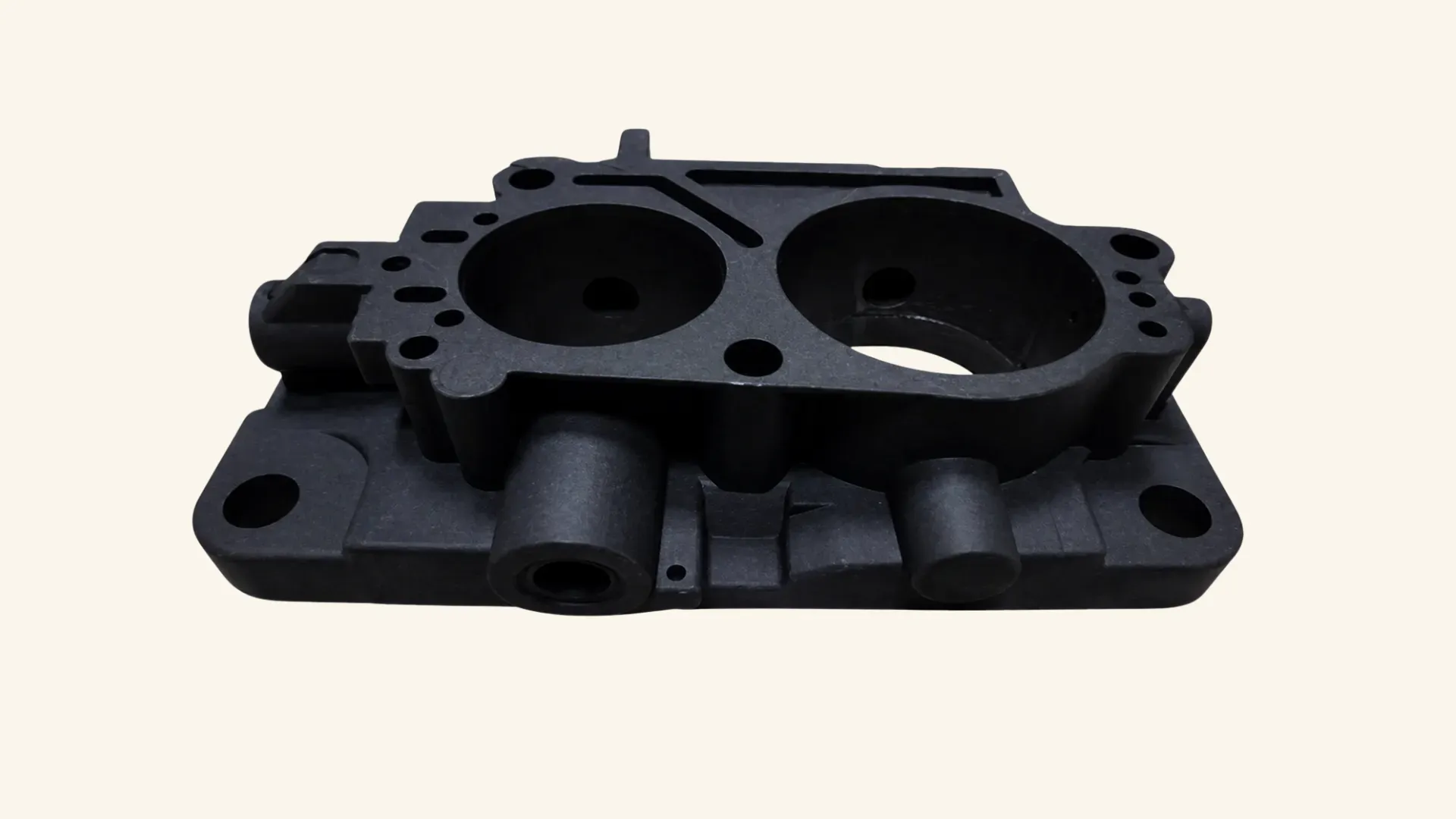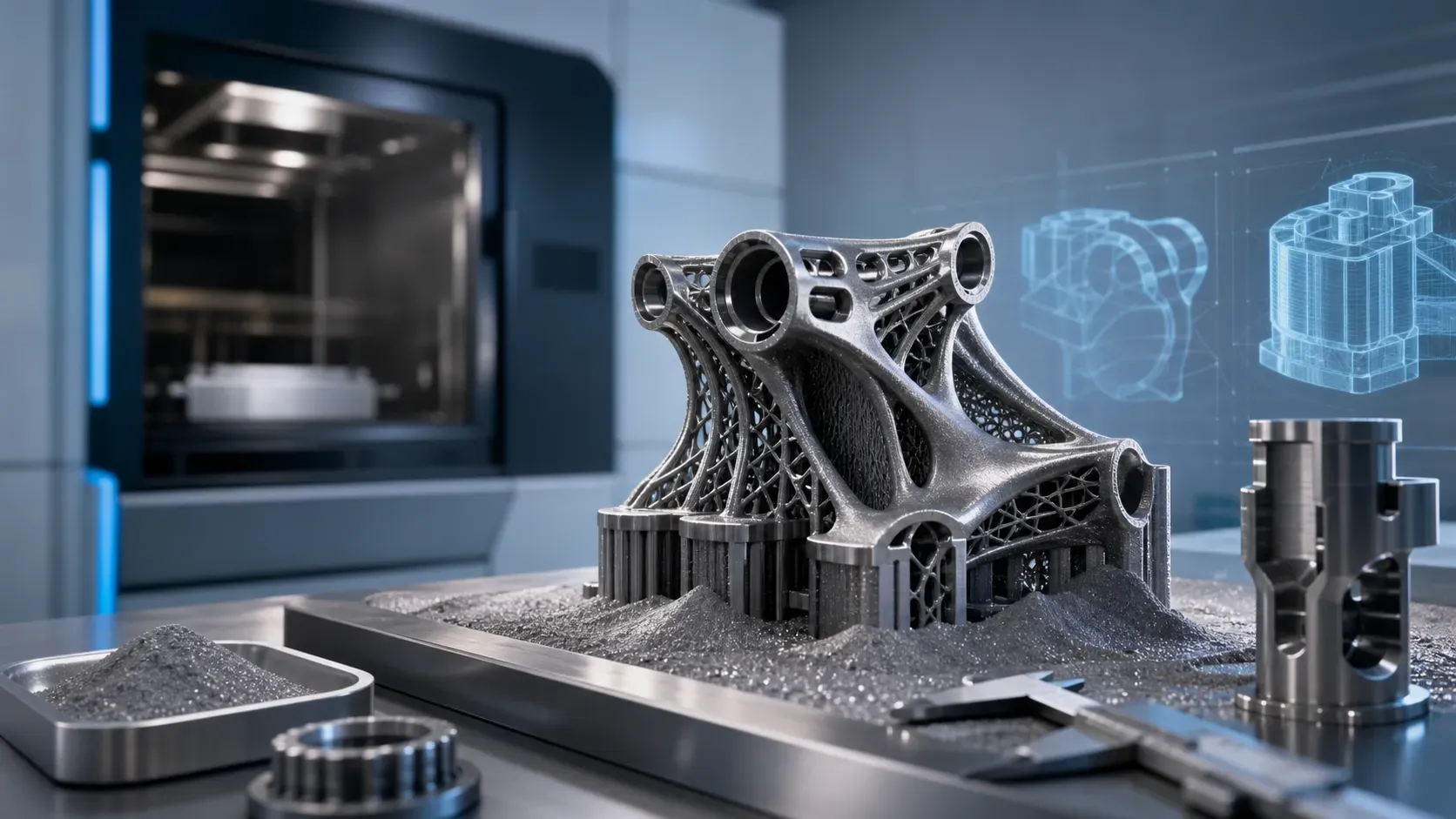

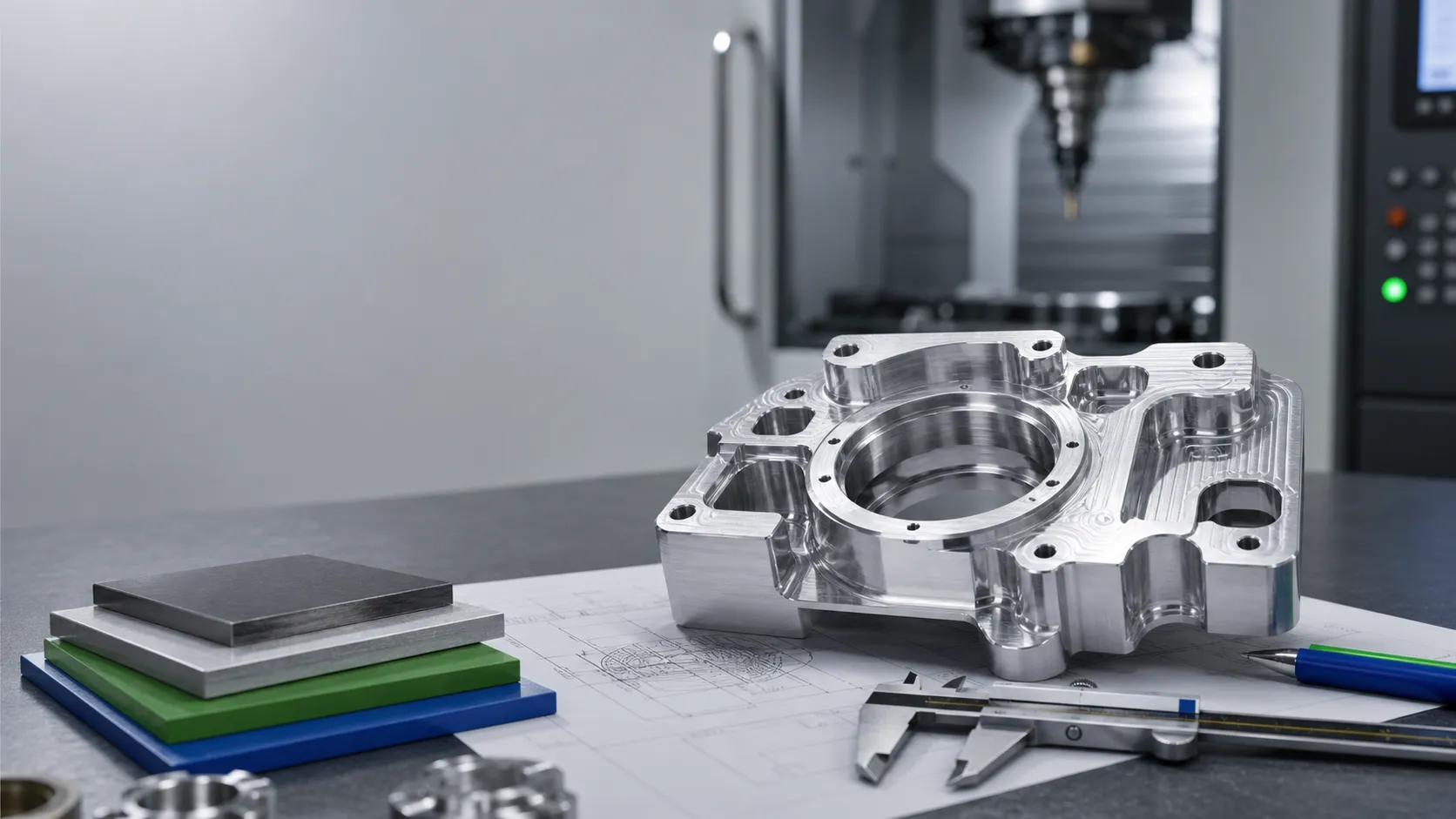
This is a practical guide to design optimization, material selection, tolerance strategy, and sourcing decisions.
Prefer to read or share this guide offline? Download the full PDF version of this CNC cost reduction guide for easy reference.
Cost Reduction Starts Before the Machine Starts
A high CNC quotation does not automatically mean a supplier is overpriced. In many projects, the largest cost drivers are already embedded in the design, rawing, material specification, inspection plan, and sourcing strategy.
Core principle Effective CNC cost reduction is not about squeezing supplier margin. It is about removing unnecessary material, machining time, setups, tooling, inspection, finishing, and communication risk.
Who This Guide Is For
Mechanical engineers and product-development engineers
Industrial designers and engineering project managers
Procurement managers and supply-chain teams
Automotive, robotics, industrial equipment, medical-device, and consumer-electronics companies
Teams sourcing prototypes, low-volume production, bridge production, or recurring CNC orders
Typical Cost Escalators
Cost escalator | Why it increases cost |
|---|---|
Difficult or long-lead materials | Higher stock cost, slower cutting, longer procurement lead time, or greater tooling wear |
Tight tolerances applied everywhere | More finishing passes, measurement, temperature control, rework risk, and supplier contingency |
Deep cavities, small radii, and deep holes | Longer tools, slower feeds, poor chip evacuation, vibration, and breakage risk |
Multiple part orientations | More setups, re-zeroing, fixtures, labor, accumulated error, and scrap risk |
Unnecessary surface finishes | Extra subcontracting, masking, inspection, dimensional change, and minimum-order charges |
Conflicting or incomplete files | More engineering clarification, quote assumptions, revision risk, and production disputes |
Where CNC Machining Cost Comes From
A CNC quotation includes far more than raw material and spindle time. Understanding the cost structure helps engineering and procurement teams focus on the highest-impact decisions.
TOTAL CNC COST = MATERIAL + ENGINEERING + MACHINE TIME + SETUPS + TOOLING + FINISHING + INSPECTION + LOGISTICS + RISK
1. Raw Material
Blank size and shape
Minimum order quantity
Material yield and scrap ratio
Special grades and lead times
Material certification and traceability
Important A finished part weighing 500 g may require a 2 kg—or larger—starting blank. Finished-part weight is not the same as purchased material weight.
2. Programming and Engineering Preparation
CAD review
CAM programming and toolpath planning
Process routing
Fixture design
First-article preparation
Inspection-plan development
Non-standard cutting tools and inspection gauges
These are largely fixed costs. A single prototype and a batch of 100 parts both require core programming, process planning, and where needed, custom tooling or gauges, which is why one-off parts usually have a higher unit cost.
3. Machine Time
Roughing, semi-finishing, and finishing
Drilling, boring, reaming, and tapping
Tool changes and probing
Part flipping and re-alignment
Deburring, cleaning, and in-process measurement
4. Setups and Labor
Every additional setup adds operator time, coordinate re-establishment, clamping verification, alignment risk, and potential scrap. A geometrically simple part requiring six orientations may cost more than a more complex part that can be machined in one or two setups.
5. Finishing and Quality
Anodizing, bead blasting, plating, passivation, painting, heat treatment, grinding, and polishing
External transport and queue time
Masking and rack marks
Color variation and dimensional change
Secondary inspection and rework risk
The Seven Core Levers of CNC Cost Reduction
Cost-reduction lever | Question to ask | Primary benefit |
|---|---|---|
Simplify geometry | Are there complex features with little functional value? | Less machining time |
Relax non-critical tolerances | Does every dimension require high precision? | Less finishing and inspection |
Optimize material selection | Are we paying for performance the part does not need? | Lower material and tooling cost |
Reduce setups | Can the part be machined from fewer orientations? | Less labor and lower alignment risk |
Standardize holes, threads, and radii | Are special tools or uncommon sizes required? | Fewer tool changes and custom tools |
Optimize surface requirements | Do all surfaces need premium finish or post-processing? | Lower finishing cost |
Adjust sourcing strategy | Are quantity, timing, and order structure economical? | Better absorption of fixed cost |
What Engineering Controls
Part geometry
Material and tolerances
Surface roughness
Datums and GD&T
Inspection requirements
Whether parts are split or consolidated
What Procurement Controls
Order quantity and delivery cadence
Approval of equivalent materials
Supplier selection and quote scope
Quality documentation
Packaging and logistics
Annual volume forecast
Best practice The strongest savings occur when engineering, procurement, and the machining supplier review the project together before the quotation is finalized.
First Principle: Reduce Machining Time
Design Features That Commonly Increase Cycle Time
Feature | Cost impact |
|---|---|
Large material-removal volume | More roughing, chips, heat, and machine hours |
Deep, narrow pockets | Long tools, slow cutting, vibration, and poor chip evacuation |
Many hole sizes and threads | More tools, tool changes, setup checks, and inspection |
Small-diameter deep holes | Drift, breakage, coolant and chip-evacuation challenges |
Small internal radii | Smaller cutters, lower rigidity, slower feeds, and shorter tool life |
Complex 3D surfaces | Longer programming and finishing toolpaths |
Large premium-finish areas | Smaller stepovers, slower feeds, polishing or grinding |
Multi-directional features | Additional setups, multi-axis equipment, or special fixtures |
Reduce Material Removal
Use plate, bar, tube, extrusion, or near-net-shape stock where practical.
For larger volumes, evaluate castings, forgings, or extrusions as starting blanks.
Consider splitting a very bulky part into machinable components when the assembly trade-off is acceptable.
Use pockets, openings, or localized wall thickness only where structural analysis supports the change.
Caution Less material is not always cheaper. Walls that are too thin can deform, vibrate, or scrap during machining. The goal is stable geometry—not minimum wall thickness.
Limit Premium Finishing to Functional Areas
Mating and locating surfaces
Sealing surfaces
Bearing and sliding surfaces
Cosmetic faces
General machined surfaces
Surfaces with no special requirement
Optimize Pockets, Radii, Holes, Threads, and Thin Walls
Deep Pockets
Deep pockets often require long-reach tools. Longer tools are less rigid and more susceptible to vibration, deflection, chatter marks, slow cutting parameters, accelerated wear, poor chip evacuation, and breakage.
Reduce pocket depth
Increase pocket width
Avoid extreme depth-to-width ratios
Provide tool-entry and chip-clearance space
Avoid enclosed features that trap chips
Add practical corner and floor radii
Internal Corner Radii
End mills are round. A smaller internal radius normally requires a smaller cutter, which reduces rigidity and increases cycle time.
Use standard cutter radii whenever possible
Make the radius comfortably larger than the minimum manufacturable radius
Standardize radii across the part
Avoid several nearly identical radius values
Use reliefs or dog-bone features when assembly requires a nominally square internal corner
Holes and Threads
Design choice | More economical approach |
|---|---|
Non-standard hole diameter | Use standard drill and reamer sizes where function permits |
Small, deep blind hole | Increase diameter, reduce depth, machine from both sides, or use a through-hole |
Thread to the bottom of a blind hole | Specify drilling depth, effective thread depth, engagement length, and bottom clearance separately |
Excessive thread length | Limit thread length to the functional engagement requirement |
Many thread standards | Consolidate thread sizes and standards wherever possible |
Thin Walls
Thin walls may vibrate, bend, distort under clamping force, move with heat, or spring back after machining. Engineering plastics are especially sensitive to heat, moisture, internal stress, and clamping pressure.
Define allowable deformation
Identify critical measurement locations
Explain the real assembly condition
Confirm whether temporary support ribs or sacrificial features are acceptable
Tolerance: The Most Common Hidden Cost Multiplier
Rule of thumb Every tight tolerance on a drawing should have a clear functional reason.
Why Tight Tolerances Increase Cost
Additional finishing passes
Reduced cutting speed
Specialized tools or fixtures
Temperature control
In-process measurement
CMM inspection
Rework and scrap risk
Supplier risk contingency
Classify Dimensions into Four Groups
Category | Examples | Recommended approach |
|---|---|---|
Critical fit dimensions | Bearing seats, sealing faces, locating-pin holes, shaft fits, precision slides | Control according to actual fit and functional analysis |
Functional dimensions | Mounting, travel, clearance, and operating relationships | Use the precision needed for function—not the tightest achievable value |
General machined dimensions | Features with no special functional sensitivity | Use a clearly stated general tolerance standard |
Non-critical dimensions | Envelope, relief, clearance, and appearance-only dimensions | Apply wider tolerances |
Avoid Conflicting Requirements
3D model and 2D drawing dimensions do not match
General tolerances, individual callouts, and inspection requirements are inconsistent
The same feature is over-constrained by multiple dimension chains
GD&T lacks clear datums
Surface roughness is applied to the entire part
Reference dimensions are treated as inspection requirements
Control Functional Relationships, Not Just Individual Dimensions
Where appropriate, geometric dimensioning and tolerancing can express functional relationships more clearly through position, flatness, parallelism, perpendicularity, coaxiality, profile, and runout. Overly complex or unjustified GD&T, however, also increases inspection cost.
Engineering questions Does this tolerance directly affect function? Is it required for assembly? Can clearance, shims, or locating features compensate? Is high precision needed only locally? Is 100% inspection necessary, or is first-article plus sampling sufficient?
Material Selection: Do Not Pay for Performance You Do Not Need
Material | Typical strengths | Cost considerations |
|---|---|---|
Aluminum 6061-T6 | General structures, housings, brackets, fixtures, consumer products | Good machinability, broad availability, balanced strength, weight, cost, and anodizing response |
Aluminum 7075-T6 | High-strength lightweight structures, motorsport, aerospace-type applications | Higher material cost; choose only when added strength is justified |
Stainless Steel 304 | General corrosion resistance and cleanability | Slower machining than aluminum or free-machining steels |
Stainless Steel 316 | Higher corrosion resistance, marine or chemical exposure | Do not default to 316 without a clear environmental requirement |
Carbon / Alloy Steel | Strength, wear resistance, heat treatment | Often economical, but include corrosion protection, heat-treatment distortion, and grinding |
Titanium alloys | High strength-to-weight ratio, corrosion resistance, biocompatibility | High stock price, slow cutting, heat concentration, and rapid tool wear |
Engineering plastics | Low weight, insulation, friction control, chemical resistance | Precision can be limited by heat, moisture, residual stress, clamping, and rebound |
Engineering Plastics Commonly Machined
POM / Acetal
ABS
Nylon
Polycarbonate
PTFE
PEEK
PMMA / Acrylic
Selection framework Separate required performance from preferred performance and non-functional extras. Do not use an expensive material to solve a problem that can be addressed more economically through geometry, loading, or environmental protection.
Reduce Setups and Choose the Right Process
Why Setup Count Matters
Operator handling and re-zeroing
Locating and alignment time
Fixture and soft-jaw requirements
Work-in-process waiting
First-piece validation
Accumulated positional error
Collision and scrap risk
3-Axis vs. 5-Axis Machining
Process | Advantages | When it may be economical |
|---|---|---|
3-axis machining | Widely available, lower hourly rate, straightforward programming and inspection | Prismatic parts with accessible faces, holes, slots, and contours |
5-axis machining | Fewer setups, access to multiple directions, shorter tools, improved feature-to-feature accuracy | Complex parts where avoided setups, fixtures, and alignment exceed the added machine and programming cost |
Key question Do the setup, fixture, and alignment savings from 5-axis machining exceed the additional equipment and programming cost?
Do Not Mill a Part That Should Be Turned
Rotationally symmetric parts—shafts, sleeves, cylindrical connectors, flanges, threaded fittings, and round sealing components—should be evaluated for CNC turning or mill-turn machining.
Should a Complex Part Be Split?
One-piece machining | Split-and-assemble |
|---|---|
Longer machining time, fewer part numbers, higher structural continuity, simpler assembly | Simpler individual components, but added fasteners, welding or bonding, tolerance stack-up, purchasing complexity, and failure points |
Always compare total manufacturing cost, not only the quoted price of one component.
Design for Fixturing, Datums, and Tool Access
Provide Clamping Space
Without stable clamping areas, suppliers may need custom soft jaws, vacuum fixtures, dedicated tooling, adhesive workholding, temporary tabs, or extra setups.
Confirm whether sacrificial tabs are acceptable
Identify allowable clamping zones
Mark surfaces where clamp marks are prohibited
Define when temporary features may be removed
Confirm whether removal requires secondary finishing
Use Clear, Repeatable Datums
Stable planar surfaces
Accessible contact surfaces
Features tied to assembly relationships
References that can be reproduced in both manufacturing and inspection
Avoid Inaccessible Features
Problem feature | Possible consequence |
|---|---|
Hole blocked by a side wall | Additional orientation or special-angle tooling |
Closed internal corner | EDM, split construction, or redesign |
Reverse step or hidden chamfer | Extra setup or special tool |
Cross-hole inside a deep slot | Multi-axis machining or part split |
Internal thread with no tool access | Special tooling or assembly redesign |
Undercut | Lollipop, keyseat, or dovetail tool; extra access and inspection |
Design review question Is every hard-to-reach feature functionally necessary, or can it be opened, relocated, standardized, or eliminated?
Surface Roughness and Post-Processing
Do Not Apply Premium Surface Requirements Everywhere
High surface quality typically requires slower feed rates, smaller stepovers, extra finishing toolpaths, polishing or grinding, and additional inspection.
Sealing surfaces
Sliding surfaces
Bearing fits
Optical areas
Defined cosmetic faces
Fluid-contact or friction-critical surfaces
Clearly Mark Cosmetic Surfaces
If only the front face requires a premium appearance, mark it. Otherwise, the supplier may assume that all visible surfaces must receive the same treatment.
Common Post-Processing Decisions
Process | Cost drivers and questions |
|---|---|
Anodizing | Type, color, thickness, batch size, masking, electrical contact points, cosmetic grade, and color tolerance |
Bead blasting | Separate operation; useful for visual uniformity but unnecessary for many internal prototypes |
Brushing | Texture direction, consistency, inaccessible geometry, and interaction with anodizing |
Heat treatment | Distortion, hardness variation, retained machining allowance, stress relief, final-state inspection, and possible grinding |
Multiple finishes | Each extra operation adds handling, minimum charges, queue time, dimensional risk, and re-inspection |
Cost warning A stack such as bead blasting + anodizing + laser marking + local polishing + special packaging can approach—or exceed—the base machining cost.
Inspection Requirements Affect the Quotation
Inspection Is Not a Free Add-On
Full dimensional report
CMM inspection
100% inspection
Material certificate
First Article Inspection (FAI)
PPAP
Hardness, roughness, and coating-thickness tests
Profile scanning
Special metrology
Third-party certification
Match Inspection Level to Project Risk
Project stage | Recommended focus |
|---|---|
Prototype | Critical assembly and functional dimensions, material, appearance, and design validation |
Pilot / low-volume production | Process stability, repeatability of critical dimensions, finishing results, assembly and functional testing |
Production | Sampling plan, control plan, key characteristics, process capability, batch traceability, and regulatory requirements |
Before Requiring Full Inspection, Ask
Is the part safety-critical?
What is the consequence of failure?
How has the supplier performed historically?
Is the process stable?
What is the batch size?
Do customer or regulatory requirements mandate documentation?
Practical alternative For lower-risk parts, first-article inspection plus targeted sampling may provide better value than a full dimensional report for every piece.
Procurement Strategy: Lower Unit Price and Total Cost
Use Quantity Breaks
Programming, process planning, material preparation, and first-article work are fixed costs. Ask for tiered pricing to reveal the quantity breakpoint and whether dedicated fixtures or alternate stock become economical.
Suggested quantities | What the comparison reveals |
|---|---|
1 / 5 / 10 / 50 / 100 pieces | Fixed-cost share, price breakpoints, fixture economics, process changes, and alternative stock strategies |
Do Not Overbuy for a Lower Unit Price
Demand certainty
Likelihood of design revision
Inventory and cash cost
Product life cycle
Material aging, moisture, or corrosion risk
Provide a Realistic Lead Time
Rush scheduling and overtime
Expedited material procurement
Priority finishing
Express logistics
Higher contingency for coordination risk
Combine Similar Parts Where Practical
Parts using the same material, finish, approximate size, and quality requirements may be grouped to reduce material minimums, finishing minimum charges, logistics, and supplier-management effort.
Maintain Strict Revision Control
Part number
Drawing revision
3D model revision
Material
Quantity
Finish
Inspection scope
Delivery date
Do Not Compare the Lowest Price Alone
A very low quote may exclude or assume | What to confirm |
|---|---|
Different material grade | Exact grade, condition, certificate, and traceability |
No finishing or inspection | Included scope and acceptance criteria |
Different default tolerances | Applicable standard and critical features |
Lower quality level | Cosmetic expectations, deburring, edge condition, and documentation |
Packaging and freight excluded | Incoterm, packaging, shipping, duties, and total delivered cost |
Pre-RFQ CNC Cost-Reduction Checklist
CAD and Drawings
☐ Are the 3D model and 2D drawing revisions consistent?
☐ Have non-functional micro-features been removed?
☐ Have unnecessary deep pockets and small radii been avoided?
☐ Is there adequate tool access?
☐ Have machining directions been minimized?
☐ Is stable clamping space available?
Tolerances
☐ Are tight tolerances limited to critical dimensions?
☐ Is the general tolerance standard clearly stated?
☐ Are duplicate or conflicting dimensions removed?
☐ Do GD&T callouts use clear datums?
☐ Is the inspection scope defined?
Material
☐ Does the selected material match the real function?
☐ Is a more machinable equivalent acceptable?
☐ Is a specific grade required?
☐ Is certification required?
☐ Can standard stock sizes be used?
Holes and Threads
☐ Are standard hole sizes used?
☐ Are small-diameter deep holes minimized?
☐ Can blind holes become through-holes?
☐ Is thread length limited to actual engagement?
☐ Are thread standards consolidated?
Surface and Quality
☐ Are roughness requirements limited to necessary surfaces?
☐ Are blasting, polishing, or anodizing truly required?
☐ Are cosmetic and non-cosmetic surfaces identified?
☐ Is strict color matching necessary?
☐ Are masking areas defined?
☐ Is full dimensional inspection justified?
Procurement
☐ Have tiered quantities been requested?
☐ Is the lead time realistic?
☐ Are packaging and freight included?
☐ Are all post-processes included in the quote?
☐ Is first-article plus sampling acceptable?
CNC Cost-Reduction Priority Matrix
Optimization measure | Savings potential | Implementation difficulty | Recommended priority |
|---|---|---|---|
Relax non-critical tolerances | High | Low | Highest |
Increase internal corner radii | High | Low | Highest |
Reduce deep pockets and deep holes | High | Medium | Highest |
Reduce setup directions | High | Medium | Highest |
Choose a more machinable material | High | Medium | High |
Standardize holes and threads | Medium | Low | High |
Reduce unnecessary surface requirements | Medium to high | Low | High |
Use economical quantity breaks | Medium to high | Low | High |
Use standard stock | Medium | Medium | Medium |
Split a complex part | Project-dependent | Medium | Evaluate case by case |
Use 5-axis machining | Project-dependent | Medium | Evaluate against setup count |
Remove all inspection | High risk | Low | Not recommended |
Illustrative Case: Aluminum Equipment Bracket
Original design | DFM-optimized design |
|---|---|
7075 aluminum | 6061 aluminum after load verification |
Large solid starting blank | Reduced material-removal volume |
Four deep pockets | Shallower, wider pockets |
Multiple small internal radii | Standardized larger radii |
Six hole diameters and three thread standards | Three standard hole sizes and one thread standard |
Tight tolerances on many non-critical dimensions | Tight control limited to locating and assembly features |
Fine machined appearance on all surfaces | Standard finish on non-cosmetic faces |
Five setups | Two primary setups after geometry revision |
Full CMM report | Targeted report for critical dimensions |
Black hard anodizing | Standard black anodizing based on actual environment |
Result The combined changes reduce material cost, cutting volume, tool count, tool-change time, setup time, finishing time, inspection time, post-processing expense, and rework risk. The goal is not to delete requirements blindly—it is to ensure every requirement supports a real function.
Conclusion: The Best CNC Savings Happen Before Quotation
Reducing CNC machining cost is not the same as choosing the lowest quotation. A low price can later become a quality issue, delivery delay, rework event, assembly failure, supplier dispute, or project slip.
A Better Cost-Reduction Process
Define the part’s real functional requirements.
Identify the largest manufacturing cost drivers.
Prioritize high-cost features with low functional value.
Concentrate tight tolerances on critical areas.
Choose materials that meet the requirement and machine efficiently.
Reduce setups, tool changes, and special processes.
Match inspection to project and failure risk.
Evaluate total delivered cost—not only unit price.
Final takeaway A well-optimized part is usually not only less expensive. It is also easier to machine, inspect, reproduce, and scale into production.
Let Unionfab Help Reduce Your CNC Machining Cost
Submit your CAD files and project requirements. Unionfab’s engineering team can review:
Part geometry and manufacturability
3-axis, 5-axis, turning, and mill-turn process options
Material selection and equivalent-material opportunities
Tolerance and surface-roughness optimization
Deep holes, pockets, thin walls, radii, and thread design
Setup count, machining direction, and fixture strategy
Post-processing and quality documentation
Prototype, low-volume, and production cost structure
CNC machining versus additive manufacturing
Lead time and total procurement cost