
CNC Aluminum Alloys
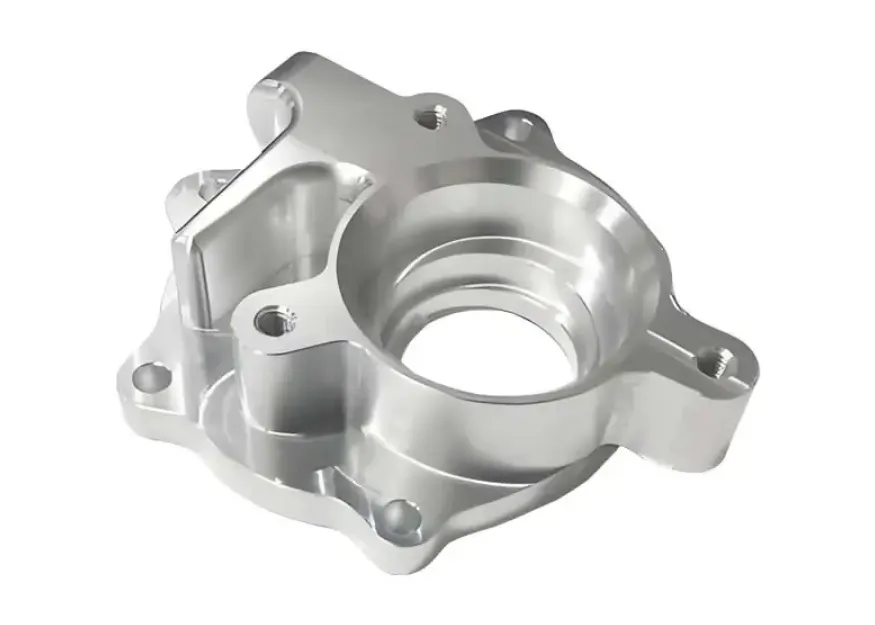
CNC-machined Aluminum Alloys are widely used across various industries due to their lightweight, high strength, corrosion resistance, and excellent machinability. These alloys offer superior mechanical properties while maintaining cost-effectiveness, making them an ideal choice for aerospace, automotive, electronics, and industrial applications.
Light Weight
Corrosion Resistance
Thermally Conductive
Complex Geometries
Lead Time
5~7 days
Density
2.7g/cm³
Typical Tolerance
±0.1 mm
Max Size
3600 x 2500 x 600 mm
Material Profile
Why Aluminum Alloys Are the CNC Baseline
Light weight and high strength
Aluminum alloys have a density of about 2.7 g/cm³, which is lighter than steel, but some alloys (such as 7075) are close to steel in strength.
Excellent corrosion resistance
In particular, these alloys 5052, 5083, 6061 are suitable for wet or Marine environments.
Good machinability
6061, 5052 These alloys have excellent CNC cutting properties, suitable for high-precision parts.
Performance Snapshot
Material Characteristics at a Glance
Relative performance profile across key engineering parameters. Values are contextual — not absolute stress ratings.
Detail
MediumSource score: 3/5
Strength
ExcellentSource score: 5/5
Flexibility
LowSource score: 2/5
Benefits
- Lightweight: Aluminum alloys are significantly lighter than other metals, making them suitable for aerospace and automotive applications.
- High Machinability: Aluminum is easy to cut, drill, and mill, allowing for faster production with lower tooling costs.
- Corrosion Resistant: Natural resistance to corrosion reduces the need for additional coatings in many environments.
- Thermal Conductivity: Ideal for components requiring heat dissipation, such as heat sinks.
Limitations
- Strength Limitations: Aluminum alloys may not provide the same level of strength as steel or titanium in high-load applications.
- Surface Softness: Aluminum is softer compared to other metals, making it susceptible to scratches and dents.
- Cost: Depending on the alloy and application, aluminum can be more expensive compared to other materials like carbon steel.
Technical Specifications
CNC Aluminum Alloys Family Data
Material Properties
Machining Rules
Available Finishes
Finishes That Make Sense For Aluminum Alloys
Anodizing
Creates a protective oxide layer on metal surfaces to improve corrosion resistance, wear resistance, and color options, commonly used for aluminum.
Powder Coating
Applies and cures a dry powder coating to create a durable, colored protective surface.
Electropolishing
Uses an electrochemical process to smooth and brighten metal surfaces by removing microscopic surface peaks.
Bead Blasting
Blasts the surface with fine media to create a uniform matte texture and reduce visible machining marks.
Compare & Decide
Pick A Different CNC Family
Higher Strength
CNC Steel Alloys
CNC Steel Alloys refers to the steel alloy used for CNC processing, that is, on the basis of carbon steel to add other alloying elements (such as chromium Cr, nickel Ni, molybdenum Mo, vanadium V, manganese Mn, etc.) to improve its strength, hardness, wear resistance and corrosion resistance. Steel alloys are widely used in aerospace, automotive manufacturing, industrial equipment, medical devices and tool manufacturing.
Corrosion Resistance
CNC Stainless Steel
CNC Stainless Steel is a kind of high strength, corrosion resistance, high temperature resistant alloy material, mainly composed of iron (Fe), chromium (Cr), nickel (Ni), carbon (C) and other elements. It is widely used in CNC machining to manufacture precision parts, structural parts, medical devices, automotive parts, etc., and is favored for its excellent mechanical properties, durability, and surface treatment adaptability.
Premium Strength-to-Weight
CNC Titanium Alloys
Titanium Alloys are a kind of high strength, low density, corrosion resistance, high temperature resistance of metal materials, widely used in aerospace, medical, automotive, Marine engineering, military and other fields. Due to the high strength-to-weight ratio and excellent corrosion resistance of titanium alloys, it is difficult to process them, so special tools and processing strategies are required for CNC machining.
Next Step
Ready To Machine Aluminum Alloys Parts?
Upload CAD and include a 2D drawing for tolerance-critical features, threads, finish requirements and inspection notes.

Unionfab is China's Largest 3D Printing Manufacturing Company for Rapid Prototyping and On-Demand Production Parts.
沪ICP备17023219号-3Region: -, Version: 26.09.14
