
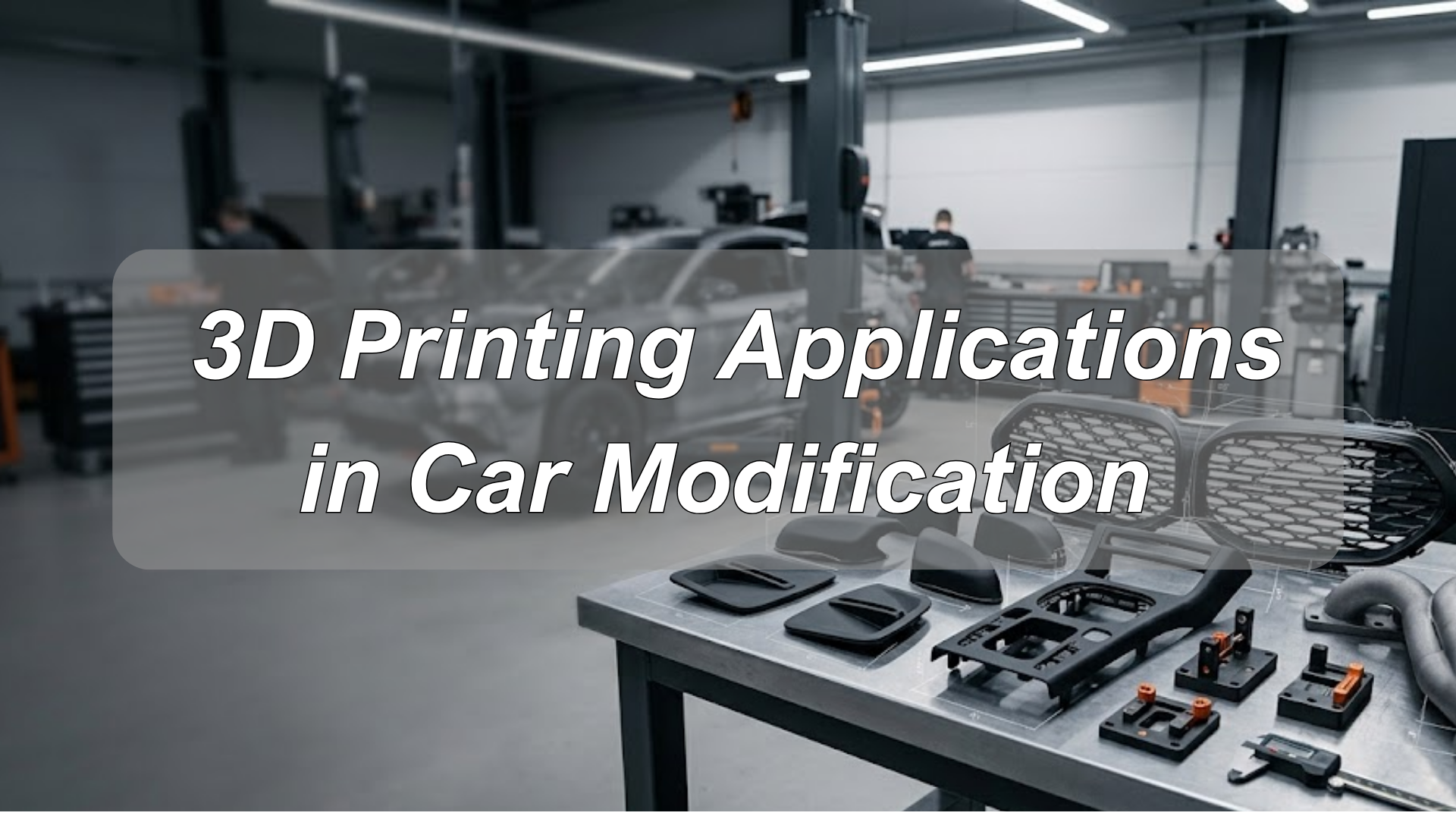
Explore how 3D printing is used in car modification, from custom interiors and exterior parts to performance upgrades, fitment testing, and low-volume production.
Introduction
What is car modification? It involves altering a vehicle’s components so that it differs from its original factory condition in terms of performance, appearance, fit, or function. This is distinct from the broader automotive aftermarket, which also includes maintenance, repair, and replacement parts.
In recent years, 3D printing has emerged as a practical tool in this space. It reduces reliance on molds, shortens lead times, and eliminates the need for high minimum order quantities. For builders and aftermarket teams, it enables faster iteration, greater design freedom, and a more efficient approach to producing custom or low-volume parts.
With this in mind, this article explores five key applications of 3D printing in car modification:
Interior components (e.g. dashboard trim, center consoles, switch panels)
Exterior components (e.g. grilles, splitters, vents, mirror covers, body kits)
Functional and high-performance parts (e.g. intake ducts, exhaust manifolds, heat shields)
Prototyping and fitment testing (e.g. test-fit mockups before committing to final materials)
Jigs and fixtures (e.g. drilling guides, welding fixtures, panel alignment jigs)
1. Exterior Components and Styling Parts
Exterior components are one of the most visible applications of 3D printing in car modification. These parts often need to match existing body lines while introducing a more individualized look.
Examples: flares, grilles, aero accents, mirror housings, side markers, and decorative trim pieces.
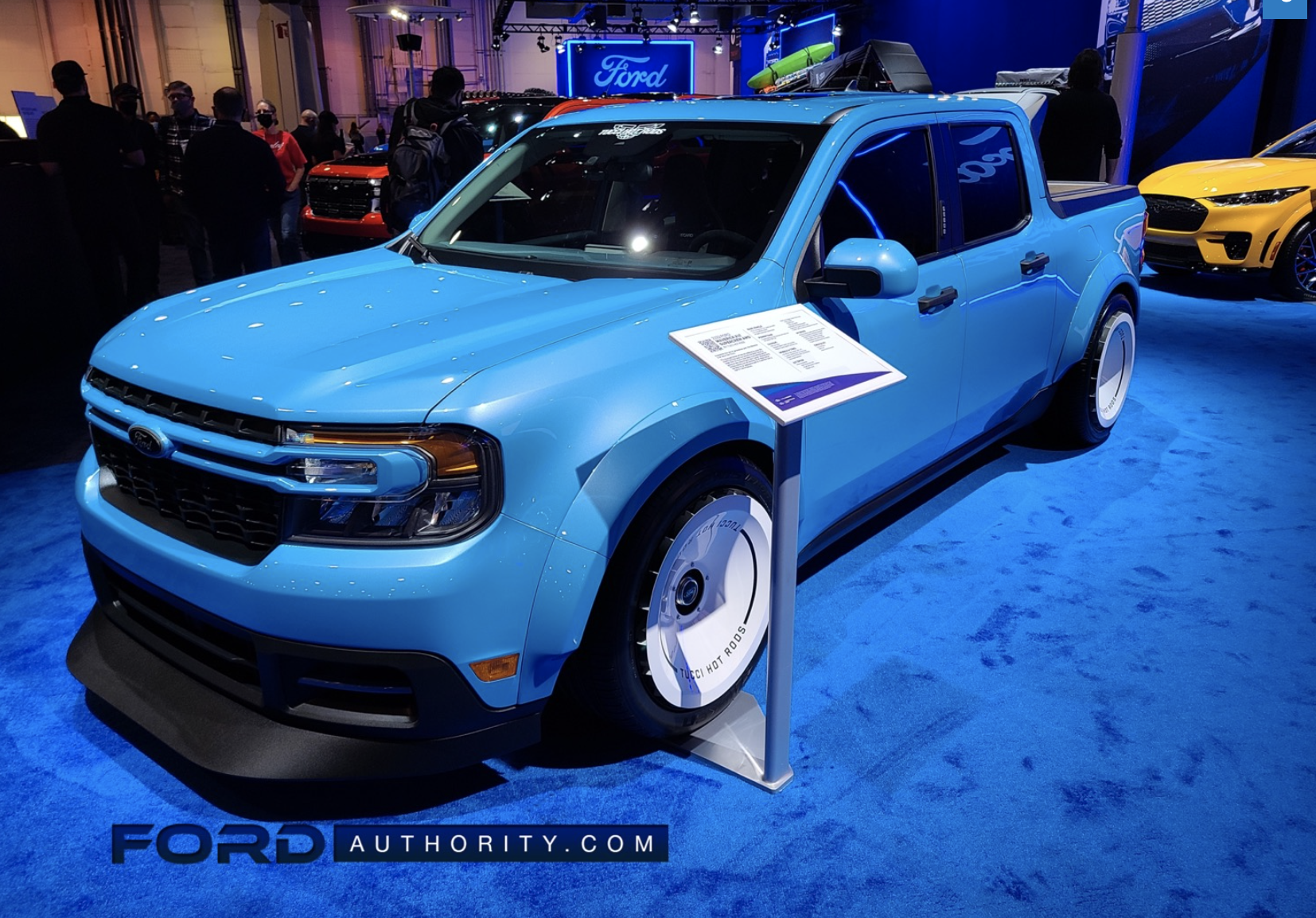
Case 1: Ford Maverick by Tucci Hot Rods
The 2022 Ford Maverick by Tucci Hot Rods provides a strong example of an exterior-focused application. Ford Authority reported that the build used 3D-printed exterior cosmetic parts designed by Dom Tucci, including a rear cab spoiler, fender flares, and a front spoiler. This case shows why 3D printing is so useful in car modification: it makes it easier to create highly customized visual parts without committing to conventional tooling or large production volumes.
Case 2: Custom Grille in a Full-Vehicle Build
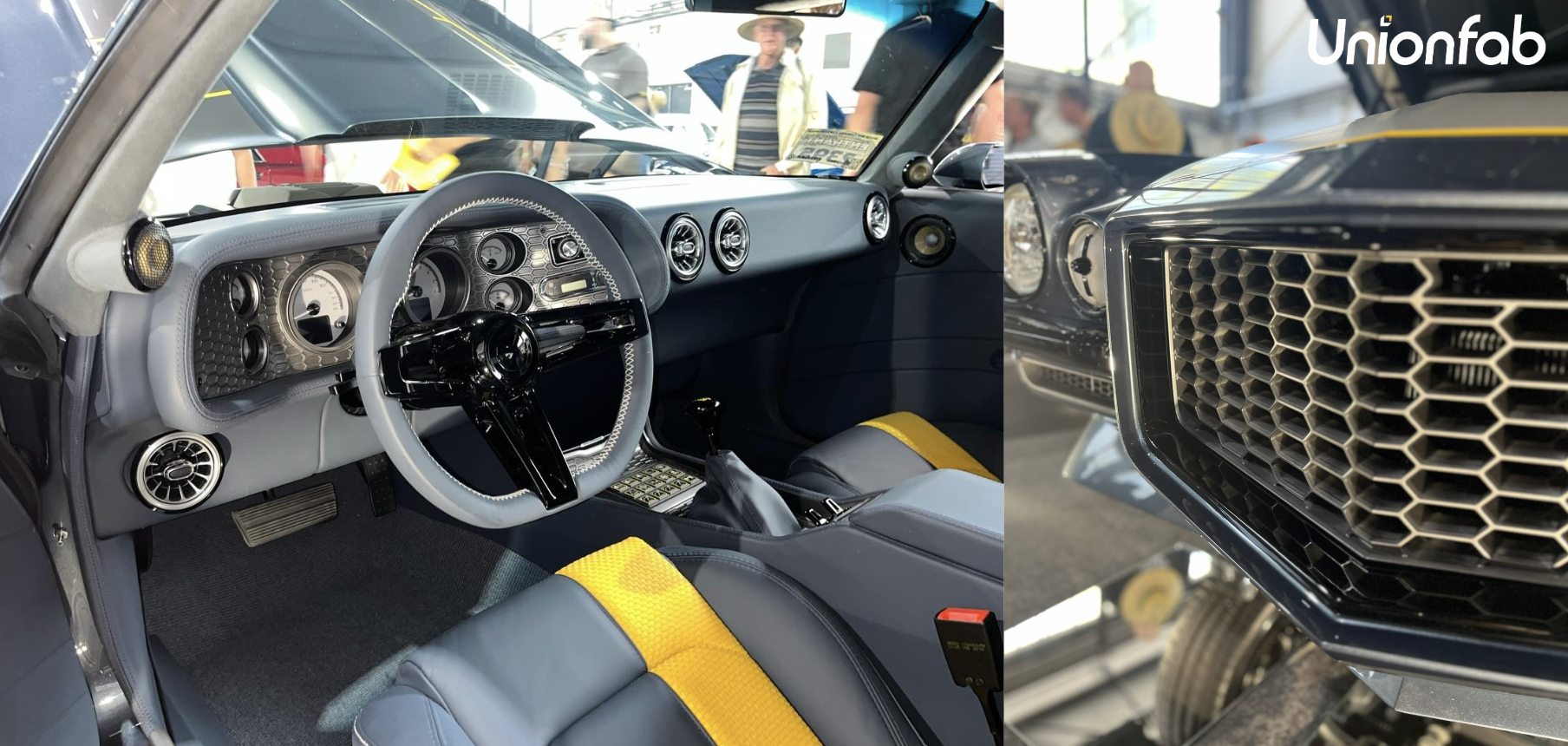
At Unionfab, we have also produced a custom grille as part of a full-vehicle automotive customization project. While the same build also included dashboard inserts and center-console elements, the grille highlights how 3D printing can be used for exterior styling parts that require customized geometry, precise fit, and low-volume production. Together, the project also shows how additive manufacturing can support coordinated customization across both the exterior and interior of a vehicle.
2. Functional and High-Performance Parts
When a build is focused on performance, 3D printing becomes valuable for parts that benefit from complex internal geometry, optimized airflow, or extreme heat resistance. These are areas where conventional fabrication often runs into practical limits.
Examples: intake manifolds, exhaust manifolds, cooling ducts, louvres, lightweight brackets, and heat shields.
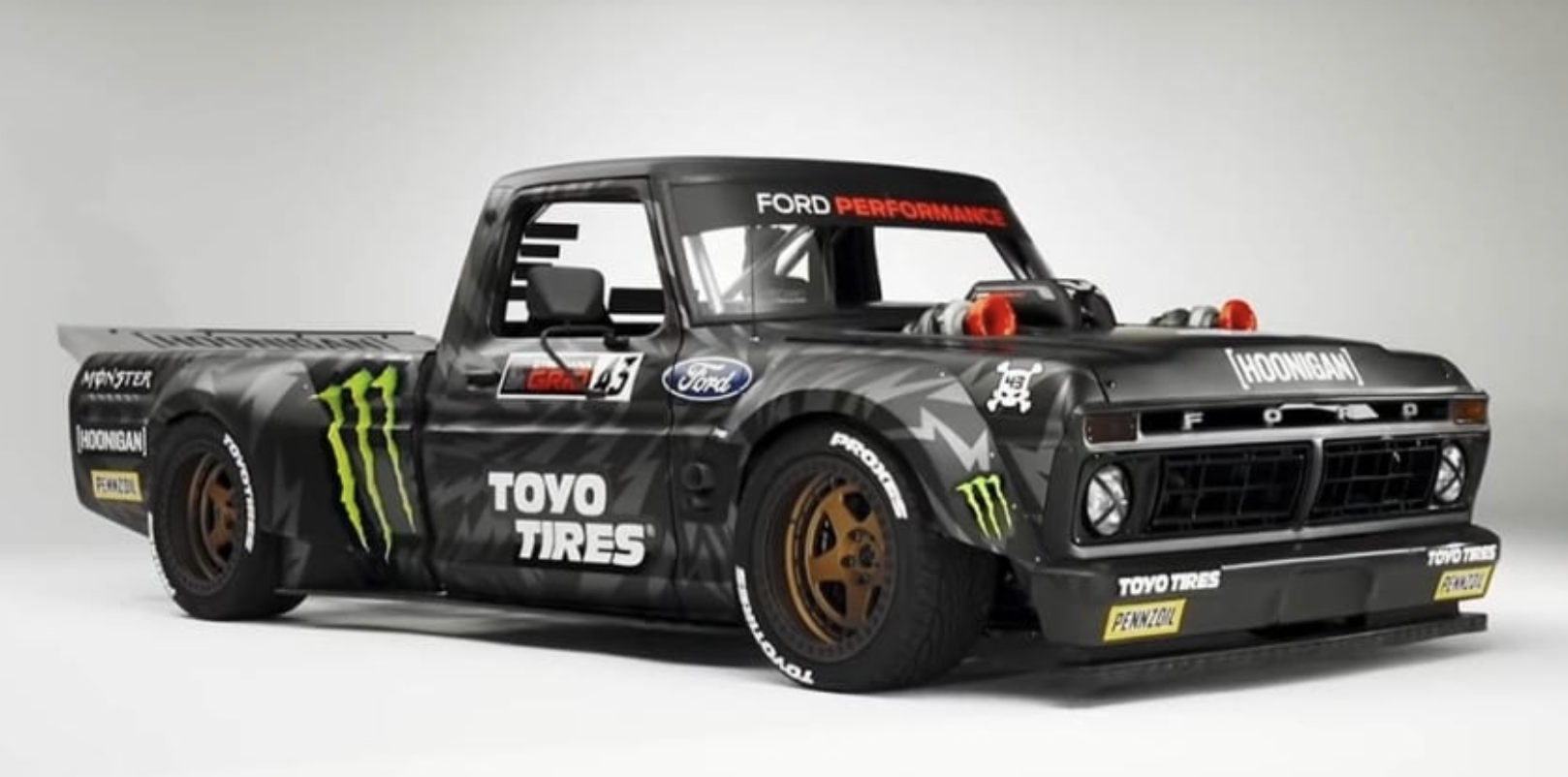
Case 1: Ford Hoonitruck
Ford's official Hoonitruck announcement remains one of the best-known examples. Ford engineers developed a 3D metal-printed aluminum intake manifold for Ken Block's heavily modified 1977 F-150 "Hoonitruck," a vehicle built around a twin-turbo EcoBoost engine producing more than 900 horsepower. Ford explicitly noted that the manifold had a complex web-like structure that could not be made using traditional manufacturing methods.
Case 2: Custom Metal 3D-Printed Exhaust Manifold Components
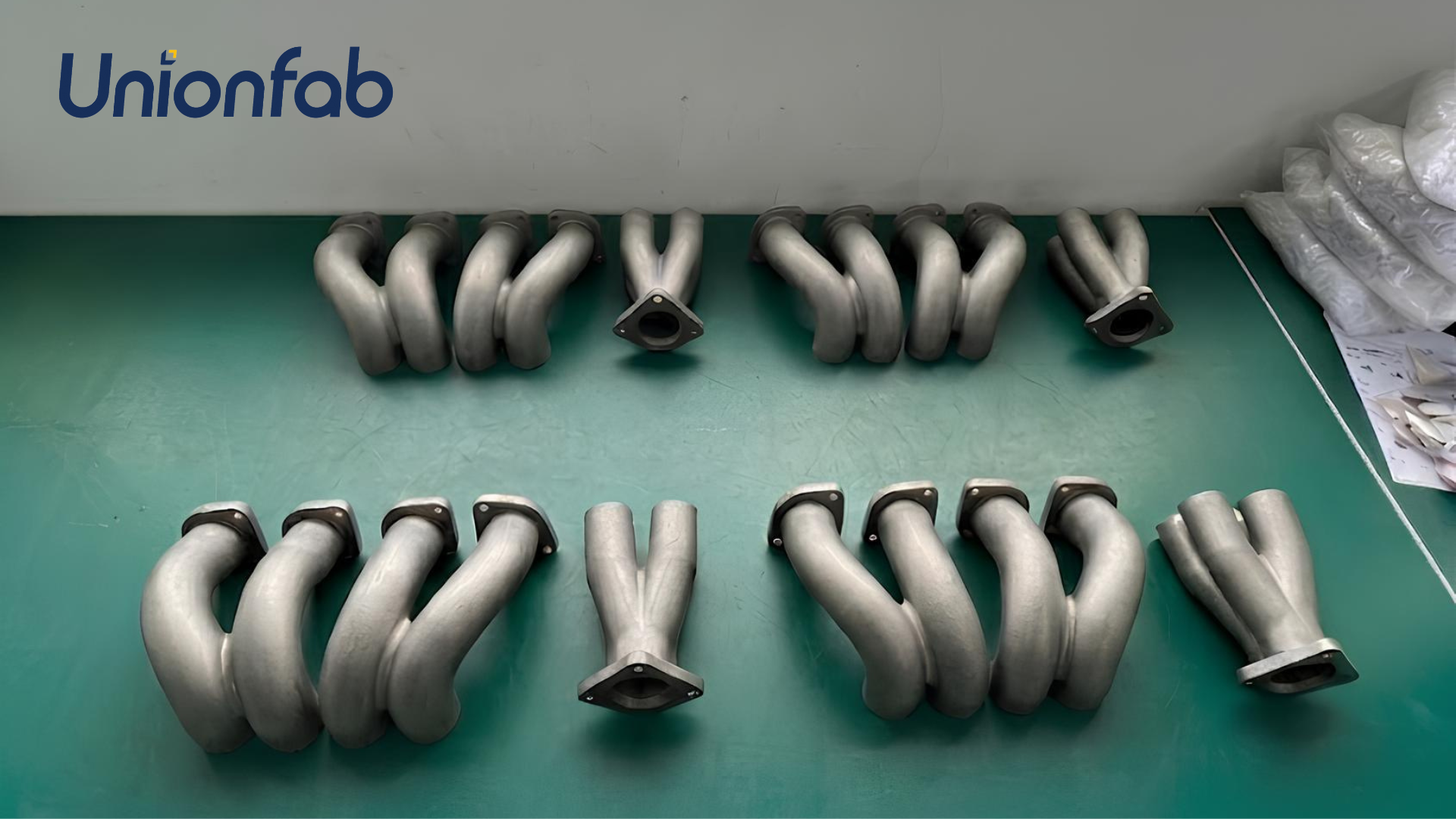
At Unionfab, we have produced custom metal 3D-printed exhaust manifold components in Inconel 625 for high-performance applications. These are manufactured as separate sections rather than as a fully finished manifold, allowing customers to weld and assemble the final product according to their build requirements. The approach combines the thermal performance of Inconel 625 with the design freedom of metal additive manufacturing for complex exhaust geometries.
Want to estimate the cost of your next automotive 3D printing project?
3. Interior Components
Interior customization is another major application of 3D printing in car modification. Interior parts often need exact fit, short production runs, and personalized details that are difficult to justify with conventional tooling.
Examples: dash trim, switch surrounds, vent details, seat components, gauge pods, center-console inserts, and branded interior accents.
Case 1: MINI
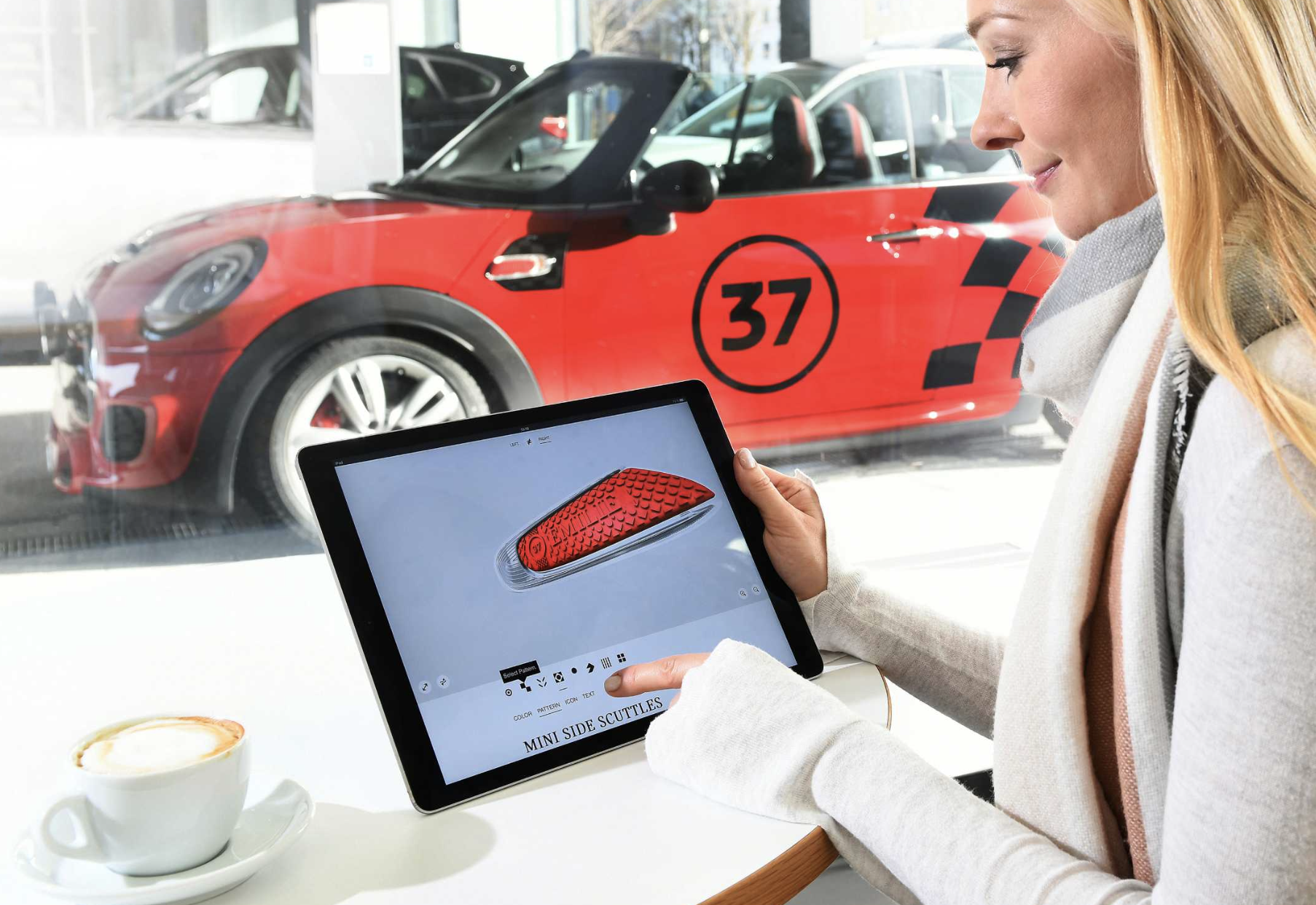
MINI provided an early and very clear example through its MINI Yours Customised program. The company offered personalized passenger-side interior trim, LED door sills, and LED door projectors, as well as side scuttles, produced with 3D printing and laser lettering.
Case 2: Porsche
Porsche applied a similar idea to performance seating with its 3D-print bodyform full bucket seat. Built on Porsche’s lightweight full bucket seat, it used 3D-printed cushion and backrest comfort elements offered in three rigidity grades. The seat could be retrofitted to eligible vehicles and gave drivers a more individualized seating interface without requiring a fully bespoke seat structure.
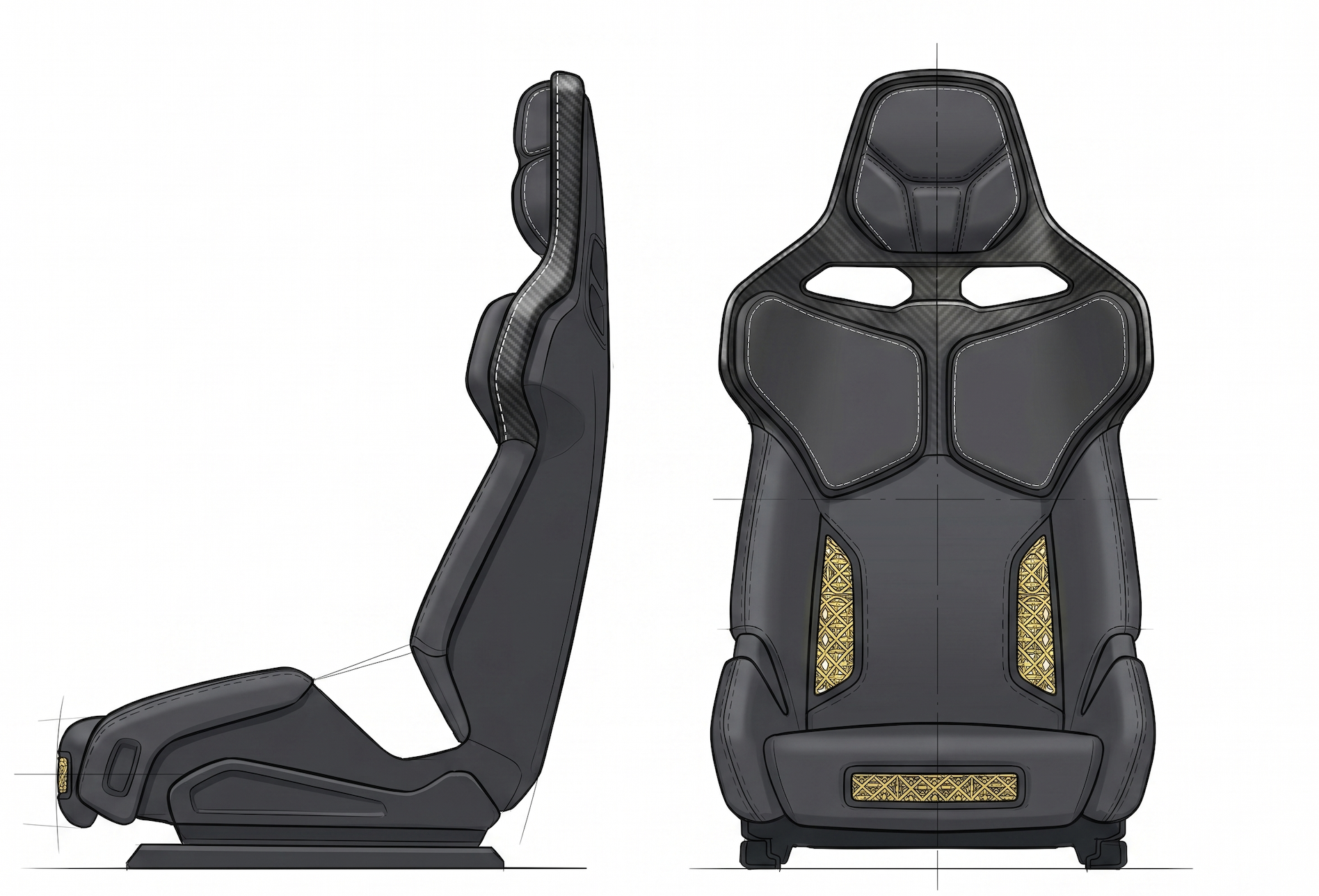
Note: Due to copyright restrictions, original images cannot be reproduced here. The illustration above was independently AI-generated based on publicly available technical descriptions, for reference purposes only, and does not represent the actual product.
4. Rapid Prototyping and Fitment Testing
Many modification projects run into delays or rework because the first physical version does not fit correctly. That is why rapid prototyping remains a core application of 3D printing in the aftermarket.
Examples: body-kit mockups, mounting brackets, intake-system prototypes, cabin trim test pieces, and other parts that need to be physically checked before final production.
SEMA’s reporting offers a clear view of how this works in the aftermarket development process.
In its article How SEMA Garage Detroit Can Speed Products to Market, the association explains that live measuring sessions are supported by 3D printing, scanning services, and the Tech Transfer program’s OEM and scanned-vehicle CAD library. That combination exists to help aftermarket manufacturers develop parts faster, validate fitment earlier, and move into production with less risk.
The workflow becomes even clearer in SEMA's '24 Toyota Tacoma 3D Scan Data Now Available article. SEMA explains that Tech Transfer members can access scan data covering the full exterior as well as suspension, brake assemblies, exhaust systems, air-intake areas, and other key zones.
Once aftermarket manufacturers access this 3D scan data, it can be used to support physical prototyping and fitment validation. This allows teams to test complex body kits, brackets, or other components before investing in expensive CNC machining or injection molds.
5. 3D-Printed Jigs and Fixtures
Unlike the other applications on this list, jigs and fixtures are not components installed on the vehicle. Instead, they are workshop tools used by mechanics and fabricators to ensure that custom modifications are built, cut, or welded with perfect accuracy.
Examples: drill guides (to prevent slipping on curved body panels), welding fixtures (to hold pipes at exact angles), alignment jigs (to place badges perfectly straight), and assembly aids.
Both industry reporting and workshop practices show why this application matters. For instance, custom shops often use FDM or SLA to print a custom drill template before cutting into an expensive fender for a widebody kit. These workshop aids eliminate the guesswork, help reduce human errors, and speed up the installation process.
For custom shops, this is a game-changer: instead of fabricating expensive metal jigs or measuring by hand for every unique project, technicians can simply 3D print a precise, disposable, or reusable guide specific to that exact vehicle.
Whether you are prototyping a single aero component or moving into low-volume production for a custom build, choosing the right manufacturing partner is crucial.
3D Printing Automotive Parts with Unionfab
With 20+ years of expertise and 1,000+ industrial machines, Unionfab is equipped to handle everything from one-off custom builds to repeatable, low-volume automotive parts production.
Technologies & Materials
Unionfab supports automotive 3D printing across a range of technologies and materials, covering both prototype development and end-use part production.
Technology | Materials | Typical Automotive Applications |
|---|---|---|
Nylon-like Resin, Standard Resin, and more | Interior trim, dashboard inserts, fitment prototypes | |
ABS, ASA, PC, PETG, and more | Exterior trim prototypes and high-temp functional prototypes | |
Inconel, Stainless Steel, Titanium, Aluminum, and more | Exhaust manifolds, performance brackets, structural parts | |
PA12, and more | Complex functional parts, lightweight structural components | |
PA12, PA11, and more | Housings, ducting, under-hood components |
Post-Processing Capabilities
To ensure your 3D-printed parts match OEM-level quality, our post-processing capabilities include:
Surface Refinement: Vapor smoothing, polishing, sandblasting, shot peening, and more
Coloring & Coating: Custom color matching, dyeing, powder coating, and clear coating
Plating: Chrome, nickel, zinc plating
Detailing: VDI/SPI/mold textures and laser engraving
Ready to place your first order? New customers get 10% off.
FAQs
How is 3D printing used in automotive modification?
3D printing is commonly used in automotive modification for custom interior parts, exterior styling components, performance airflow parts, fitment prototypes, and workshop tools such as jigs and fixtures.
Can 3D printing be used for truck modification parts?
Yes, 3D printing is a highly effective solution for truck modification, enabling the creation of custom exterior components like trim, spoilers, and fender flares, as well as functional interior accessories and specialized brackets.
Is 3D printing used to make automotive tools and fixtures?
Yes. In automotive modification, 3D printing is often used to make drill guides, alignment jigs, trim-install tools, mock-up fixtures, and other workshop aids. These tools help improve consistency, speed up installation, and reduce the risk of fitment errors during custom builds.
Can 3D printing make custom car emblems and exterior trim parts?
Yes. 3D printing is well suited to custom car emblems, trim pieces, side scuttles, grille elements, and other decorative exterior parts. These components usually require customized geometry and low production volumes, which makes additive manufacturing more practical than conventional tooling in many modification projects.