
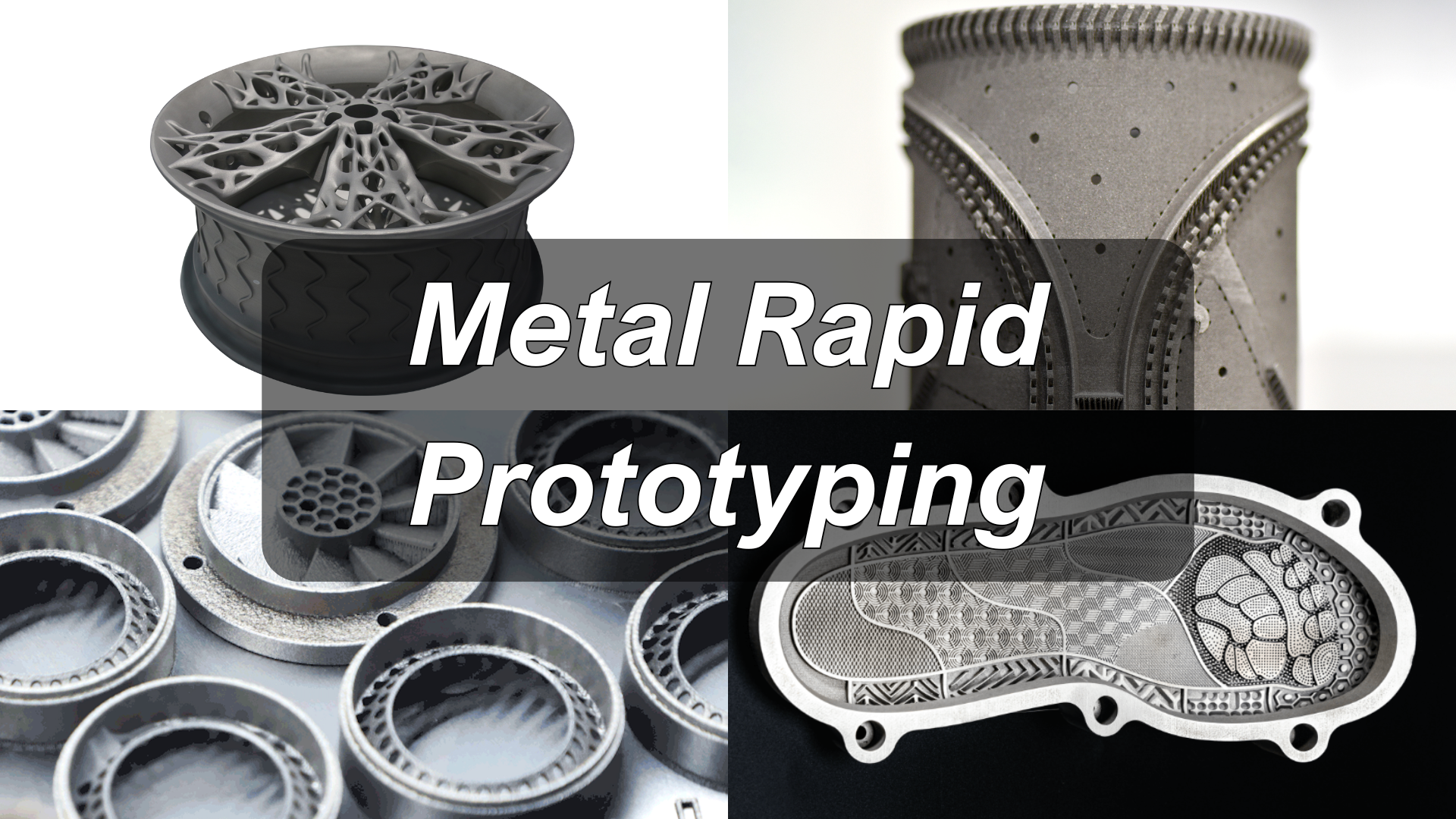
Learn about metal rapid prototyping, including what it is, when to use it, and how to compare four methods to select the right process.
Introduction
Metal rapid prototyping has become an essential tool for engineers and product designers who need to bring ideas to life quickly. Unlike traditional manufacturing, rapid prototyping allows teams to create functional metal parts at a fraction of the time and cost, enabling faster testing, iteration, and market entry.
However, rapid doesn’t mean without careful consideration. The real challenge is balancing speed, accuracy, and material performance. Whether developing a precision medical implant or a lightweight automotive bracket, mastering the intricacies of metal prototyping is essential to turning a digital design into a reliable, high-performance physical component.
What Is Metal Rapid Prototyping?
Metal rapid prototyping refers to the process of producing metal components quickly to validate designs, test functionality, and assess manufacturability before committing to full-scale production. Unlike traditional manufacturing, which often requires expensive molds or complex setups, rapid prototyping focuses on agility, allowing engineers to create physical parts directly from 3D CAD data in a fraction of the time.
To better understand this process, it can be broken down into three core elements:
Purpose: To bridge the gap between a digital concept and a physical product. It is used across various stages of development—from initial concept models to functional testing and small-batch production—to ensure a design is ready for the market.
Methods: A diverse range of specialized manufacturing methods are employed depending on the project's needs, including Metal 3D Printing, CNC Machining, Sheet Metal Prototyping, and Investment Casting.
Benefits: By enabling rapid iterations, these techniques help designers gain valuable insights into real-world performance, reduce the risk of costly design flaws, and significantly accelerate the overall time-to-market.
When to Choose Metal Rapid Prototyping?
Transitioning from a digital design to a physical product requires strategic decisions regarding timing, materials, and end-use environments.
Understanding when to use rapid prototyping, why metal is the optimal choice over plastic, and how different industries apply these solutions is essential for optimizing development budgets and accelerating product timelines.
When to Choose Rapid Prototyping (RP)?
At what point in your development cycle does rapid prototyping become the most strategic choice?
Primarily, Rapid Prototyping (RP) is most valuable during the early stages of product development, when designs are still evolving and agility is more important than high-volume production. It allows teams to quickly test ideas and gather feedback without committing to expensive, permanent tooling.
You should opt for Metal RP in the following strategic scenarios:
Design Iteration & Optimization: Use RP when your design is still evolving. It allows you to verify complex geometries by modifying CAD files and receiving new parts in days, bypassing the financial penalties of altering hardened tools.
Functional Validation & Testing: When you need to verify mechanical performance—such as stress resistance or thermal load—under real-world conditions. This ensures only validated concepts move forward.
Bridge to Market: When you need a small batch of parts (1–50 units) for immediate assembly while waiting weeks for production-grade dies to be completed.
Moving from strategic planning to execution requires a clear understanding of your project's financial requirements.
Curious about how much your metal prototype will cost?
Use our free cost calculator to get an instant, transparent estimate tailored to your project!
Why Choose Metal Prototypes Over Plastic Ones?
While plastic works for basic concepts, metal is essential for functional performance. Choosing metal ensures your prototype survives real-world testing conditions.
The key advantages of metal prototypes over plastic alternatives are as follows:
Mechanical Strength & Durability: Metals such as stainless steel, titanium, and aluminum withstand high stress, heavy loads, and harsh environments far better than plastics.
Thermal & Electrical Performance: With high melting points, excellent heat dissipation, and electrical conductivity, metals are ideal for automotive, electronics, and EMI-sensitive applications.
Precision & Tight Tolerances: Metal prototyping—especially CNC machining—delivers superior accuracy and repeatability for complex, high-precision assemblies.
Surface Quality & Finishing Options: Metals offer a premium look and support advanced post-processing (anodizing, plating, bead blasting) for enhanced corrosion resistance and surface hardness.
Cost Efficiency Over Time: Although upfront costs are higher, metal prototypes endure repeated testing cycles, reducing redesigns and material waste.
Strength-to-Weight Optimization: Lightweight alloys like aluminum and magnesium provide high strength-to-weight ratios for aerospace and automotive applications.
Regulatory Compliance: In medical, aerospace, and defense industries, prototyping with production-grade metal materials is often required to meet strict standards.
Applications of Metal Rapid Prototyping
Metal rapid prototyping is a cornerstone of innovation across diverse sectors, enabling engineers to move from concept to functional validation with unprecedented speed. Key applications include:
Aerospace & Automotive: Producing lightweight structural components, aerodynamic models for wind-tunnel testing, and high-temperature engine parts.
Medical & Dental Devices: Creating specialized surgical instruments, patient-specific orthopedic guides, and protective housings for sensitive implantable electronics like pacemakers.
Robotics & Automation: Fabricating intricate mechanisms, including high-torque gears, custom grippers, and structural brackets that must withstand repetitive mechanical stress.
Consumer Electronics: Developing high-strength enclosures, internal connectors, and ergonomic housings that require a premium metallic finish and precise fit.
4 Metal Rapid Prototyping Methods: An Overview
There are several ways to create metal prototypes, and each method comes with its own set of advantages and limitations. The most commonly used methods in metal rapid prototyping are metal 3D printing, CNC machining, sheet metal fabrication, and investment casting.
Let’s take a closer look at these four processes, including their pros and cons, suitable materials, and cost considerations.
Metal 3D Printing
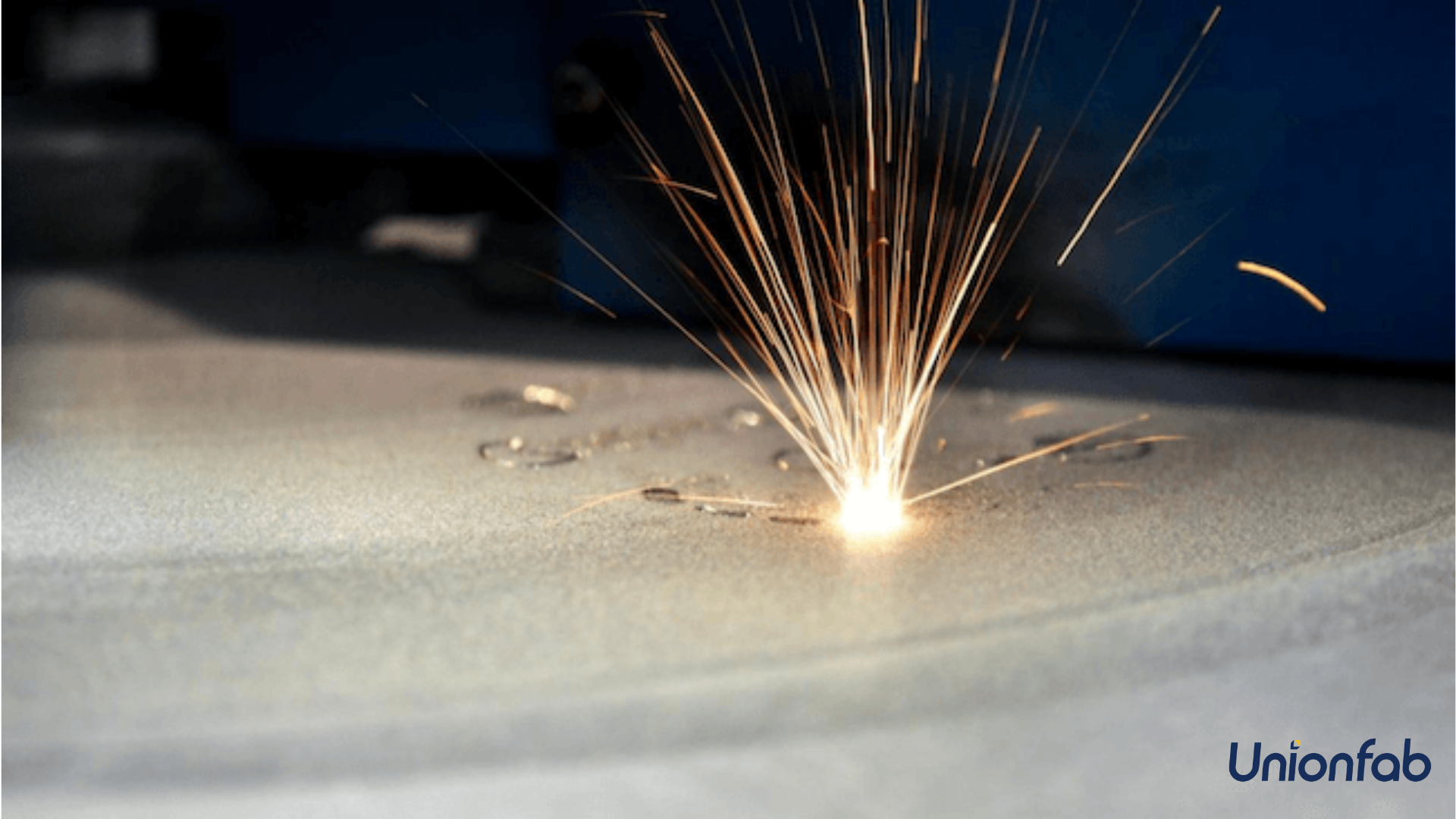
Metal 3D printing is an additive manufacturing process that builds components layer by layer using metal materials based on digital CAD models. By fusing or binding the metal material, it enables the production of intricate, highly customized parts that are often difficult or impossible to create with traditional methods.
Pros: Total design freedom; perfect for complex internal geometries; no tooling required; ideal for light-weighting
Cons: Rougher "as-printed" surface finish; higher cost for simple designs; potential for internal porosity
Technologies: Selective Laser Melting (SLM) / Direct Metal Laser Sintering (DMLS) and Binder Jetting (BJ)
Materials: Aluminum, Titanium, Stainless Steel, Maraging Steel, Inconel, CuCrZr, and other metals
Cost: High — driven by expensive metal powders and machine run-time
For a detailed breakdown of costs and to estimate your own project, check out our full guide: Metal 3D Printing Cost – Free Cost Calculator & Full Breakdown.
CNC Machining
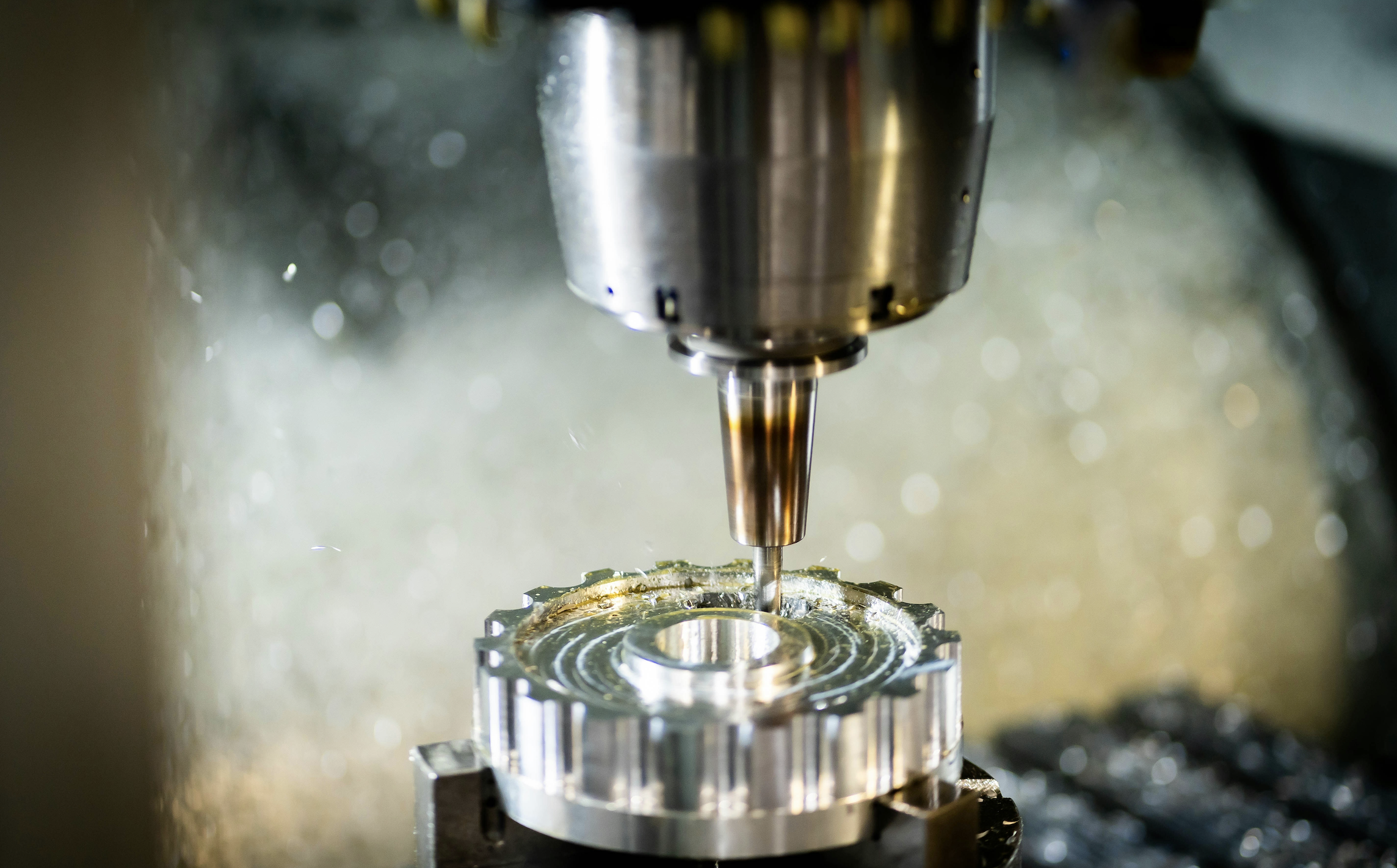
CNC (Computer Numerical Control) machining is a subtractive manufacturing method where material is strategically removed from a solid metal block using various rotating cutting tools. It is widely considered the gold standard for parts requiring high dimensional accuracy and a smooth finish, as it utilizes the exact materials intended for final production.
Pros: Exceptional dimensional accuracy and surface smoothness; utilizes production-grade solid billets; no Minimum Order Quantity (MOQ)
Cons: Material waste due to its subtractive nature; limited by tool reach (cannot create certain complex internal cavities or undercuts)
Technologies: CNC Milling, Turning, and more
Materials: Aluminum, Stainless Steel, Titanium, Copper, Bronze, Brass, and other metals
Cost: Moderate to High — largely determined by the part's geometric complexity and the total machining time required.
For a detailed cost breakdown and to estimate your own CNC project, see our article about CNC machining costs.
Sheet Metal Fabrication
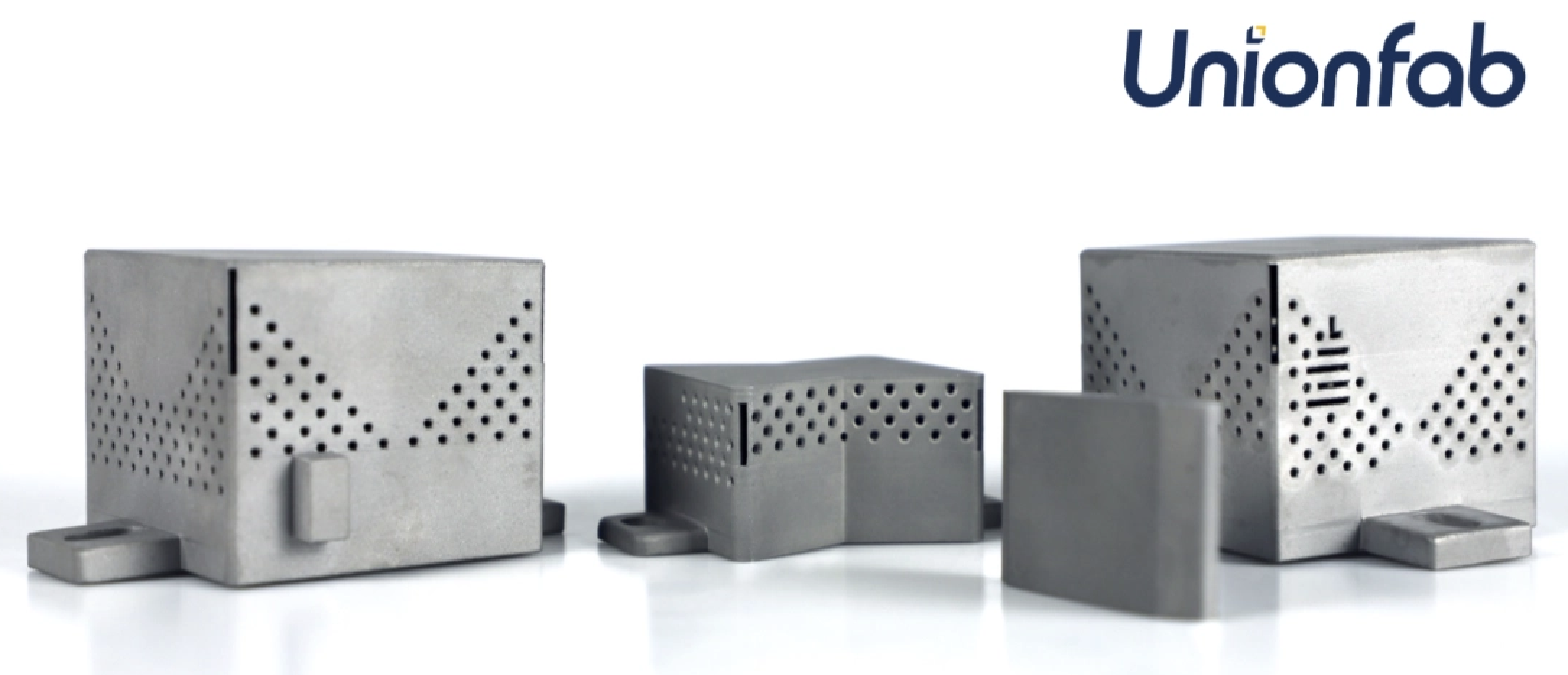
Sheet metal prototyping is a fabrication method that transforms flat sheets of metal into functional parts through cutting, bending, and assembly processes. It is the most efficient way to create thin-walled structural components like enclosures or chassis.
Pros: Highly cost-effective for enclosures and brackets; fast turnaround; production-quality strength and durability
Cons: Restricted to parts with uniform wall thickness; restricted geometric complexity compared to machining
Technologies: Laser/waterjet cutting, CNC bending (press brakes), and welding
Materials: Aluminum, Steel, Copper, Brass, Titanium, Magnesium, and other metals
Cost: Low to Moderate — the most economical choice for structural housings
If you want to learn more, check out our guide: Sheet Metal Prototyping: A Definitive Guide.
Investment Casting

Investment casting, or "lost-wax" casting, involves pouring molten metal into a ceramic mold. For prototyping, the pattern is often 3D-printed to eliminate the need for expensive permanent tooling while maintaining high-quality metallurgical properties.
Pros: Best for large, heavy, or thick-walled components; achieves production-intent metallurgical grain structures
Cons: Longer lead times; initial cost for the mold/pattern; coarser tolerances than CNC machining
Technologies: Gravity or pressure casting using 3D-printed wax or resin patterns
Materials: Aluminum, carbon and alloy steels, stainless steels, nickel-based alloys, copper alloys, and other metals
Cost: Moderate — Tooling costs vary: 3D wax patterns for low-volume prototypes (lower upfront cost), hard tooling for mass production (lower unit cost); expensive for single-piece small parts
If you want to know more, check out our service page: Rapid Investment Casting.
Detailed Comparison of Metal Rapid Prototyping Methods
Choosing the right prototyping method for metal components depends on a combination of factors. Below is a detailed comparison of the four most commonly used metal rapid prototyping methods.
Comparison Table: Which Method Fits Your Project
Aspect | Metal 3D Printing | CNC Machining | Sheet Metal Fabrication | Investment Casting |
|---|---|---|---|---|
Manufacturing Approach | Additive | Subtractive | Forming | Casting |
Lead Time | 3–7 business days | 7–12 business days | 3–14 business days | 2–6 weeks |
Cost | $$$$ High: driven by metal powders and machine runtime | $$$ Moderate to High: depends on part complexity and machining time | $$ Low to Moderate: most economical for structural housings | $$$ Moderate: tooling costs vary: 3D wax patterns for low-volume prototypes (lower upfront cost), hard tooling for mass production (lower unit cost); expensive for single-piece small parts |
Material Options | Aluminum, Titanium, Stainless Steel, Maraging Steel, Inconel, CuCrZr, and other metals | Aluminum, Stainless Steel, Titanium, Copper, Bronze, Brass, and other metals | Aluminum, Steel, Copper, Brass, Titanium, Magnesium, and other metals | Aluminum, carbon and alloy steels, stainless steels, nickel-based alloys, copper alloys, and other metals |
Max Part Size | ~400 x 300 x 400 mm | Up to 2000 × 750 × 600 mm (milled), or Ø500 × 4500 mm (turned) | Up to 1520 × 3050 mm blank | Up to 1000 x 1000 x 1000 mm (Industrial) |
Design Complexity | ★★★★★ Excellent: intricate geometries, internal channels, undercuts | ★★★☆☆ Moderate: limited by tool access and fixturing | ★★☆☆☆ Limited: best for simple bends and cut features | ★★★☆☆ Moderate: complex shapes possible, constrained by mold design |
Strength | ★★★★☆ Moderate: High (process & post-processing dependent) | ★★★★★ High: full material density | ★★★★☆ High: production-grade for thin-walled parts | ★★★★★ High: production-quality metallurgy |
Tolerance | L<100 mm: ±0.2 mm, L>100 mm: ±0.2% × L | Standard: ±0.127 mm, Advanced Option: ±0.0127 mm | ±0.38–0.76 mm | ±0.05–0.25 mm |
Surface Finish | As-printed surface; post-processing often required | Excellent, smooth machined finish | Industrial finish; cosmetic finishing optional | Rougher as-cast surface; machining often needed |
Best For | Highly complex, low-volume, or customized prototypes | Functional prototypes requiring tight tolerances | Enclosures, brackets, frames, and structural parts | Large, heavy, or bridge-production metal prototypes |
Key Takeaways for Selection
Choose Metal 3D Printing if you need highly complex or customized parts, internal channels, or one-off prototypes. It’s excellent for intricate designs but comes with higher material and machine costs.
Choose CNC Machining for functional prototypes that require high precision and excellent surface finish. Best suited for parts made from standard production metals, especially when tight tolerances are critical.
Choose Sheet Metal Fabrication for thin-walled structural components like enclosures, frames, and brackets. It’s cost-effective and fast but limited in geometric complexity.
Choose Investment Casting when you need large, heavy, or bridge-production prototypes. It delivers production-quality metallurgical properties but requires molds, making tooling costs and lead times higher.
Consider Your Project Priorities: Always weigh design complexity, material requirements, precision, cost, and production volume when selecting a method. Each process has trade-offs, and the right choice depends on your specific prototype goals.
How to Select a Reliable Metal Rapid Prototyping Service Partner?
Choosing the right metal rapid prototyping partner can make or break your project timeline and budget. Here are some key factors to consider:
Experience & Expertise: Look for a service provider with proven experience in your chosen metal and prototyping method. They should understand material properties, tolerances, and post-processing requirements.
Technology Portfolio: A good partner should offer multiple metal prototyping technologies—SLM/DMLS, Binder Jetting, CNC Machining, Sheet Metal, and Investment Casting—so they can match the best method to your design needs.
Quality Assurance: Check if they provide quality reports, dimensional inspection, and traceable certifications. Consistent quality reduces the risk of errors and costly iterations.
Lead Times & Capacity: Confirm that their lead times align with your project schedule, and that they can handle the volume of parts you need, even for small batches.
Customer Support & Collaboration: A responsive partner who provides design feedback, helps optimize for manufacturability, and is open to iteration can save time and improve the final product.
Transparent Pricing: Ensure cost estimates include material, post-processing, and potential tooling or setup fees. Clear pricing helps avoid unexpected expenses.
By carefully evaluating these factors, you can find a partner who not only produces high-quality metal prototypes but also supports your project from design to delivery.
Unionfab's Metal Rapid Prototyping Services
At Unionfab, we specialize in delivering high-quality metal prototypes quickly and efficiently. Our services include:
Metal 3D Printing: We offer SLM/DMLS and Binder Jetting for producing complex geometries and lightweight components with a range of metals including Stainless Steel, Aluminum, Titanium, Inconel, and more.
CNC Machining: Our milling and turning capabilities provide high-precision, production-grade prototypes in Aluminum, Stainless Steel, Titanium, and other alloys.
Sheet Metal Fabrication: From laser cutting and CNC bending to welding, we turn flat sheets into enclosures, brackets, and structural components quickly and cost-effectively.
Investment Casting: For large, heavy, or bridge-production prototypes, our rapid investment casting services combine 3D-printed patterns with precise casting techniques to deliver durable, high-quality parts.
We support every stage of your project, from design consultation and material selection to post-processing and quality inspection. Our goal is to help you bring your metal prototype to life, on time and within budget.
Ready to start your first prototype with Unionfab?
Claim your 10% new customer discount today and bring your design to life for less!
FAQs
What does rapid prototyping mean?
Rapid prototyping is a group of techniques used to quickly fabricate a scale model of a physical part or assembly using three-dimensional computer-aided design (CAD) data. It allows engineers to test and validate designs before committing to expensive mass production.
What is the difference between rapid prototyping and 3D printing?
The terms are often used interchangeably, but there is a distinction: 3D printing is a specific manufacturing process (additive), while rapid prototyping is the application. You can use 3D printing for prototyping, but you can also use CNC machining or casting.
Will we ever be able to 3D print metal?
Yes, metal 3D printing is already possible today using technologies like Selective Laser Melting (SLM), Direct Metal Laser Sintering (DMLS), and Binder Jetting. These methods allow for the production of complex metal parts directly from digital designs.
What are the methods of metal rapid prototyping?
The most common methods of metal rapid prototyping include metal 3D printing (additive), CNC machining (subtractive), sheet metal fabrication (forming), and investment casting.
What materials can be used for metal rapid prototyping?
Depending on the method, a wide range of metals can be used, including aluminum, stainless steel, titanium, tool steel, copper, brass, and high-performance superalloys like Inconel.
What are the advantages and disadvantages of rapid prototyping?
Advantages: faster iteration, early testing, reduced development costs, and better design validation.
Disadvantages: higher unit costs for single prototypes, limited material properties compared to production parts, and some methods may produce less durable parts.
What is rapid prototyping design thinking?
Rapid prototyping design thinking involves quickly creating physical or digital models to test ideas, gather feedback, and iterate on product designs as part of a user-centered design process.
Can you give examples of rapid prototyping?
Common examples include customized medical implants, lightweight aerospace brackets with internal lattice structures, automotive engine components for performance testing, and sleek aluminum enclosures for high-end electronics.