
Compare 3D Printing, CNC Machining, Vacuum Casting, and Injection Molding to choose the right manufacturing method for custom plastic parts based on production volume, geometry, surface finish requirements, lead time, and cost.
Introduction
If you already know your part will be made from plastic, the next question is how it should be manufactured: 3D printing, CNC machining, vacuum casting, or injection molding?
Each option has its own strengths, trade-offs, and ideal use cases. Some are better for fast prototypes, some are better for tight tolerances, and some only become cost-effective at higher volumes. The right choice depends on what you need the part to do, how many parts you need, how quickly you need them, and how much flexibility you still need in the design.
This guide compares four of the most common manufacturing processes for custom plastic parts and shows how to choose between them based on cost, lead time, production volume, part complexity, surface finish, and other key factors.
Quick Selection by Production Volume
Production quantity is often the fastest way to narrow down your manufacturing options.
In the table below, "✓" means the process is technically feasible and commonly used at that volume range, while "✗" means it is generally not cost effective or practical compared to other options, even though it may still be technically possible in some cases.
Quantity | 3D Printing | Vacuum Casting | CNC Machining | Injection Molding |
|---|---|---|---|---|
1-10 pcs | ✓ | ✓ | ✓ | ✗ |
10-200 pcs | ✓ | ✓ | ✓ | ✗ |
200-500 pcs | ✓ | ✓ | ✓ | ✓ |
500-10,000+ pcs | ✗ | ✗ | ✗ | ✓ |
1–10 pcs: All three processes are commonly used. If there are no special requirements, 3D printing is usually the most efficient option due to zero tooling and fast turnaround.
10–200 pcs: 3D printing, vacuum casting, and CNC machining are all viable. Vacuum casting is often the most practical choice in this range due to its balance of cost, surface quality, and moderate tooling effort.
200–500 pcs: All four processes can still be considered. There is no single default recommendation, and the optimal choice depends on geometry, precision, appearance, and cost priorities.
500–10,000+ pcs: Injection molding becomes the most cost effective option due to low unit cost and high production efficiency, even though upfront tooling investment is required.
Note: While production quantity is a strong first filter, factors such as precision, material requirements, surface finish, and part complexity should still influence the final decision.
Manufacturing Processes Overview
Below is a quick overview of the four most common manufacturing processes for custom plastic parts.
Process | 3D Printing | CNC Machining | Vacuum Casting | Injection Molding |
|---|---|---|---|---|
In a Nutshell | Rapid prototyping from zero | High-precision solid material machining | Small-batch replication with injection-molded aesthetics | High-volume plastic part production |
Key Advantages | No tooling, ultra-fast lead time, ideal for concept validation, early prototypes, and complex geometry | Excellent dimensional accuracy and surface quality, ideal for functional testing and engineering-grade parts | Outstanding appearance and consistency, ideal for trials, trade show samples, and pre-production validation | Ultra-low per-unit cost with industry-leading batch consistency, the standard for large-scale production |
3D Printing
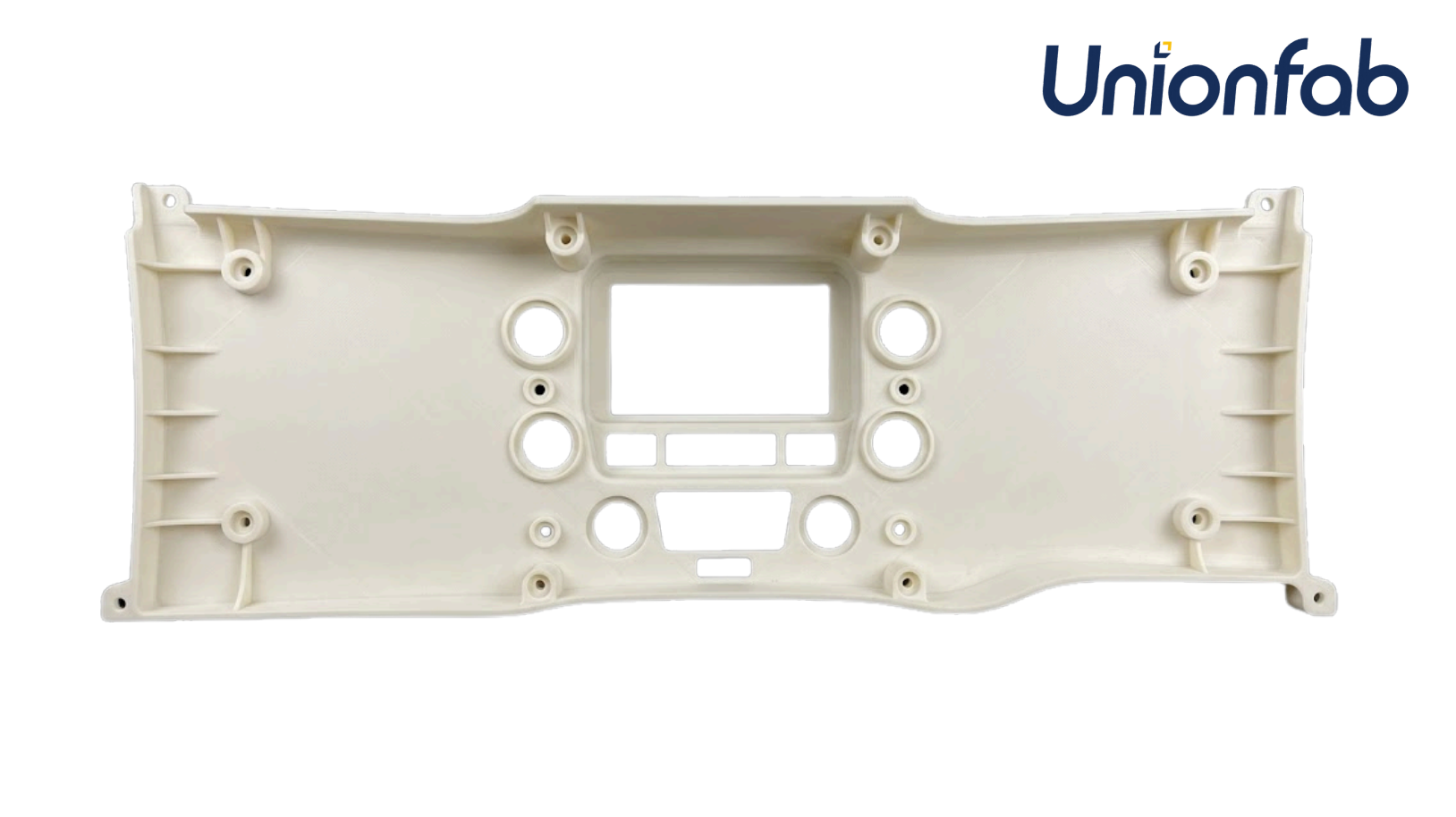
3D printing is an additive manufacturing process that builds plastic parts layer by layer directly from a digital model, without the need for tooling. It is widely used for rapid prototyping and design iteration due to its speed and flexibility.
Common technologies used for plastic parts include FDM, SLA, SLS, MJF, and PolyJet.
Read more about pros and cons of 3D printing, 3D printing cost, and 3D printing service providers in China if you need a quick reference on trade-offs, pricing structure, or supplier options.
CNC Machining
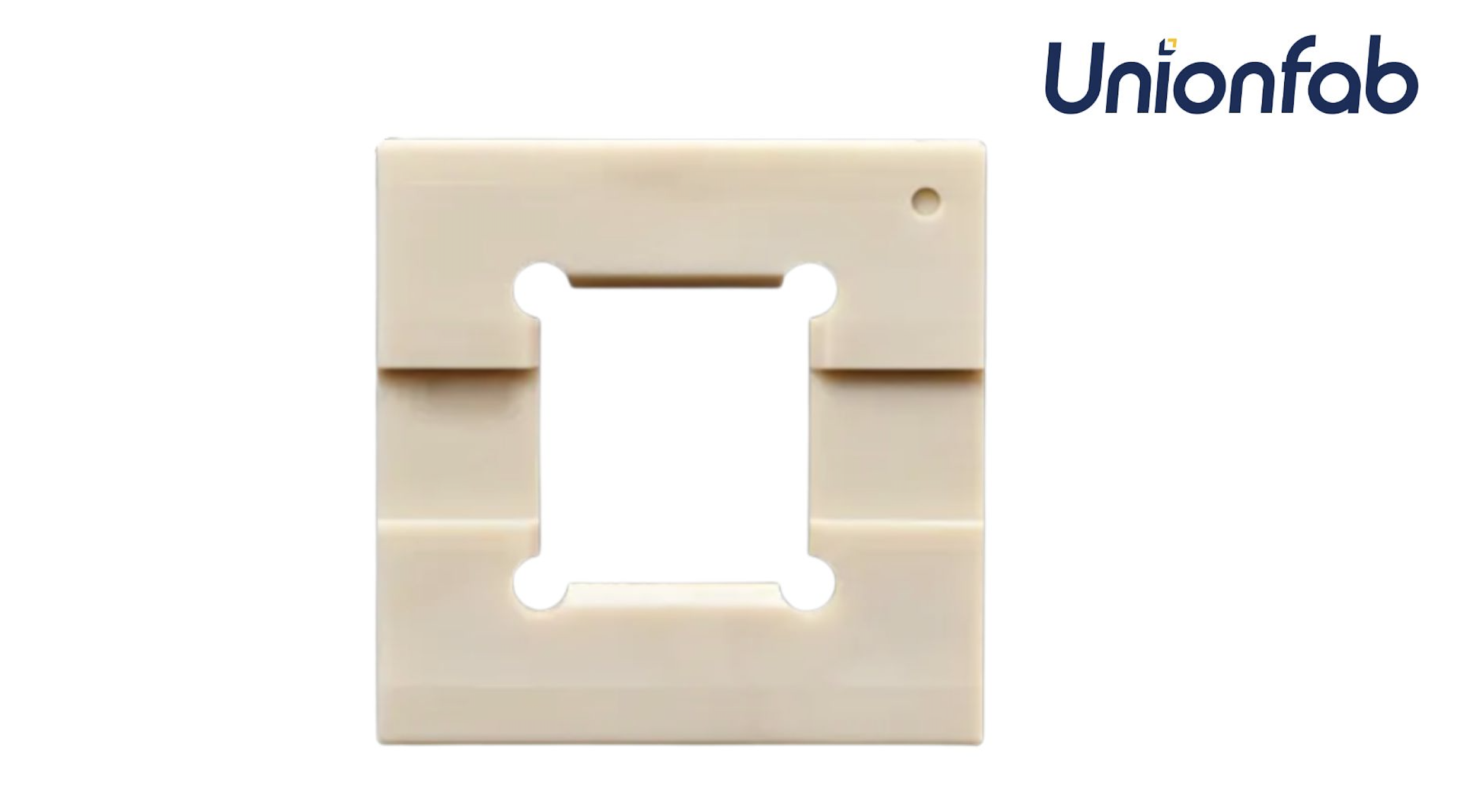
CNC machining is a subtractive manufacturing process that uses computer controlled cutting tools to remove material from a solid plastic block. It is known for high precision and production grade mechanical performance.
Read more about CNC machining cost if you need a quick overview of pricing factors.
Vacuum Casting
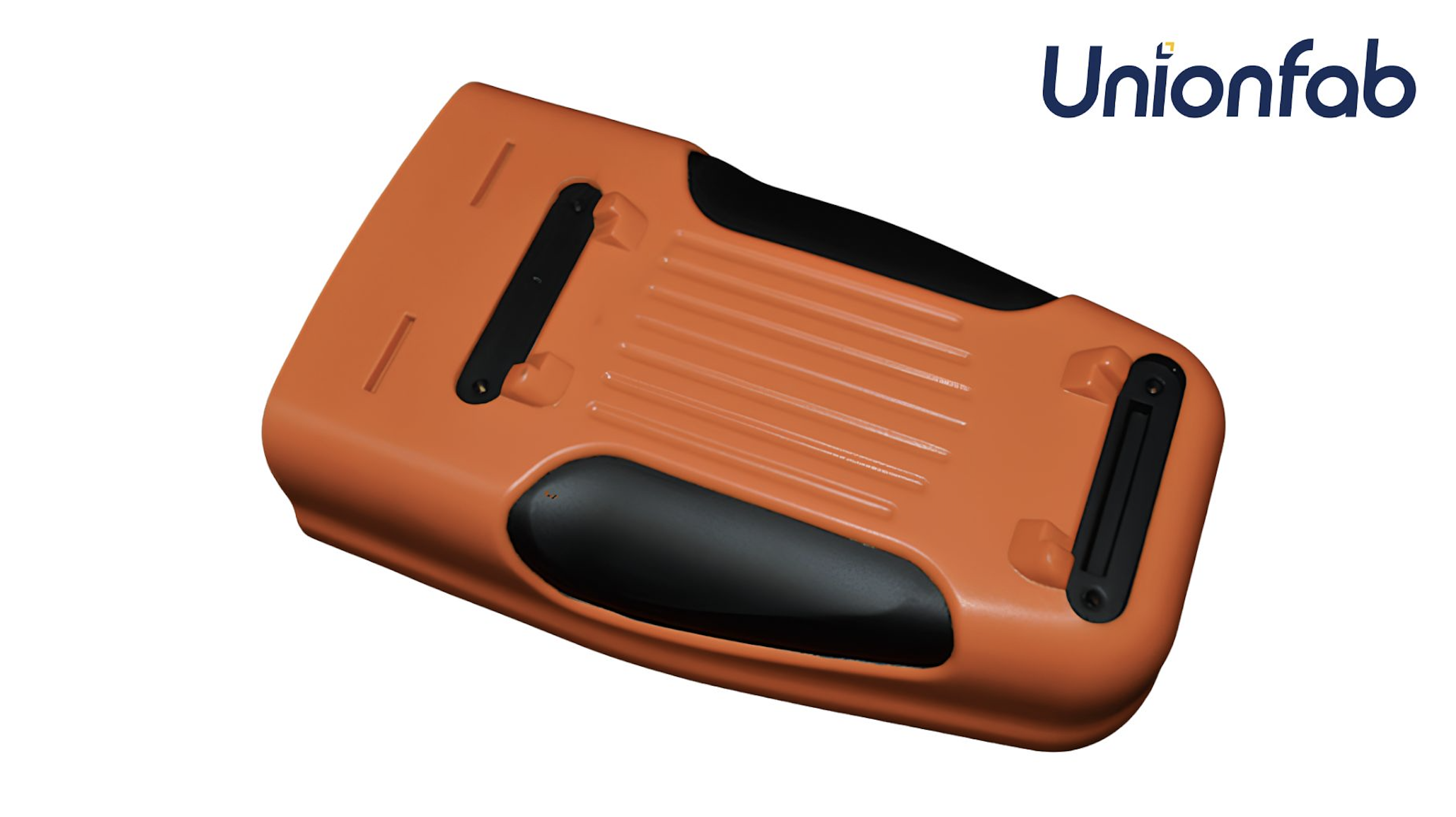
Vacuum casting is a replication process that uses silicone molds to produce plastic parts from a master pattern, typically created by 3D printing. It is ideal for low volume production where appearance and consistency are important.
Read more about how it works, available materials, technical specifications, and pricing for vacuum casting services in our detailed guide on vacuum casting.
Injection Molding
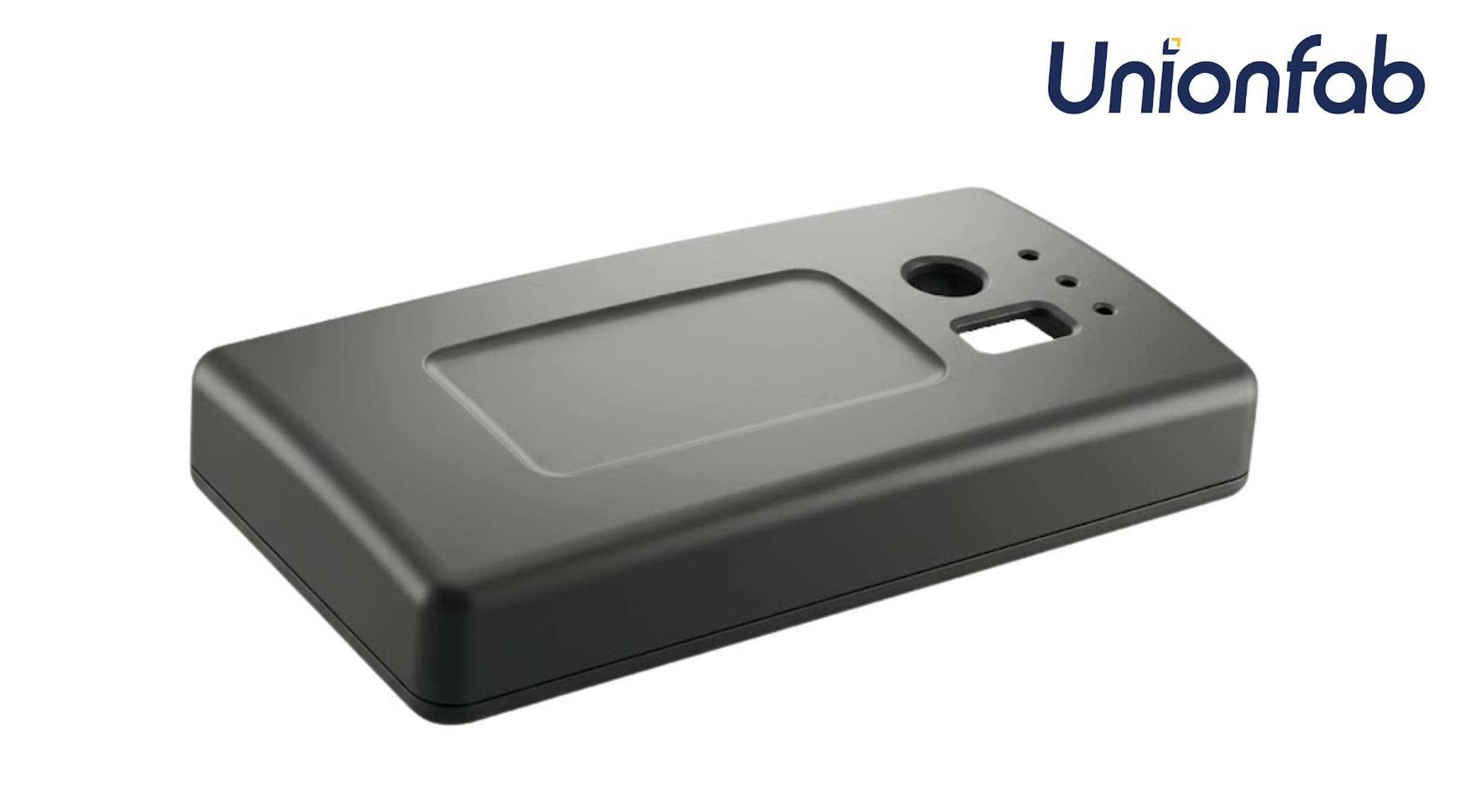
Injection molding is a medium-to-high-volume production process where molten plastic is injected into a precision machined metal mold to produce consistent, repeatable plastic parts at scale. It is the most widely used method for mass production.
While tooling requires higher upfront investment, it delivers the lowest unit cost at scale and excellent repeatability.
This process includes two important variants:
Overmolding: used when one material is molded over another to improve grip, sealing, or aesthetics, commonly seen in soft-touch handles and multi-material designs.
Insert molding: involves placing metal or other components into the mold before injection, typically used for threaded inserts or reinforced structures.
Read more about injection molding materials and overmolding vs insert molding if you need a quick reference on materials and key process differences.
Detailed Comparison of Manufacturing Processes
The right process depends on which trade-offs matter most for your part. In practice, manufacturing decisions are usually made from two perspectives:
Technical capability (what the process can physically achieve)
Application fit (what the process is best used for in real production scenarios)
The first table focuses on technical limits such as accuracy, surface finish, size, and lead time. The second table compares how each process performs in real world production decisions such as cost, materials, and use cases.
Together, they provide a complete view of both capability and practical selection criteria.
Technical Capabilities Comparison
Process | 3D Printing | CNC Machining | Vacuum Casting | Injection Molding |
|---|---|---|---|---|
Tolerance | SLA / DLP: ±0.2%/mm (lower limit of ±0.1 mm); | ISO 2768-m (Default); Custom tight tolerances down to ±0.0002" (±0.005 mm) | ±0.2%/mm (lower limit of ±0.2 mm) | ISO 20457 (Default) |
Surface Roughness | FDM: Ra 12.7 μm; | As-machined: Ra 0.4 – 3.2 μm; | As-cast: Ra 1.6 – 6.3 μm | Depends on mold finish |
Maximum Build Size | SLA: 2100 × 700 × 800 mm; FDM: 914 × 610 × 914 mm; SLS: 350 × 305 × 400 mm | Up to 4000 × 1500 × 600 mm | Up to 1500 × 1000 mm | Up to 1436 × 960 × 223 mm |
Minimum Wall Thickness | 0.5–1.0 mm | 0.5 mm | 0.75 mm, but 1.5 mm is recommended | 0.3 mm |
Standard Lead Time | 2–7 days | 7–15 days | 7–10 days | 20–30+ days |
Note: The specifications in this table are based on manufacturing capabilities supported by Unionfab’s production services across different processes.
Production & Application Comparison
Process | 3D Printing | CNC Machining | Vacuum Casting | Injection Molding |
|---|---|---|---|---|
Best For | Complex geometries, rapid concept validation, low-volume functional parts | Tight tolerances, real engineering plastics, high-load parts | Exhibition prototypes and low-volume trial production with high cosmetic requirements | Mass production with the lowest possible unit cost |
Upfront Cost | Zero (No tooling or setup cost) | Medium (Requires programming and setup) | Medium (Requires 3D printed master pattern + silicone mold) | Extremely High (Requires precision-machined metal molds) |
Unit Cost | Relatively High (Little cost reduction as quantity increases) | Relatively High (Limited cost reduction due to machine time) | Medium (Amortizes master pattern cost, but limited by silicone mold lifespan) | Extremely Low (Economies of scale; the larger the quantity, the closer to raw material cost) |
Material Performance | Depends on the process; can be real thermoplastics or resin/powder systems | Real engineering plastics, closest to the final end-use state | ABS-like / PC-like / rubber-like materials; close to injection-molding grade, suitable for functional testing | Real mass-production grade plastic pellets; most stable performance |
Surface Quality & Appearance | Varies significantly: SLA/PolyJet surfaces are relatively smooth, SLS/MJF lean towards a grainy matte finish, FDM layer lines are quite noticeable | Good to Excellent: Can achieve high surface quality and supports post-processing like polishing and sandblasting | Excellent: Can highly replicate the surface finish of the master pattern, suitable for high-gloss, textured, and transparent parts | Excellent: High appearance consistency, suitable for stable mass production of cosmetic parts |
Geometric Freedom | Highest: Can manufacture complex structures like internal cavities, lattices, and topology optimization | Limited: Tool must be able to reach, machining internal corners typically has radius (R-corner) limitations | High: Can replicate complex shapes, silicone mold allows for minor undercuts during demolding | Low: Requires careful consideration of draft angles, parting lines, and demolding methods; undercuts usually require sliders, lifters, or other mechanisms |
Applicable Material Range | Photosensitive resins, nylon powders, TPU, and various engineering plastic filaments, etc. | Real engineering plastics, metal plates, and rods | Polyurethane (PU) resins, can simulate the effects of ABS, PC, rubber, and transparent materials, etc. | Real industrial plastic pellets, widest material selection, best performance and consistency |
Example Materials | FDM: ABS, ASA, PETG, PC, PC-FR, ULTEM 9085, etc.; | ABS, PVC, PE, UHMWPE, POM, PMMA, PC, PP, PA, PTFE, PET, PBT, PEEK, PEI, etc. | ABS-like, PC-like, PP-like, Nylon-like, PMMA-like, POM-like, flame-retardant, high-temperature resistant, Rubber-like, Silicone-like, etc. | ABS, PC, PP, PE, PA6, PA66, POM, PBT, PET, PMMA, TPU, TPE, PEEK, etc. |
Key Takeaways
Now the choice is not about which process is “best”, but which trade-offs matter most for your specific situation.
Choose 3D Printing If:
you need fast prototypes with no tooling
you need maximum design flexibility
you are still iterating on the design
speed matters more than unit cost
Choose CNC Machining If:
you need tight tolerances and stable mechanical performance
you require real engineering-grade plastics
you need strong functional or load-bearing parts
Choose Vacuum Casting If:
you need low-volume parts with production-like appearance
you are preparing for pilot production or market testing
cosmetic quality matters more than material performance
Choose Injection Molding If:
you are producing at medium to high volumes
unit cost optimization is critical
you need stable, repeatable mass production
FAQ
Which manufacturing process is the most cost-effective for low-volume plastic parts?
For extremely low volumes (1–20 parts), 3D printing or vacuum casting is typically the most cost-effective because neither requires expensive upfront tooling. CNC machining is also highly competitive for small batches that demand tight tolerances. Injection molding, while offering the lowest cost per part, requires a significant initial investment in steel or aluminum molds, making it cost-effective only for higher volumes (usually 500+ parts).
If I need a specific cosmetic surface finish, which method should I choose?
Injection molding is the undisputed leader for high-quality, repeatable surface finishes. The mold cavity can be polished or textured to meet precise industry standards, ranging from a highly polished SPI A-1 to heavily textured VDI 45 finishes, right out of the machine. CNC machining offers excellent, smooth surfaces but may leave faint tool marks. 3D printing and vacuum casting usually require manual post-processing (sanding, painting) to achieve a production-grade cosmetic appearance.
What is the best process for "bridge production" before committing to injection molding?
Vacuum casting (using polyurethane resins) is an excellent bridge tooling solution. It allows you to produce up to 20 to 25 parts per silicone mold, or up to 50 parts across multiple molds, with high accuracy, closely mimicking the appearance and mechanical properties of final production plastics like PC, ABS, or TPU. This lets you test the market or perform functional validations while your steel injection molds are still being manufactured.
How quickly can I get custom plastic parts made?
If speed is your primary concern, 3D printing is the fastest option, often delivering parts within 24 to 48 hours. CNC machining is also very fast, typically taking a few days depending on the part's complexity and CAM programming time. Vacuum casting generally takes 1 to 2 weeks because a master pattern must be printed or machined first. Injection molding has the longest lead time, often several weeks, due to the time required to design and fabricate the mold.