
Learn metal 3D printing essentials: key technologies, material options, costs, design tips, post-processing methods, and how to choose the right service provider for your project.
Introduction
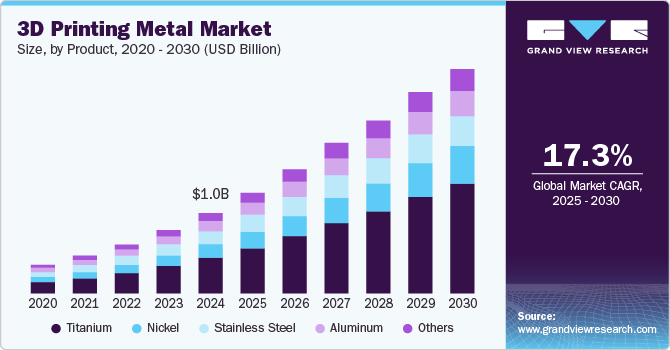
Source: Grand View Research
According to Grand View Research, the global 3D printing metal market is surging — valued at $1.0 billion in 2024 and projected to grow at 17.3% annually through 2030. This explosive growth stems from rapid innovations in printing technologies and the shift toward digital-first manufacturing.
So, what are the key aspects of Metal 3D Printing?
In this comprehensive guide, we break down everything you need to know:
Basics & Showdown: What metal 3D printing is and how it differs from traditional manufacturing methods.
Technologies & Materials: How core technologies (like SLM and Binder Jetting) work, how they compare, and how to select the right materials for your application.
Costs, Design & Post-Processing: How to estimate costs, optimize your CAD designs, and select the right post-processing options.
Service Selection & Case Studies: Practical guidance on choosing the right service provider, along with real-world Unionfab case studies.
What is Metal 3D Printing?
Metal 3D printing, also known as metal additive manufacturing (AM), is a production method that builds fully dense metal parts layer by layer directly from a digital 3D model.
Unlike traditional subtractive methods that remove material from a solid block, metal 3D printing selectively melts, binds, or deposits metal powder or wire only where material is needed. The result is a near-net-shape component that requires minimal material waste and enables geometries that were previously impossible to manufacture.
Today, metal 3D printing is widely used across industries such as aerospace, automotive, medical devices, energy, and tooling. From lightweight lattice structures to conformal cooling channels inside molds, additive manufacturing allows engineers to rethink part design rather than simply replicate conventional geometries.
Metal 3D Printing Overview
With so many technologies, alloys, and finishing methods available, many people exploring metal 3D printing encounter a wide range of unfamiliar terms, such as Powder Bed Fusion, 316L stainless steel, Design for Additive Manufacturing (DfAM), heat treatment, and surface finishing.
This often raises a question: how are these concepts related, and where do they fit within the broader framework of metal additive manufacturing?
To simplify this, it helps to think of metal 3D printing as a mathematical formula.
At its core, every successful metal AM application is a combination of six fundamental variables: industry, use case, design (DfAM), technologies, materials, and post-processing.
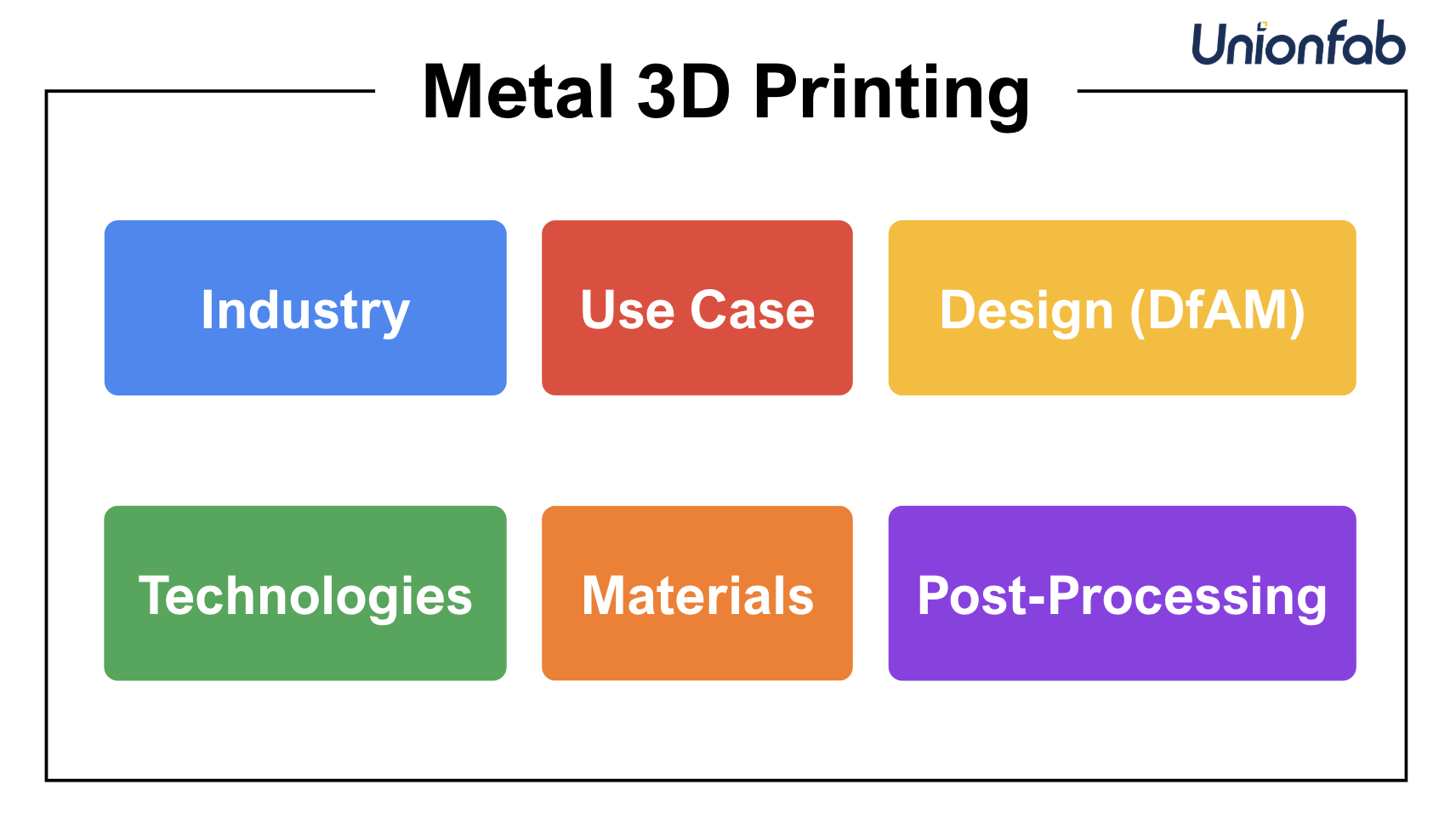
How the Equation Works in the Real World
By defining and combining these variables, you can construct the exact solution for any specific project.
For example, suppose you need to manufacture a high-performance orthopedic implant. The "equation" would look like this:
[Industry: Medical] + [Use Case: End-Use Part] + [DfAM: Porous Lattice Structure] + [Technology: SLM/EBM] + [Material: Titanium Ti6Al4V] + [Post-Processing: Sterilization & Machining] = A biocompatible, custom-fit hip implant.
To visualize this framework, refer to the mind map below, which breaks down the six primary categories and their subcategories.
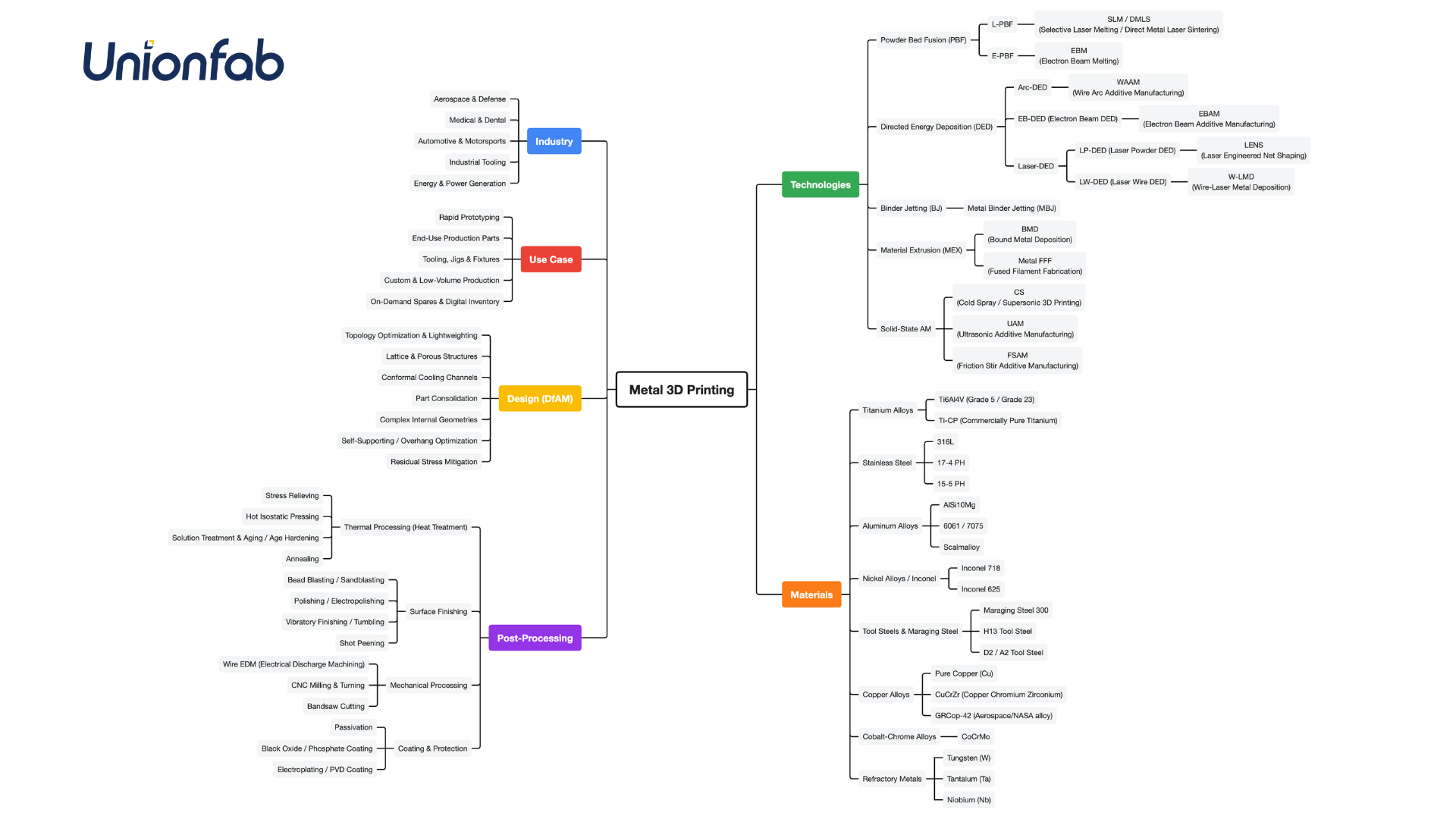
The mind map above visualizes how the six key variables of metal 3D printing are organized. Each primary category expands into more specific topics. For instance, metal 3d printing technologies include processes such as PBF, DED, BJ, and MEX, while materials cover common alloy families like titanium, stainless steel, aluminum, and nickel alloys. Post-processing further includes heat treatment, surface finishing, and machining steps required to achieve the final part performance.
This structured view helps clarify how different concepts in metal additive manufacturing relate to one another.
Metal 3D Printing vs. Traditional Manufacturing
To better understand metal 3D printing, it is useful to compare it with conventional methods such as CNC machining and casting.
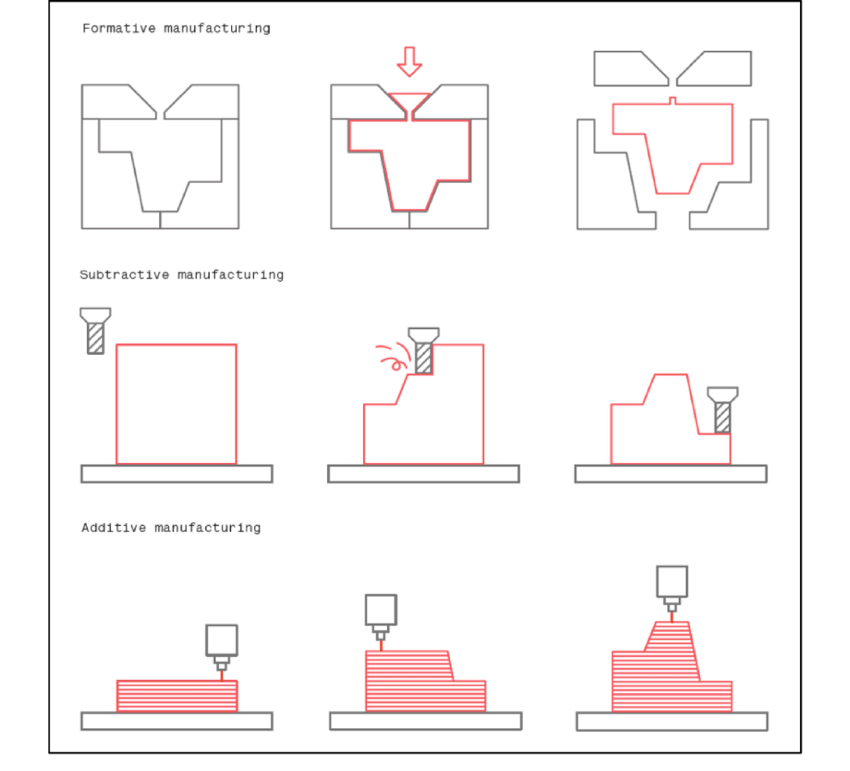
Source: researchgate.net
As shown above, the three methods differ fundamentally in how material is formed:
Formative Manufacturing (Casting): Molten metal is poured into a mold cavity and solidifies into shape.
Subtractive Manufacturing (CNC Machining): Production begins with a solid block, and cutting tools remove material to achieve the final geometry.
Additive Manufacturing (Metal 3D Printing): Components are built layer by layer directly from a digital model.
If you're deciding between metal 3D printing, CNC machining, and casting, the following guides explain their key differences and help you choose the right manufacturing method for your project.
Metal 3D Printing vs. CNC Machining: Competition or Complementarity
3D Printing vs. CNC vs. Vacuum Casting: The Ultimate Comparison
For a quick overview, the table below summarizes the key differences between the three manufacturing methods.
Aspect | Metal 3D Printing (Additive) | CNC Machining (Subtractive) | Casting (Formative) |
|---|---|---|---|
Geometry Complexity | Highest: Excels at intricate internal channels, lattices, and organic forms | Moderate: Limited by tool access; complex interiors require multiple setups | Moderate to High: Mold-dependent; undercuts require complex cores |
Production Speed | No tooling delay (fast setup); slower per-part printing time | Fast for small to medium batches | Slowest setup (mold creation); fastest per-part speed at high volumes |
Material Waste | Minimal: Powder is largely recyclable | High: Can exceed 70–90% waste for highly complex parts | Moderate: Gates/runners waste, though mostly recyclable |
Material Selection | Growing range of specific high-performance alloys (Titanium, Inconel, Steels, Aluminum) | Very broad range of virtually all machinable metals | Broad range (especially specific cast alloys) |
Surface Finish | Rougher; typically requires post-processing or CNC touch-ups | Excellent: High precision and smooth finish right off the machine | Moderate; secondary machining is often required |
Upfront Cost | Zero tooling cost | Low to moderate setup cost | Highest tooling/mold cost |
Best Production Volume | Prototypes to Low/Medium volume | Medium volume | High to Mass volume |
Metal 3D Printing Processes & Technologies
What metal 3D printing technologies are available today, which have reached industrial adoption, and which remain under development? And among the established methods, what distinguishes them from one another? Let’s take a closer look.
Evolution of Metal 3D Printing Technologies
According to the ISO/ASTM 52900 standard, additive manufacturing is initially classified into seven distinct process categories: Powder Bed Fusion (PBF), Directed Energy Deposition (DED), Binder Jetting (BJ), Material Extrusion (MEX), Vat Photopolymerization (VPP), Material Jetting (MJ), and Sheet Lamination (SHL).
While metal can technically be processed across several of these categories, what actually happens in the commercial market is much more complex.
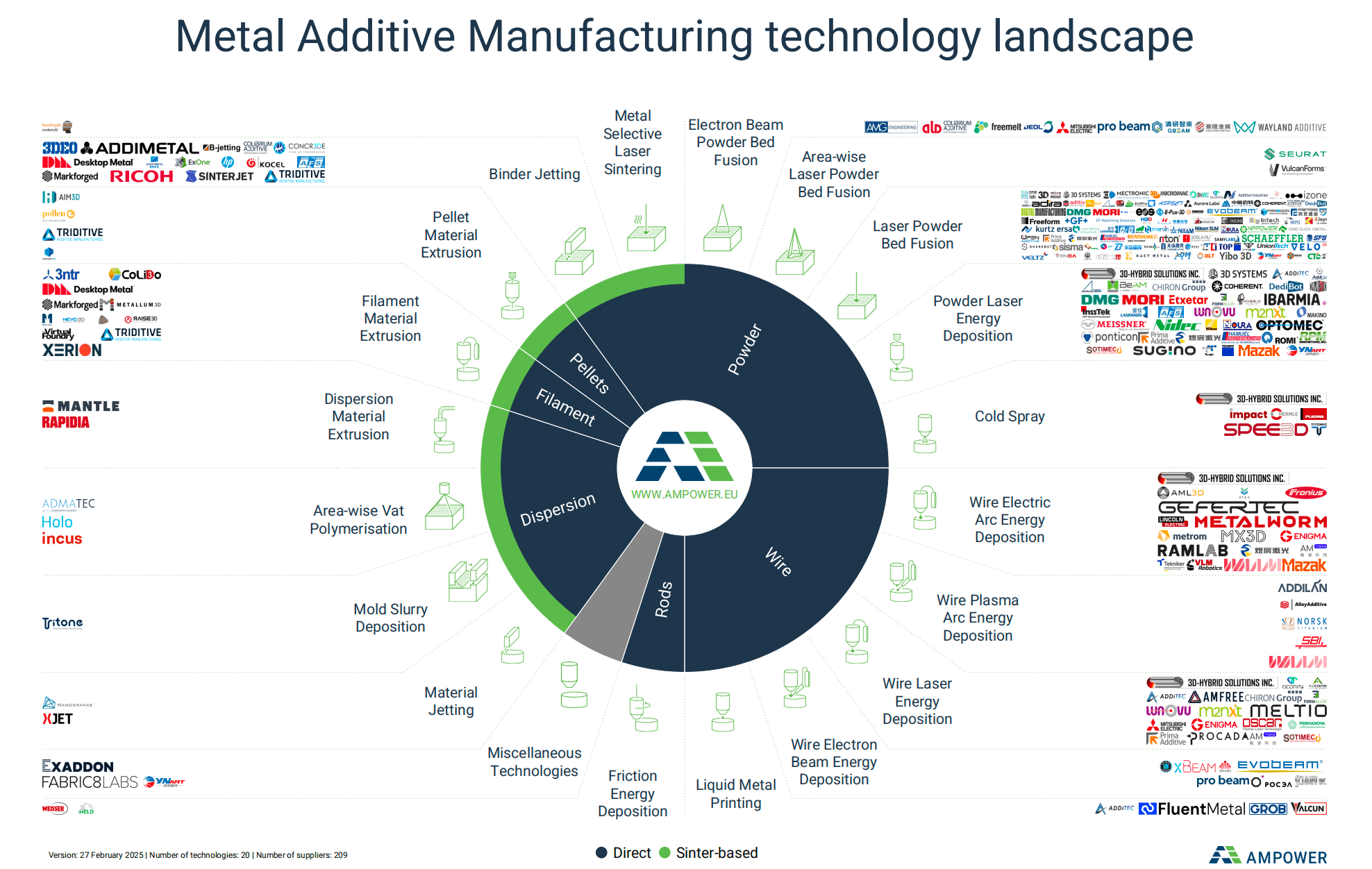
Source: AM Power
Attracted by the strong momentum in the development of metal AM industry, over the past two decades, numerous new technologies and manufacturers have sprung up.
According to AM Power’s latest research, there are essentially twenty different metal AM processes, distinguished by raw material (powder, wire, etc.), binding mechanism (melting, sintering, etc.), and energy source (laser, electron beam, arc, etc.). And as many as 209 3d printer suppliers have entered into the market.
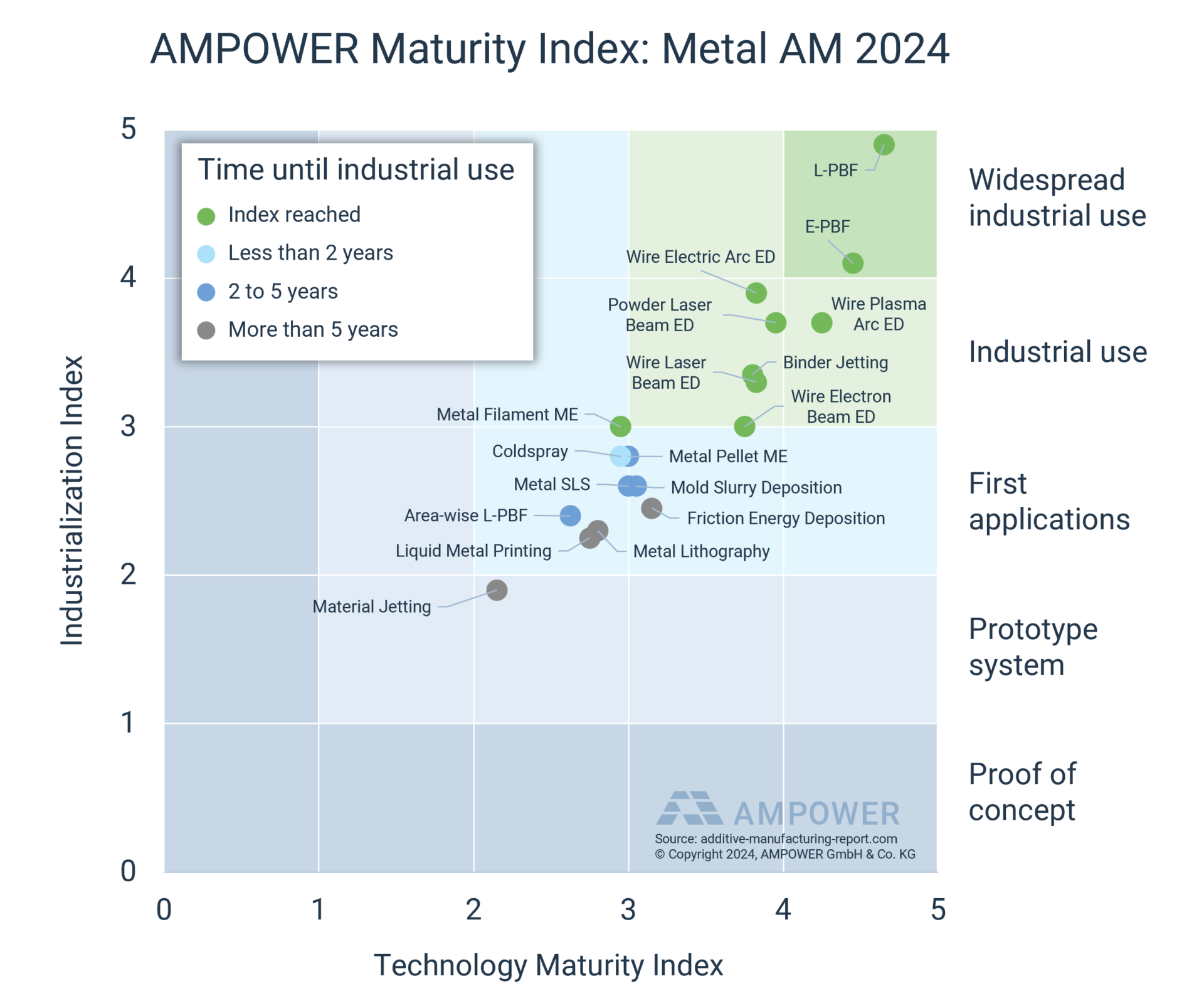
Source: AM Power
Despite 20 types of technologies on the market, not all of them are ready for widespread industrial use. According to the 2024 Metal AM Technology Maturity Index by AM Power,
Only L-PBF and E-PBF are widely used in industrial applications.
Seven other technologies — Wire Electric/Plasma Arc ED, Powder/Wire Laser Beam ED, Wire Electron Beam ED, Binder Jetting, and Metal Filament ME (Material Extrusion)—are suitable for industrial use but not yet widely adopted.
The rest may take 2 to 5 years, or even longer, to become industrially viable.
4 Metal 3D Printing Process Categories and 9 Core Technologies
Industrial-grade metal 3D printing relies almost exclusively on four specific processes: Powder Bed Fusion (PBF), Directed Energy Deposition (DED), Binder Jetting (BJ), and Material Extrusion (MEX).
Each process category includes several representative technologies. In addition, specialized methods such as Cold Spray are also used in industrial applications. Cold Spray is often considered a solid-state kinetic process rather than a traditional thermal melting technique. In total, nine key metal AM technologies are commonly discussed.
For a quick overview, the diagram below illustrates how the major metal 3D printing processes and technologies are organized.
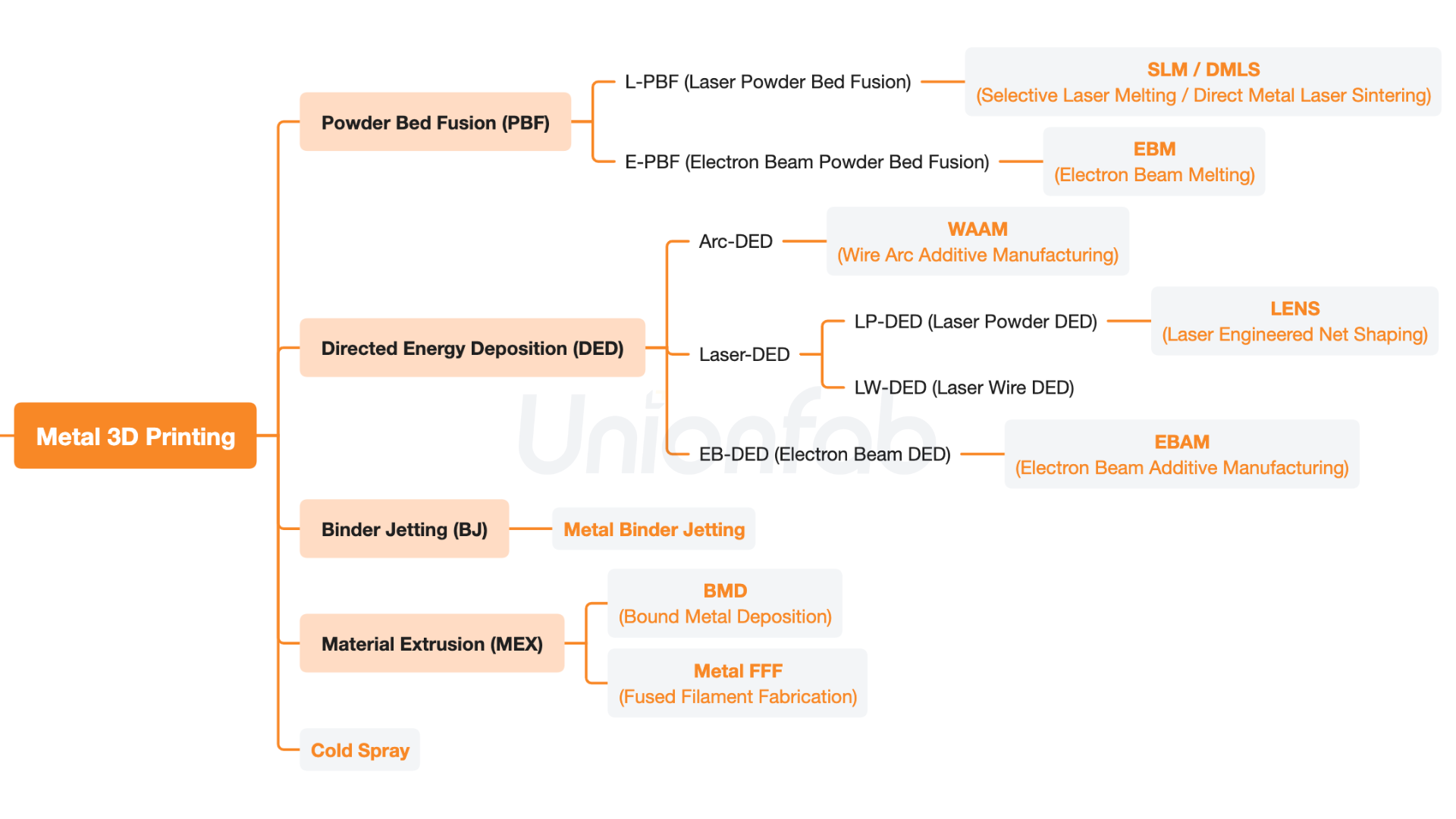
If you want a deeper understanding of how these processes work and how their underlying technologies differ, the following guides provide a detailed explanation:
Metal 3D Printing Processes Explained: PBF, DED, BJ, and MEX
Metal 3D Printing Technologies Explained: SLM, EBM, Metal Binder Jetting, and More
Below is a brief introduction to each process category and its representative technologies.
1. Powder Bed Fusion (PBF)
PBF processes use a concentrated thermal energy source to selectively melt and fuse layers of fine metal powder, producing dense, high-precision parts layer by layer.
Based on the type of energy source, metal PBF technologies are classified into two primary categories:
Laser Powder Bed Fusion (L-PBF): includes SLM and DMLS
Electron Beam Powder Bed Fusion (E-PBF): includes EBM
2. Directed Energy Deposition (DED)
DED uses a focused heat source to melt metal feedstock as it is deposited through a nozzle, forming material precisely where it is needed. DED technologies are typically classified by combining different energy sources (Laser, Electron Beam, or Arc) with different feedstock forms (Powder or Wire):
Arc + Wire = WAAM (Wire Arc Additive Manufacturing)
Laser + Powder = LENS (Laser Engineered Net Shaping) / LMD (Laser Metal Deposition)
Electron Beam + Wire = EBAM (Electron Beam Additive Manufacturing)
3. Binder Jetting (BJ)
Binder Jetting deposits a liquid binding agent onto layers of powdered material. While it applies to sand and ceramics, in industrial metal manufacturing, it often refers to Metal Binder Jetting (MBJ). This process creates a "green" part that must be sintered in a furnace to achieve final density.
4. Material Extrusion (MEX)
Metal MEX involves extruding binder-bound metal feedstock layer by layer. Like Binder Jetting, it forms a "green" part that is subsequently densified through debinding and furnace sintering to produce a near-solid metal component. Based on the form of the feedstock, it is categorized into:
Rod-Based Extrusion: Represented by BMD (Bound Metal Deposition).
Filament-Based Extrusion: Represented by Metal FFF (Fused Filament Fabrication).
How to Choose the Right Material for Metal 3D Printing
In metal 3D printing, pure metals are rarely used on their own. Instead, alloys dominate the field because they provide better strength, improved durability, and performance tailored to real-world applications.
So, how do you choose the right one?
It starts with understanding exactly what your part will go through. Will it face extreme temperatures? Does it need to be incredibly lightweight? Is corrosion resistance an absolute must, or is electrical conductivity your top priority?
Beyond these physical conditions, you might also need to consider wear resistance for high-friction components, biocompatibility for medical implants, and how the material choice aligns with your overall production budget.
Common Metal Alloys and Technology Compatibility
The table below breaks down the most common metal alloys, their key properties, typical applications, and their compatibility with the four main 3D printing technologies (PBF, DED, BJ, and MEX).
Category | Common Alloys | PBF Compatibility | DED Compatibility | BJ Compatibility | MEX Compatibility | Key Properties | Typical Applications |
|---|---|---|---|---|---|---|---|
Titanium Alloys | ★★★★ | ★★★ | ★★ | ★ | High strength-to-weight ratio, biocompatible | Aerospace components, medical/dental implants | |
Aluminum Alloys | ★★★★ | ★★ | ★ | ★ | Lightweight, excellent thermal conductivity | Automotive parts, heat exchangers | |
Stainless Steels | ★★★★ | ★★★ | ★★★ | ★★ | High corrosion resistance, moderate to high strength | Industrial tooling, marine parts, medical devices | |
Tool Steels | H13, Maraging Steel | ★★★ | ★★★★ | ★★ | ★ | High hardness, excellent wear resistance | Injection molds, dies, cutting tools |
Nickel Superalloys | Inconel 718, Inconel 625 | ★★★★ | ★★★★ | ★ | ✕ | Extreme temperature and oxidation resistance | Turbine blades, aerospace engine exhausts |
Cobalt-Chrome | CoCrMo, CoCrW | ★★★★ | ★★★ | ★ | ★ | High wear resistance, highly biocompatible | Dental implants, orthopedic joint replacements |
Copper Alloys | ★★ | ★★★ | ★★ | ★★ | Superior thermal and electrical conductivity | Heat sinks, electrical connectors, induction coils |
Key Takeaways for Material Selection
If you have a limited budget and need a versatile, general-purpose material, choose Stainless Steels (316L, 17-4 PH) or Aluminum (AlSi10Mg, 6061).
Why? Stainless steels offer excellent durability, corrosion resistance, and printability at a fraction of the cost of exotic metals, making them the industry's default workhorses. Alternatively, choose Aluminum if you need a budget-friendly option that is also lightweight with good thermal properties (ideal for automotive prototypes).
If you want to explore stainless steel and aluminum in metal 3D printing in more detail, including alloy comparisons, design tips, post-processing options, and performance differences across printing technologies, see the guides below:
If you prioritize an ultimate strength-to-weight ratio or strict biocompatibility, choose Titanium Alloys (Ti6Al4V).
Why? Titanium is the undisputed king of aerospace and medical AM. It is significantly lighter than steel yet remarkably strong, and its natural compatibility with the human body makes it a preferred choice for custom bone implants and high-performance racing components.
To learn more about titanium in metal 3D printing, including grades, properties, applications, technology comparisons, and service costs, read our Titanium 3D Printing Guide.
If your parts will face extreme heat or harsh, oxidative environments, choose Nickel-Based Superalloys (Inconel 625 / 718).
Why? Standard metals may warp, creep, or lose strength under extreme stress, but Inconel maintains its structural integrity even at rocket-engine or gas-turbine temperatures. Furthermore, because Inconel is notoriously difficult and expensive to CNC machine, 3D printing it is highly cost-effective.
To learn more about Inconel in metal 3D printing, read our Inconel 3D Printing Guide.
If you need ultimate wear resistance for manufacturing tooling, choose Tool Steels (H13, Maraging Steel) or Cobalt-Chrome.
Why? Tool steels can be heat-treated to achieve extreme hardness, drastically extending the lifespan of injection molds with conformal cooling channels. Conversely, choose Cobalt-Chrome if you need high wear resistance combined with biocompatibility (e.g., dental crowns or artificial joint replacements).
To learn more about maraging steel and its applications, see our Maraging Steel Guide.
If you need to rapidly dissipate heat or conduct electricity, choose Copper Alloys.
Why? Copper offers superior thermal and electrical conductivity compared to all other AM metals. While historically difficult to print due to its high laser reflectivity, recent advancements have made it the go-to material for complex heat sinks, induction coils, and high-efficiency heat exchangers.
To learn more about copper in metal 3D printing, read our Copper 3D Printing Guide.
How Much Does Metal 3D Printing Cost?
There is no single flat rate for metal 3D printing. While the process eliminates expensive upfront tooling costs, the exact price of a part depends on several factors, most notably the material and printing technology selected, the part's volume and geometry, and the required post-processing and logistics.
To estimate the total cost, you can use this general framework:
Total Cost = Printing Cost (material price × part weight) + Post-Processing Cost + Packaging Fees + Shipping Fees + Customs Duty
Printing Cost: The primary expense, largely determined by the material price and the total material consumed.
Post-Processing: Costs vary depending on the required finishing steps, such as support removal, stress relief heat treatment, CNC machining for tight tolerances, or surface polishing.
Logistics and Fees: Specialized packaging (for example wooden crates for heavy parts), international shipping, and customs duties (typically 5%–20%) all contribute to the final landed cost.
How can engineering decisions reduce your costs?
Factors like part orientation, support design, and topology optimization significantly impact the final price. To see these variables in action, read our Ultimate Guide to Metal 3D Printing Cost.
Want a quick estimate for your specific part?
Use our Free Cost Calculator by uploading your CAD file to receive an instant quote.
Design Guidelines for Metal 3D Printing
Optimizing your CAD design for metal additive manufacturing, a practice known as Design for Additive Manufacturing (DfAM), is the most direct way to slash production costs and ensure first-time print success.
Unlike CNC machining, metal 3D printing is highly sensitive to thermal stress, support structures, and material consumption. A design that works well for traditional manufacturing may lead to excessive supports, unnecessary material usage, or even build failures when printed.
In practice, most effective metal 3D printing designs follow five key principles:
Topology Optimization & Generative Design: Use simulation-driven design software to remove unnecessary material where stress is low. This creates highly optimized, organic-looking structures with minimal mass and maximal stiffness.
Minimizing Supports (The 45° Rule): Design self-supporting overhangs whenever possible to reduce the need for solid metal supports, which increase material usage and require additional removal during post-processing.
Lightweighting (Lattices and Hollowing): Replace bulky solid sections with internal lattice structures or hollow geometries to significantly reduce material consumption, printing time, and thermal distortion. Always remember to include escape holes for powder removal.
Thermal Management: Maintain relatively uniform wall thickness and smooth transitions between features. This reduces internal stresses that may lead to warping or cracking during rapid cooling.
Hybrid Manufacturing (Machining Allowances): Add approximately 0.5–1 mm of extra material to critical surfaces, such as mating interfaces or bearing bores, so they can be precisely CNC machined after printing.
Explore Our In-depth Design Guides:
Metal 3D Printing Design Rules: Wall Thickness, Overhangs, and Tolerances
DMLS vs. Metal Binder Jetting: How Design Rules Change by Technology
Not sure if your design is ready for production?
Get free expert DFM feedback from our engineers!
How to Select Post-Processing Methods for Metal 3D Printed Parts
Metal 3D printed parts typically require post-processing to transform the as-built component into a fully functional, end-use industrial part.
How do you know which post-processing steps your project requires?
The decision always traces back to the part's final application:
If the priority is structural integrity and relieving internal stress, you need Thermal Treatments.
If the priority is aesthetics, surface roughness, or environmental resistance, you need Surface Finishes.
If the priority is mating precision and tight dimensional tolerances, you need Mechanical Processing.
Here is a breakdown of the standard post-processing categories and when to apply them.
1. Thermal Treatments
The rapid heating and cooling cycles inherent to processes like SLM and DMLS trap immense residual stress inside the metal. Thermal treatments utilize specialized furnaces to alter the metal's microstructure, ensuring stability and enhancing specific mechanical properties.
Stress Relieving (Annealing): The most fundamental heat treatment. It softens the metal and relieves internal stresses before the part is cut from the build plate, preventing it from warping or cracking.
Hot Isostatic Pressing (HIP): Essential for aerospace, medical, and high-stress applications. HIP applies simultaneous high heat and high pressure (using inert argon gas) to eliminate internal micro-porosity and consolidate the metal, yielding a fully dense part and drastically improving its fatigue life.
Tempering: Applied to certain alloys (like tool steels) to decrease brittleness and increase toughness after initial hardening.
Hardening & Age Hardening: Used to increase the ultimate tensile strength and wear resistance of specific high-performance alloys (such as Titanium Ti6Al4V or Maraging Steel) by precipitating alloying elements within the metal matrix.
2. Surface Finishes
Raw powder-bed metal prints typically have a matte, slightly rough surface finish (resembling cast sand). Surface treatments are applied to improve the visual appeal, lower the surface roughness (Ra), and protect against corrosion.
Bead Blasting: Firing fine glass or ceramic beads at high pressure to remove loose powder, erase minor layer lines, and create a uniform, matte finish.
Polishing & Brushed Finish: Mechanical or electrochemical polishing is used to achieve a mirror-like or smooth brushed surface, essential for medical implants, fluid-flow components, or consumer-facing parts.
Passivation: A chemical process specifically for stainless steels to remove free iron from the surface, enhancing the natural oxide layer and maximizing corrosion resistance.
Coating (Black Oxide, Phosphate, Powder Coating): Applied to alter the component's color, add a protective barrier against harsh environmental factors, or provide an anti-reflective finish for optical/military applications.
3. Mechanical Processing
When the organic design freedom of 3D printing must interface with the rigid precision of traditional engineering, mechanical processing bridges the gap.
Part Removal (Wire EDM / Bandsaw): Unlike plastics, metal prints are physically welded to a thick metal build plate. Wire Electrical Discharge Machining (EDM) or an industrial bandsaw is required to precisely and cleanly sever the components from the platform before further processing.
Deburring: The manual or automated process of removing sharp edges, support structure remnants, and small imperfections left behind after the print is separated from the build plate.
CNC Machining: Essential for functional mating parts. CNC milling and turning are used to drill precise holes, tap threads, and face flat surfaces, bringing critical dimensions down to micron-level tolerances that 3D printing alone cannot achieve.
Metal 3D Printing Service Provider Comparison
Selecting the right metal 3D printing service provider is just as important as optimizing your design.
For a more detailed evaluation of global providers, including pricing, capabilities, and lead times, see our guide: Best Metal 3D Printing Services [+ Detailed Comparison].
If you prefer a quick overview, the table below compares several major metal 3D printing service providers and their key capabilities.
Service Provider | One-line Profile | Technology | Material | Max. Build Volume | Online Instant Quoting System | *Sample Cost | Trustpilot Score |
|---|---|---|---|---|---|---|---|
Xometry | A US-based Global Factory-less 3D Printing Supply Chain Platform | SLM/DMLS, | SLM/DMLS:
| SLM/DMLS: 250 x 250 x 250 mm
400 x 250 x 250 mm | ✅ | $575.26 | 4.7 |
Unionfab | A China-based Global 3D Printing Service Provider with Six In-house Factories | SLM/DMLS, | SLM/DMLS: | SLM/DMLS: 400 x 300 x 400 mm
400 x 250 x 250 mm | ✅ | $45.49 | |
Facfox | A China-based Global Factory-less 3D Printing Supply Chain Platform | SLM/DMLS, | SLM/DMLS: | SLM/DMLS: 500 x 500 x 1000 mm
254 x 381 x 203 mm | ✅ | $46.93 | 4.2 |
Additive3dAsia | A Singapore-based 3D Printing Company | SLM/DMLS | SLM/DMLS: | Not mentioned | ❌ | / | / |
Zelta3D | A Singapore-based 3D Printing Company | SLM/DMLS | SLM/DMLS: | Not mentioned | ✅ | $92.07 | / |
Addimen | A Spain-based 3D Printing Company | SLM/DMLS | SLM/DMLS: | Not mentioned | ❌ | / | / |
Jellypipe | A Germany-based Global Factory-less 3D Printing Supply Chain Platform | SLM/DMLS | SLM/DMLS: | Not mentioned | ✅ | $439.56 | / |
Rapidobject | A Germany-based Global 3D Printing Service Provider with Factories | SLM/DMLS | SLM/DMLS: | Not mentioned | ✅ | $583.56 | / |
Note: The sample cost is calculated using the online instant quoting systems of each company listed above.
Volume: 74.62 cm³; Material: Stainless Steel 316L; Technology: Selective Laser Melting (SLM)
In summary,
Xometry, Unionfab, and Facfox provide both SLM and Binder Jetting technologies, and offer a broader range of materials compared to other competitors.
Facfox offers the largest build volume for SLM, while Xometry and Unionfab provide the largest build volume for Binder Jetting.
Xometry, Unionfab, and Facfox have higher ratings on Trustpilot, with real customer feedback available.
Unionfab and Rapidobject operate self-owned factories, while Xometry, Facfox, and Jellypipe function as factory-less supply chain platforms.
Case Studies: Real-World Metal 3D Printing Projects by Unionfab
Below are selected real-world metal 3D printing projects that demonstrate how Unionfab applies advanced additive manufacturing technologies to produce high-performance industrial components with speed, precision, and reliability.
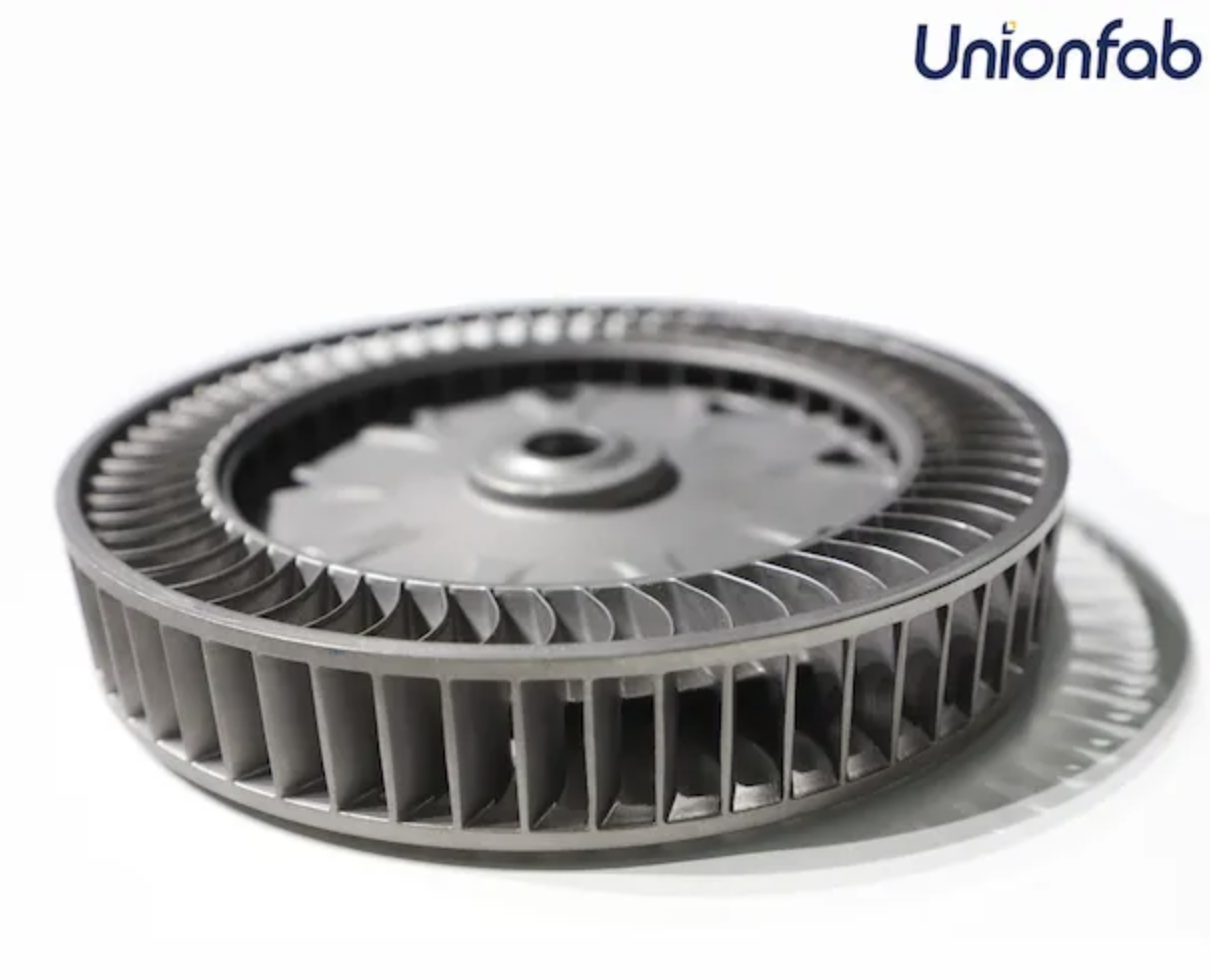
Case Study 1: 316L Stainless Steel Impeller
Project Background & Challenges
An industrial pump manufacturer required a functional prototype of a high-performance impeller to validate a new fluid dynamics design. The component featured highly complex, curved vanes and internal channels critical for hydraulic efficiency.
The primary challenges included:
Geometric Complexity: The intricate, overlapping blade design was nearly impossible to produce as a single piece using traditional 5-axis CNC machining without compromising structural integrity.
Rapid Iteration: To meet tight R&D deadlines, the client needed a fully functional metal prototype within days to perform real-world flow testing and stress analysis.
Unionfab Solution
Unionfab utilized SLM (Selective Laser Melting) technology to manufacture the impeller from 316L Stainless Steel. This additive approach allowed for the seamless integration of complex blade geometries directly from the CAD data, eliminating the need for expensive tooling or sacrificial casting patterns.
By using SLM, Unionfab ensured:
High Precision: Exceptional dimensional accuracy for the thin-walled blades, ensuring the prototype matched the fluid dynamic simulations.
Material Integrity: The 316L stainless steel provided excellent corrosion resistance and mechanical strength, making it suitable for immediate functional testing in liquid environments.
Technical Specs & Delivery Timeline
Metric | Details |
|---|---|
Component | Industrial Impeller Prototype |
Technology | SLM (Selective Laser Melting) |
Material | 316L Stainless Steel |
Production Scale | Functional Prototyping |
Bounding Box* | 120mm × 120mm × 45mm |
Print Time | 9 Hours |
Post-Processing | 15 Hours |
Logistics | 2-Day International Air Express |
Total Lead Time | 4 Business Days (Order to Doorstep) |
Note on Data Privacy: To protect client Intellectual Property (IP), dimensions are provided as a Bounding Box (maximum spatial volume).
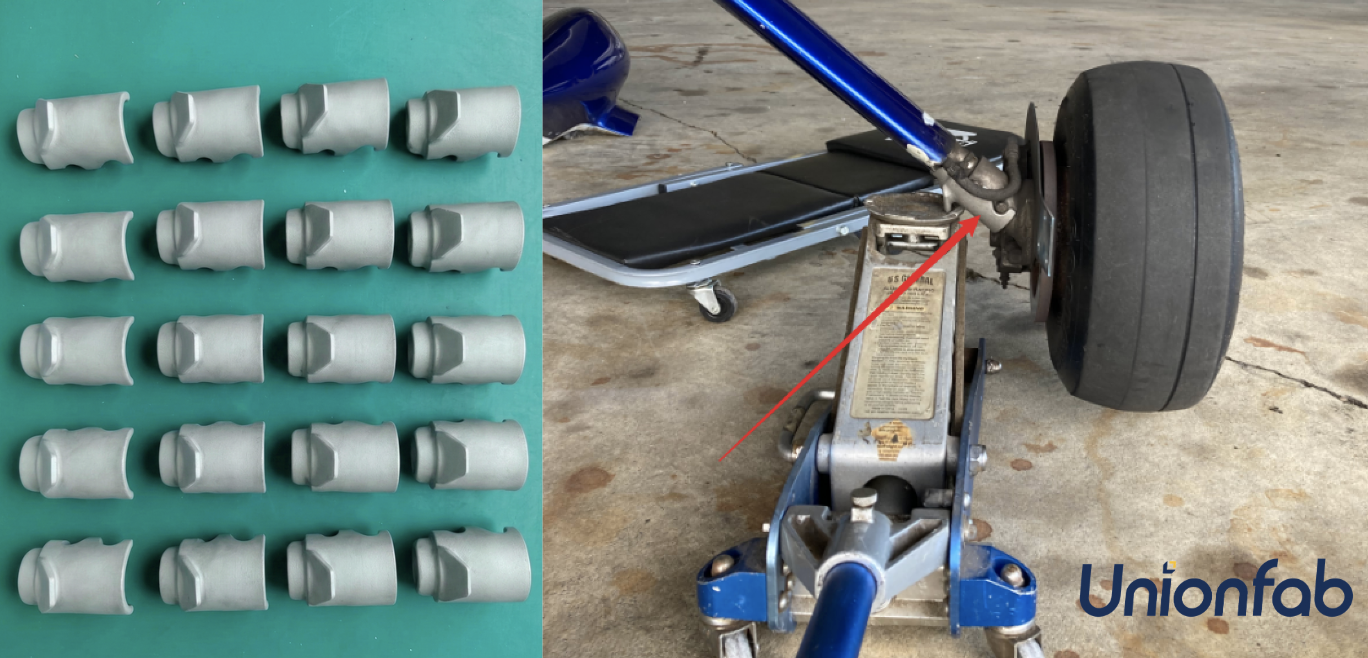
Case Study 2: Custom Jack Adapters for Aircraft MRO
Project Background & Challenges
For high-precision aircraft restoration, a specialized MRO (Maintenance, Repair, and Overhaul) firm required custom jack adapters to bridge the gap between standard lifting equipment and unique aircraft jacking points.
These critical Ground Support Equipment (GSE) components were required to:
Withstand extreme point loads during lifting.
Ensure a perfect fit to prevent costly structural damage to the airframe.
Unionfab Solution
Unionfab employed SLM (Selective Laser Melting) to produce the adapters from 17-4PH stainless steel, achieving the high strength, corrosion resistance, and precision required for aerospace applications.
By bypassing the constraints of traditional tooling, Unionfab delivered a high-performance solution that significantly reduced AOG (Aircraft on Ground) time.
Technical Specs & Delivery Timeline
Metric | Details |
|---|---|
Component | Custom Jack Adapter |
Technology | SLM (Selective Laser Melting) |
Material | 17-4PH Stainless Steel |
Production Scale | Low-Volume Production (20pcs) |
Bounding Box* | 55mm × 60mm × 100mm |
Print Time | 15 Hours |
Post-Processing | 12 Hours (Vacuum stress relief, WEDM, detailed support removal) |
Logistics | 3-Day International Air Express (China to USA) |
Total Lead Time | 5 Business Days (Order to Doorstep) |
Note on Data Privacy: To protect client Intellectual Property (IP), dimensions are provided as a Bounding Box (maximum spatial volume).
Unionfab’s Metal 3D Printing Services
With 20+ years of expertise, 1,000+ industrial 3D printers, and 6 cutting-edge factories, Unionfab, certified with ISO 9001, ISO 13485, and AS9100D, is committed to delivering high-quality, cost-effective 3D printing services.
From advanced metal 3D printing technologies to professional post-processing, we provide end-to-end manufacturing solutions for rapid prototyping and production parts.
Special Offer: New customers enjoy 10% off their first order!
Factory Online Tour
Take a closer look at Unionfab’s manufacturing capabilities, including our production workshops, equipment, and quality control process. Visit our online factory tour to explore our facilities and see how your parts are produced.
Metal 3D Printing Technologies
The table below provides an overview of the capabilities and specifications of our SLM/DMLS and binder jetting metal 3D printing services.
Feature | ||
|---|---|---|
Materials | Aluminum (AlSi10Mg, 6061), Titanium (TC4), Stainless Steel 316L, Stainless Steel 17-4PH, Maraging Steel, Inconel 625, CuCrZr | Stainless Steel 316L, Stainless Steel 17-4PH |
Part Size | up to 400 × 300 × 400 mm | up to 400 x 250 x 250 mm |
Layer Thickness | 0.035 mm | 0.05 mm |
Dimensional Tolerance | ±0.2 mm | ±0.3 mm |
Minimum Wall Thickness | 0.5 mm | 2.0 mm |
Pass Rate | 99.5% | 99.5% |
Lead Time | As fast as 4-5 days | As fast as 4-5 days |
On-Time Delivery Rate | 98% | 98% |
Post-Processing Capabilities
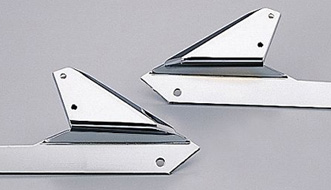
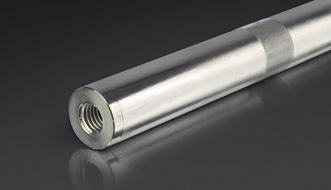
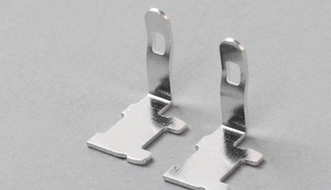
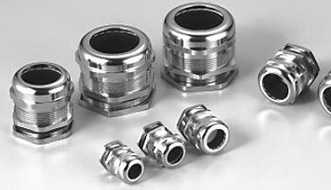
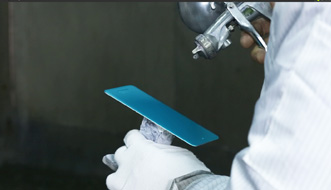
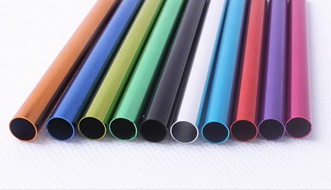
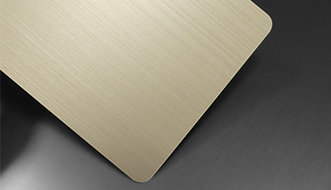
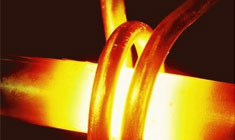
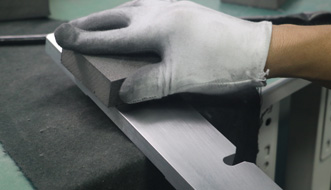
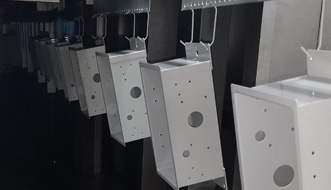
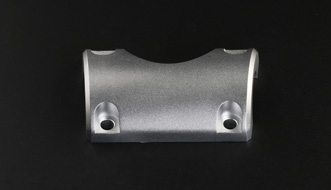
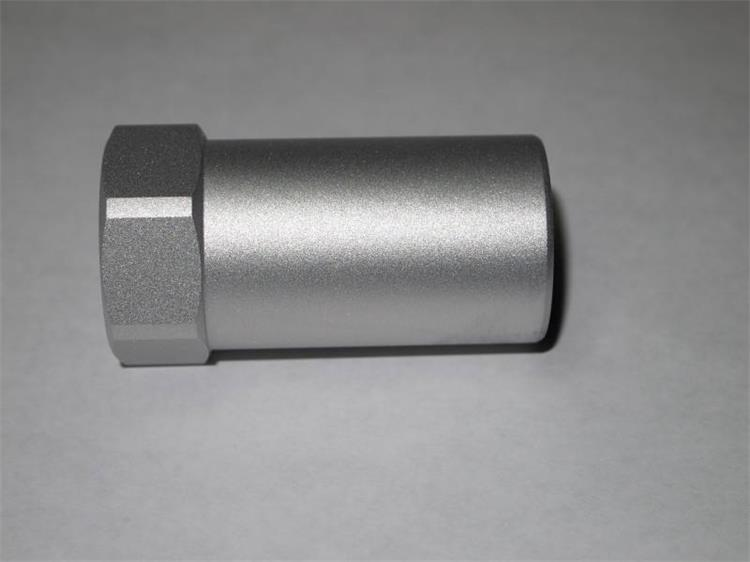
In addition to high-precision metal 3D printing, we offer a wide range of post-processing options, including sandblasting, electroplating, polishing, and heat treatment, to improve surface quality, durability, and aesthetics, ensuring that the parts meet various functional and visual requirements.
 |  |  |  |  |
|---|---|---|---|---|
 |  |  |  |  |
 |  |  |  |  |
Future Trends and Developments in Metal 3D Printing
Metal 3D printing continues to evolve rapidly, with ongoing advancements in materials, manufacturing capabilities, and digital technologies. The following trends are expected to shape the future development of metal additive manufacturing.
New Materials: A wider range of metal alloys, including superalloys, refractory metals, and rare earth materials, are becoming available for 3D printing. New metal composites and multi-metal alloys are improving part performance, particularly in aerospace and energy sectors.
Multi-Material Printing: Advances in multi-material technologies are allowing the combination of metal and non-metal materials in a single part, enabling custom properties and functional gradients in complex components.
Printed Electronics: Conductive materials like copper and graphene are being integrated into 3D printed metal structures, opening up possibilities for customized electronics such as sensors and antennas.
Industry Adoption: As technology matures and costs decrease, metal 3D printing is increasingly used for end-use parts across industries like aerospace, automotive, and medical, accelerating its transition from prototyping to production.
Automation and AI: AI integration is enhancing process control, enabling automated quality assurance, predictive maintenance, and more efficient production, making metal 3D printing more reliable and scalable.
FAQs
Can Inconel be 3D printed?
Yes. Inconel can be 3D printed using technologies such as Powder Bed Fusion (PBF) and Directed Energy Deposition (DED). Alloys like Inconel 625 and Inconel 718 are commonly used because of their excellent high-temperature strength, oxidation resistance, and corrosion resistance, making them suitable for aerospace and energy applications.
What metals are difficult to 3D print?
Some metals are more difficult to 3D print due to high reflectivity, oxidation, or safety concerns. Examples include:
Pure copper and gold – High reflectivity can reduce laser absorption in some powder bed systems.
Magnesium and beryllium – These metals are highly reactive and pose safety risks during processing.
Cast iron – Its brittle nature makes it prone to cracking during rapid heating and cooling.
Despite these challenges, ongoing research and new laser technologies are gradually expanding the range of printable metals.
How long does it take to 3D print metal?
The printing time depends on part size, geometry, layer thickness, and printing technology. Typical production times include:
Small parts: A few hours
Medium-sized parts: 10–20 hours
Large or complex parts: Several days
Additional time may be required for post-processing, such as heat treatment, support removal, or surface finishing.
Is 3D printed metal stronger than forged metal?
In most cases, forged metal is stronger because forging creates a directional grain structure and work-hardened material. However, properly optimized metal 3D printed parts can achieve comparable mechanical properties, especially when combined with heat treatment and post-processing.
What are the downsides of metal 3D printing?
Metal 3D printing offers many advantages, but it also has some limitations:
High equipment and material costs
Slower production speed compared with CNC machining or casting for large volumes
Limited material availability compared with traditional manufacturing
Porosity or internal defects if process parameters are not optimized
These challenges are gradually improving as technologies and materials continue to develop.
What is the largest metal 3D printing company?
The answer depends on the market segment and business model. In China, Unionfab is one of the leading metal 3D printing service providers, offering large-scale production capacity and on-demand manufacturing services.
What is the strongest type of metal 3D printing?
Laser Powder Bed Fusion (L-PBF) is known for producing high-density metal parts with fine microstructures, which can result in excellent mechanical properties. Materials such as titanium alloys, Inconel, and maraging steel are among the strongest metals commonly used in metal 3D printing.
Do you need a special 3D printer to print metal?
Yes. Metal 3D printing requires industrial-grade machines that use lasers, electron beams, or binding agents to fuse metal powder or wire layer by layer. These systems are significantly more complex than standard plastic 3D printers.
Is metal 3D printing cheaper than CNC machining?
It depends on the application.
For complex, low-volume parts, metal 3D printing is often more cost-effective because it reduces material waste and eliminates tooling.
For simple, high-volume parts, CNC machining is usually cheaper due to faster production speeds and lower per-part costs.
Is metal 3D printing the future?
Metal 3D printing is rapidly growing, particularly in industries such as aerospace, medical, and automotive. However, it is unlikely to fully replace traditional manufacturing. Instead, it will complement existing methods, especially for complex geometries, lightweight structures, and high-performance parts.